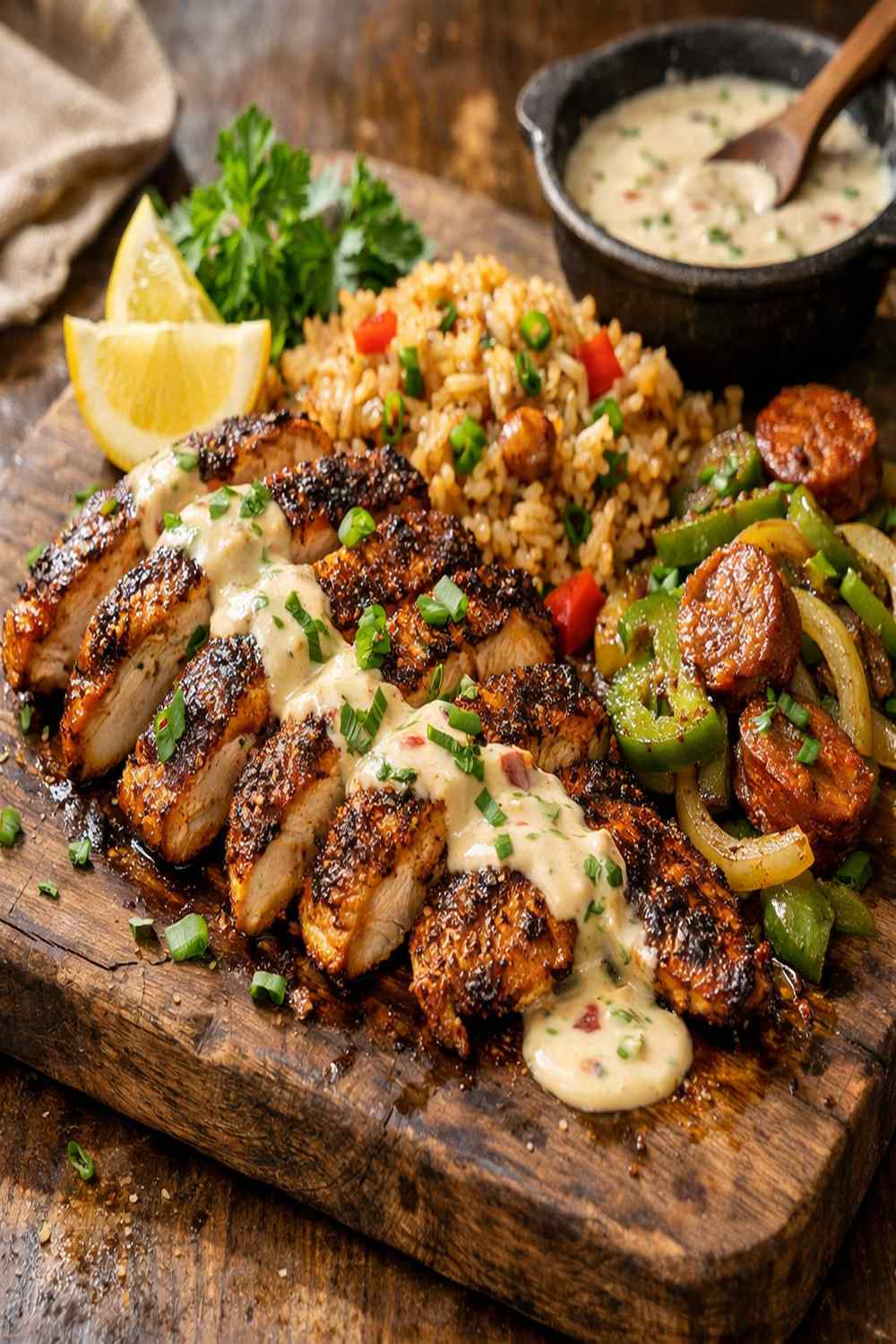

Ingredients
Method
Step 1: Prep Your Vegetables While Water Boils
- Start by filling a large pot with water and placing it on high heat. You'll need this water later, but while it's coming to a boil, use that time productively. Dice your bell peppers directly into a medium bowl, slice your celery into thin half-moons, and mince your garlic (or measure from a jar). This parallel processing cuts your total cooking time by 20 minutes. I learned this trick during my clinical nutrition days when time management was literally part of patient care. Never have your stove running and your hands empty.
Step 2: Pat Dry and Season Your Chicken
- Remove your chicken from the package and pat it completely dry with paper towels—this is the one step that determines whether your chicken browns or steams. Moisture is the enemy of flavor development. Arrange the breasts on a large cutting board and coat evenly with 1½ teaspoons of your Cajun seasoning, using about one-quarter teaspoon per breast. Don't worry about being perfectly precise; the seasoning will distribute as you cook. Flip each breast and season the other side.
Step 3: Create Your Flavor Base by Searing the Chicken
- Heat a very large skillet (12 inches ideally) over medium-high heat. When a drop of water sizzles on contact, add 1 teaspoon of olive oil and let it heat for 30 seconds. Place three chicken breasts in the skillet and let them sit undisturbed for 2 minutes—resist the urge to move them constantly, as this breaks the browning crust. Flip, cook the other side for 2 minutes, then transfer to a clean plate. Repeat with the remaining three breasts. You're not cooking them through; you're building flavor.
Step 4: Build Aromatics and Finish the Sauce Base
- In the same skillet, melt 2 tablespoons of butter over medium heat. Once foaming, add your prepared celery, bell peppers, and garlic. Sauté for exactly 2 minutes, stirring constantly—you want them to soften slightly and perfume the butter, not cook through. Pour in your honey and stir for 15 seconds, allowing it to caramelize slightly. This combination of honey, butter, and aromatic vegetables becomes the flavor backbone for your entire week of meals.
Step 5: Toast Your Rice and Build the Cooking Liquid
- Add 2 cups of your uncooked rice directly to the skillet and stir constantly for 2-3 minutes. You'll notice the rice becomes slightly translucent on the edges—this toasting step develops a subtle nuttiness that prevents mushy rice. Pour in your 5¼ cups of chicken broth and the remaining 1½ teaspoons of Cajun seasoning. Stir thoroughly, scraping the bottom to release any browned bits (we call these fond, and they're pure flavor). Bring to a boil—you should see large bubbles breaking the surface.
Step 6: Nestle the Chicken and Finish Cooking
- Arrange your seared chicken breasts on top of the rice, pressing them down slightly into the liquid. Reduce your heat to low, cover the skillet with a lid (or aluminum foil if you don't have one), and cook for 18-22 minutes. Check at 18 minutes by piercing the thickest breast with a fork—juice should run clear, and the internal temperature should reach 165°F. The rice should be tender, and most liquid should be absorbed but not dry.
Step 7: Cool and Portion Into Containers
- This step determines whether your meals taste fresh on Friday or borderline. Remove the skillet from heat and let it rest, uncovered, for 10 minutes. This allows carryover cooking to finish without overdrying the chicken, and it lets the steam escape so your rice doesn't continue absorbing moisture and become mushy. Transfer to a large baking sheet in a single layer and let cool for another 10 minutes before portioning. Never put hot food directly into sealed containers—the condensation creates moisture that accelerates spoilage. Once cooled, shred or cut your chicken into bite-sized pieces and divide into six equal portions with rice and vegetables.