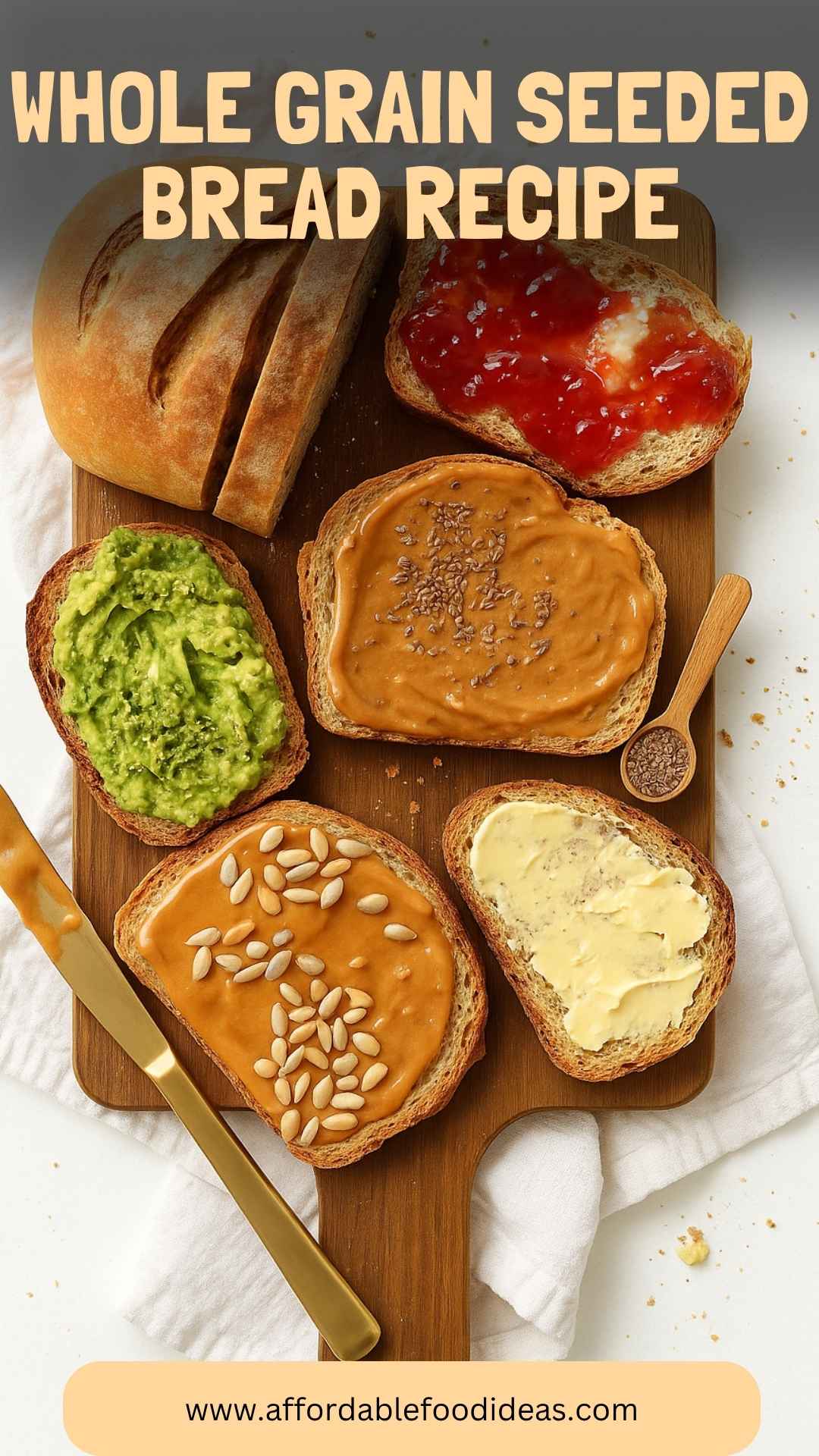
Ingredients
Method
Step 1: Prepare Your Dough
- Start by combining the lukewarm water, instant yeast, and sweetener (maple syrup, agave nectar, or honey) in a bowl. Stir gently and let it sit for about 5-10 minutes until foamy. This activation of yeast is crucial for a good rise.
Step 2: Mix in Dry Ingredients
- In a large mixing bowl, combine both types of flour, chia seeds, flaxseed, sea salt, and rolled oats. Mix thoroughly to ensure the seeds are evenly distributed.
Step 3: Combine Wet and Dry Mixtures
- Create a well in the center of the dry ingredients. Slowly pour in the yeasted water mixture and apple cider vinegar. Using a spatula, mix until the ingredients come together to form a sticky dough.
Step 4: Knead the Dough
- Transfer the dough to a floured surface. Knead gently for about 8-10 minutes. The dough will become smoother and slightly elastic. Keep dusting with a little flour if it’s too sticky.
Step 5: First Rise
- Transfer the dough into a lightly greased bowl. Cover it with a damp cloth or plastic wrap. Allow it to rise in a warm place until it doubles in size, roughly 1-2 hours.
Step 6: Shape the Dough
- Once risen, gently punch down the dough to release air. Transfer it to a floured surface and shape it into a loaf or place it into a loaf pan.
Step 7: Second Rise
- Cover the shaped dough and let it rise again until it doubles, around 45 minutes to 1 hour. This second rise is essential for achieving the perfect texture.
Step 8: Preheat the Oven
- While the dough is rising, preheat your oven to 375°F (190°C). This ensures the oven is hot and ready for your dough, which will help it bake evenly.
Step 9: Bake the Bread
- Once the dough has risen adequately, bake it for 30-35 minutes. The crust should be golden brown, and when you tap the bottom of the loaf, it should sound hollow.
Step 10: Cool the Bread
- Remove the loaf from the oven and let it cool in the pan for 10 minutes. Then transfer it to a wire rack to cool completely. This step is vital, as cutting it too early can affect the texture.
Notes
- Use Fresh Ingredients: Always check the freshness of your yeast and flours. Old ingredients can alter the rise and flavor.
- Don’t Rush the Rising: Bread-making requires patience. Allow time for both rises for optimal results.
- Experiment with Seeds: Feel free to switch out the seeds for your favorites, such as pumpkin or sesame seeds.
- Invest in a Kitchen Scale: Measuring flour by weight can lead to consistent results. This way, you avoid variations in density affecting your dough.
- Adjust the Sweetness: Depending on your taste preference, you can modify the sweetener amount.