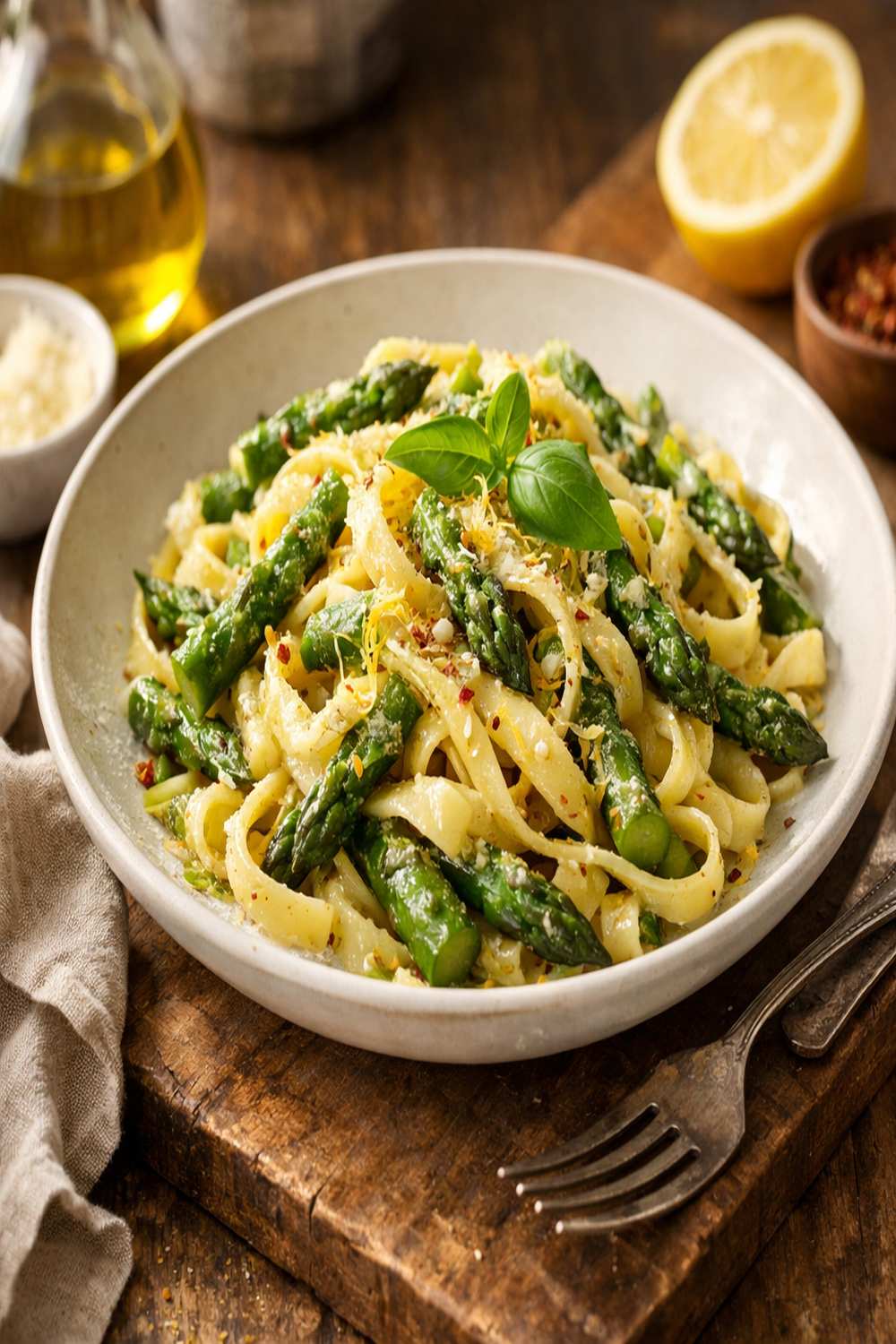

Ingredients
Method
Step 1: Prepare Your Asparagus Properly
- Start by rinsing each asparagus spear under cool water. Hold the bottom third of each spear and gently bend it—it will naturally snap at exactly the point where the tender part meets the woody, fibrous part. This is foolproof and means you won't accidentally throw away good spear or force yourself to chew through tough ends. For the thicker spears (the bottom third), use a vegetable peeler to remove that papery outer skin. I know this sounds fussy, but trust me—those tender inner layers cook perfectly while the outer skin stays tough. Takes about 30 seconds total. Cut the asparagus on a diagonal into roughly ⅓-inch thick slices, but leave the tips whole and about 2 to 3 inches long. Those tips are the prettiest part of the plate—you want them to stay intact.

Step 2: Get Your Water Boiling and Cook the Pasta
- Fill a large pot with cold water, add a generous handful of salt (the water should taste like the sea), and bring it to a rolling boil. The salt is important—this is the only place your pasta gets seasoned, so don't skip it. Add your pasta and cook according to the package instructions, but check it about a minute before the suggested time. You want it al dente—tender but still with a tiny bit of resistance when you bite it. Fresh pasta and dried pasta have different timing, so follow what your package says. While the pasta cooks, set a colander in your sink and grab a mug or measuring cup. You're going to need about ½ cup of that starchy pasta cooking water—don't drain it all away. This starch is liquid gold for making creamy sauce.
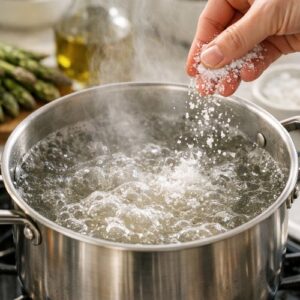
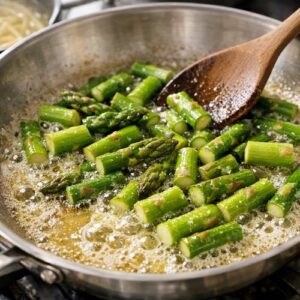
Step 3: Sauté the Asparagus While Pasta Cooks
- While the pasta is cooking (and you have about 8 to 10 minutes), melt the butter in a large, wide skillet over medium heat. Once the butter is foaming and smells nutty, add your chopped asparagus pieces (not the tips yet—just the cut spears). Sauté for about 4 to 5 minutes, stirring occasionally, until the asparagus starts to turn bright green and is just barely tender. About halfway through, add half of your lemon zest to the pan and stir it through. This infuses the butter with bright flavor. If you have those optional minced garlic cloves, add them now too—they'll soften beautifully in the warm butter. The whole pan should smell incredible at this point.
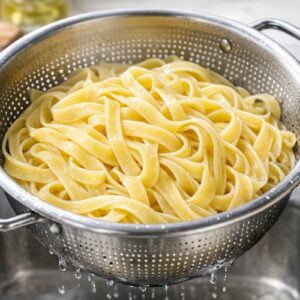
Step 4: Drain the Pasta and Set Aside
- When the pasta is perfectly al dente, drain it in your colander but don't rinse it. Leave a thin coating of starch on each piece—this helps the sauce cling. Pour that reserved cooking water into your mug and set it aside. Let the drained pasta sit in the colander while you make the sauce. It won't get cold in the next 2 minutes, and this keeps it from sticking together.
Step 5: Build Your Cream Sauce
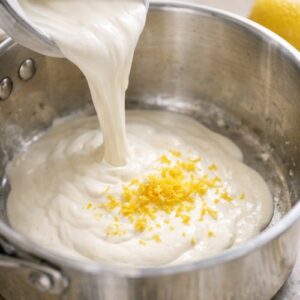
- Pour the crème fraîche (or your substitute) directly into the empty pasta pot. Add the remaining lemon zest (save just a tiny pinch for garnish) and your freshly ground black pepper. Set the pot over medium-low heat and stir constantly until the crème fraîche becomes smooth and liquid, about 2 to 3 minutes. It should look glossy and move easily when you tilt the pot. Now here's the important part: add the starchy pasta water one tablespoon at a time while stirring. This is how you create a silky, restaurant-quality sauce that clings to every strand of pasta. Add too much water at once and the sauce breaks—the fat separates and it becomes grainy. Work slowly. After about 3 to 4 tablespoons, you should have a sauce the consistency of heavy cream. Add the grated Parmesan cheese and stir it in thoroughly. Taste the sauce and add just a tiny pinch of salt if needed. Remember, you have salty pasta water and salty cheese, so you probably won't need much. If the sauce feels too thick, add one more tablespoon of pasta water.
Step 6: Finish the Asparagus and Combine Everything
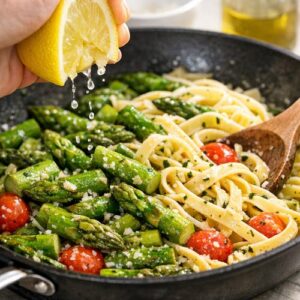
- Squeeze about 2 teaspoons of fresh lemon juice over the asparagus in your skillet and give it a good stir. The acidity brightens everything. Add the reserved asparagus tips to the pan now so they heat through gently—about 1 to 2 minutes. They should be tender-crisp, not soft. Add the drained pasta and most of the asparagus pieces (save those pretty tips for the top) to the pot with your cream sauce. Toss everything together over medium heat for about 1 minute, making sure the pasta is completely coated. The pasta should glide through the sauce smoothly.
Step 7: Plate and Garnish
- Divide the creamy asparagus pasta among bowls or plates. Top each portion with a few of those reserved asparagus tips, a small shower of Parmesan, a few grinds of fresh black pepper, and just a whisper of that lemon zest you saved. A drizzle of extra virgin olive oil is beautiful if you have it, but completely optional. Serve immediately while everything is hot and the sauce is silky. This is a dish that doesn't wait—it's best enjoyed right away.

Notes
- Choose thicker asparagus when possible - I know thin asparagus looks delicate, but thicker spears (about pencil-width or thicker) have better flavor and are easier to peel. Thin spears turn mushy quickly. Buy what looks fresh and vibrant green, not pale or wrinkled.
- Use fresh lemon, never bottled juice - This one matters more here than in almost any other recipe because lemon is the signature flavor. Bottled juice tastes metallic and flat by comparison. A fresh lemon costs 50 cents and transforms this dish.
- Don't skip zesting the lemon - The zest has intense, bright flavor with none of the sourness of juice. It's what makes this taste sophisticated rather than just creamy. Zest directly over the pan or plate so none of that precious oil gets lost.
- Taste as you go - Cream sauces are forgiving, but everyone's crème fraîche, Parmesan, and pasta water is slightly different. Taste after adding each major component and adjust seasoning accordingly. This takes 10 seconds and prevents oversalting.
- Keep the heat at medium or lower - High heat breaks cream sauces and makes them grainy. Work slowly, stir frequently, and you'll have a silky sauce every single time.
- Reserve more pasta water than you think you'll need - If your sauce gets too thick before you finish (this sometimes happens if you're going slowly, which is actually good), you can thin it with another tablespoon of that starchy water. It's easier to add than to remove.