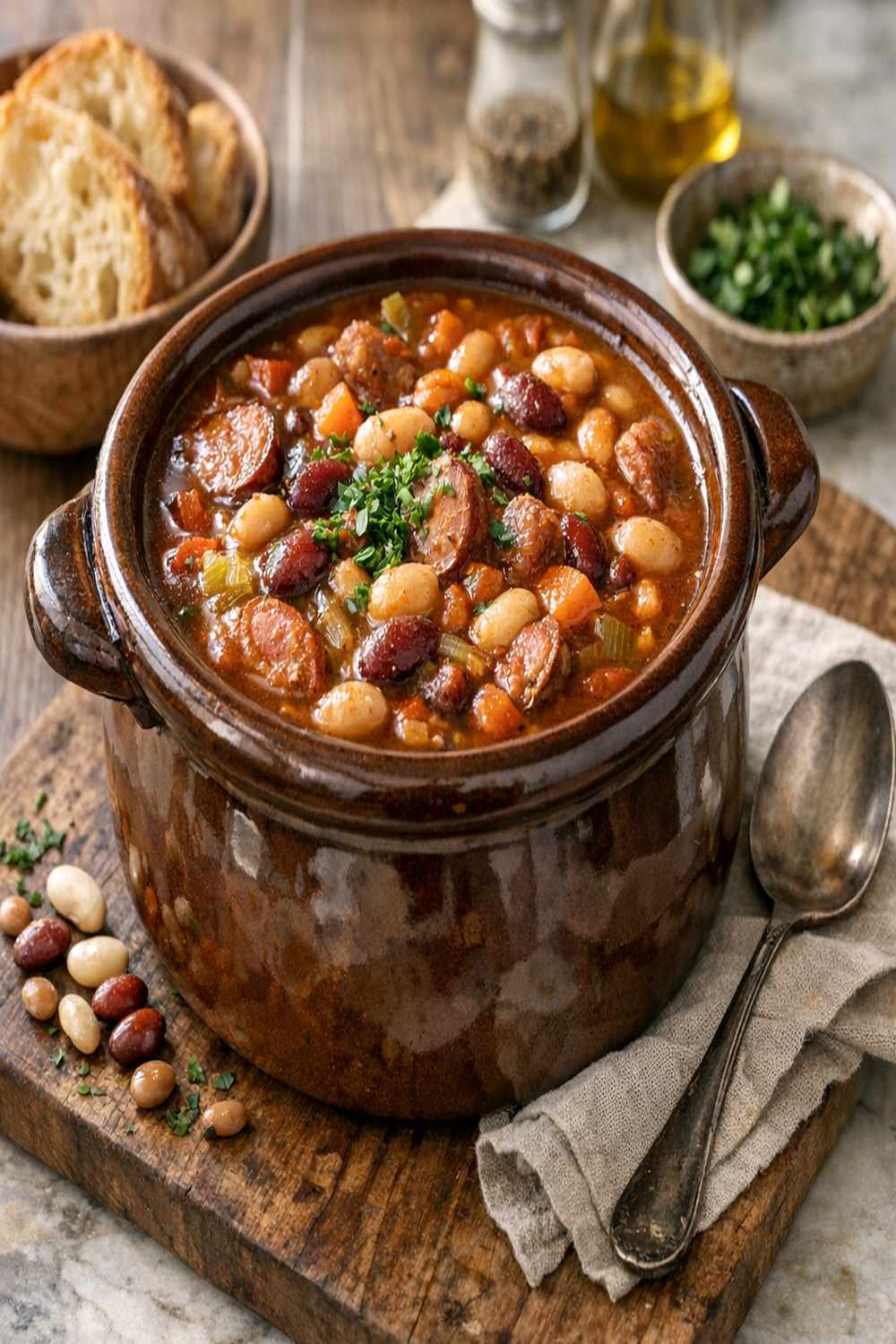

Ingredients
Method
Step 1: Prepare and Sort Your Beans
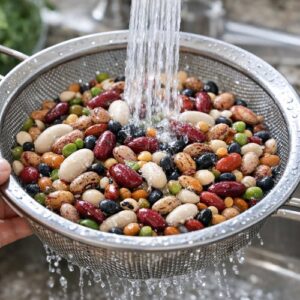
- Start by rinsing your dried bean blend thoroughly under cool running water. This removes dust and any debris that may have settled during storage. Spread the beans on a clean kitchen towel or a flat plate and look through them carefully, removing any discolored beans, pebbles, or broken pieces. This takes about 5 minutes and is genuinely important—it prevents unpleasant surprises while eating. I learned this lesson the hard way as a child when my mother's sharp look told me to chew more carefully! Once sorted, add the beans directly to your slow cooker insert. Don't add liquid yet. This is your foundation.
Step 2: Prepare Your Vegetables
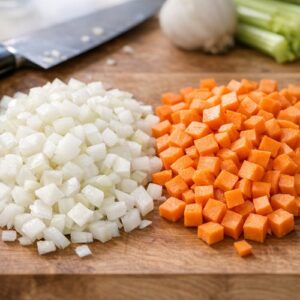
- Dice your onion into roughly quarter-inch pieces—you want them visible but not chunky. Peel and dice your carrots similarly. Remove the tough outer strings from your celery ribs with a vegetable peeler, then dice them as well. The goal is evenly sized pieces so everything cooks at the same rate. If you're using jarred minced garlic, measure it out now; if using fresh, mince it fine. Keep your vegetables separate from the beans for now. This gives you a moment to assess quantities and make adjustments if needed—a practical habit I developed during my early meal-planning days when I had to work with whatever was available.
Step 3: Layer Everything Into the Slow Cooker
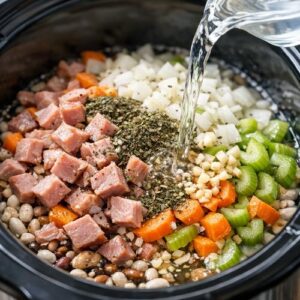
- Add your prepared ham, onion, carrots, celery, and garlic directly on top of the beans. Sprinkle in your dried basil and thyme. Pour your water or broth over everything slowly, stirring gently to combine. The liquid should cover the beans by about two inches. Now, lay your bay leaf on top of the soup—it will float or nestle in the liquid, and it's easy to spot and remove later. Cover your slow cooker with its lid and set it to HIGH for 6 hours. This is important: resist the urge to lift the lid during cooking. Every time you peek, you add 15-20 minutes to the cooking time because heat escapes and moisture evaporates. Trust the process.
Step 4: Test Beans for Doneness and Add Final Ingredients
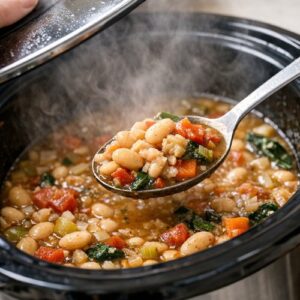
- After exactly 6 hours, remove the lid carefully—steam will rise, so be cautious. The beans should be completely soft and tender, breaking apart easily when pressed against the side of the slow cooker with a spoon. If they still feel slightly firm, cook for an additional 30 minutes to 1 hour. Once the beans are perfectly tender, remove and discard the bay leaf. Add your lemon juice, canned tomatoes with their juice, and your chopped kale. If using frozen kale, it will thaw immediately in the hot broth—no pre-thawing needed. Stir everything together thoroughly.
Step 5: Final Seasoning and Rest
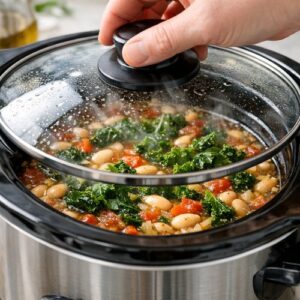
- Replace the lid and cook on HIGH for 20 additional minutes. This allows the kale to wilt slightly and the flavors to meld once more. In the final minutes, sprinkle in that savory seasoning packet—the one that came with your dried bean blend—and stir once more. Taste the soup and adjust seasoning with salt and pepper as needed. Let the pot sit for 5 minutes off the heat before ladling and serving. This allows flavors to settle slightly and makes serving easier.
Notes
- Swap the Ham for Other Proteins - If you don't have ham on hand, use 2 cups of diced rotisserie chicken, crumbled bacon, or even skip the meat entirely for a vegetarian version. The cooking time remains the same.
- Make a Vegetarian Version - Omit the ham and replace water with vegetable broth. Add 1 tablespoon of tomato paste and 1 teaspoon of Worcestershire sauce (or soy sauce for deeper umami) to replicate the savory depth that ham provides.
- Use a Slow Cooker Liners - These disposable liners make cleanup nearly effortless. I resisted them for years until I realized that easier cleanup means I'm more likely to cook this soup regularly. Practical wins.
- Double the Recipe - This scales beautifully to a larger slow cooker. Simply double all ingredients and extend cooking time to 7-8 hours on HIGH or 10-12 hours on LOW. You'll have enough to serve a crowd and fill your freezer.
- Add Spice Gradually - If your family enjoys heat, add red pepper flakes, cayenne, or hot sauce at the table rather than to the pot. This gives everyone control over their own spice level without affecting the base recipe.
- Save Vegetable Scraps for Broth - Those carrot peels, celery leaves, and onion skins? Save them in your freezer for making homemade broth. It's the opposite of wasteful cooking and costs literally nothing.