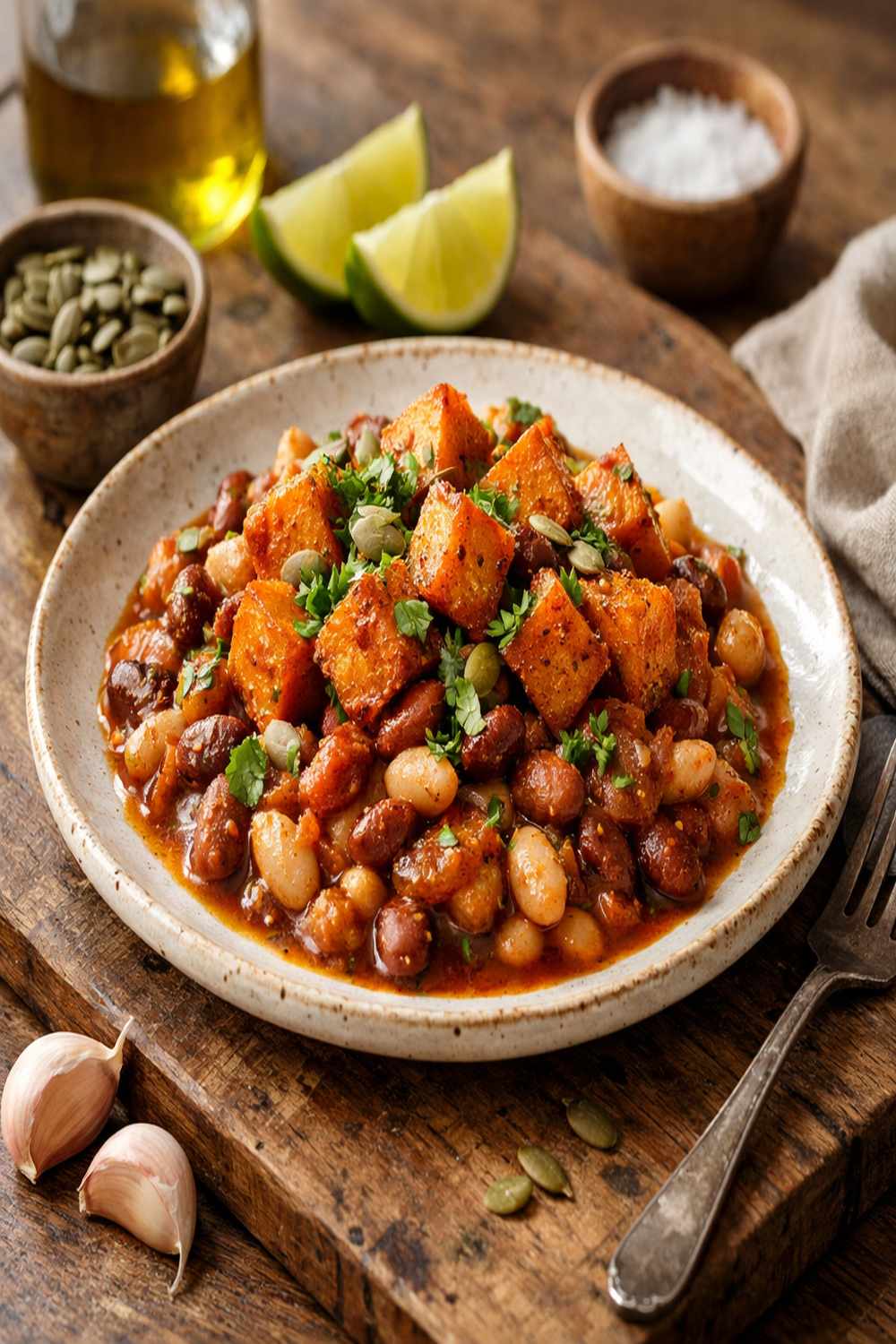

Ingredients
Method
Step 1: Prepare Your Sweet Potatoes for Roasting
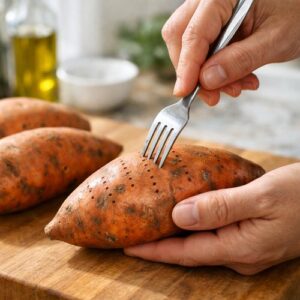
- Preheat your oven to 400°F (200°C). While the oven heats, take each sweet potato and use a fork to pierce it all over—about 1 inch apart, going completely through the skin. This prevents them from exploding in the oven and helps steam escape evenly. You're not trying to mash them; just poke holes deep enough that you feel the fork go all the way in. Line a baking sheet with parchment paper (this prevents sticking and makes cleanup painless—one of my non-negotiable kitchen investments). Place your pierced sweet potatoes on the sheet. Drizzle 1 teaspoon of olive oil into your palm and rub it lightly over each potato, coating all sides. You want just enough oil that they look slightly glossy, not shiny like they've been deep-fried. This helps them brown beautifully.
Step 2: Roast Until Fork-Tender
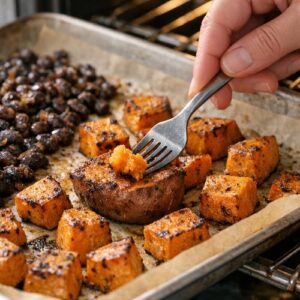
- Slide the baking sheet into your preheated oven. Set a timer for 40 to 50 minutes. Don't just set it and forget—at the 40-minute mark, take one potato out and pierce it with a fork in the thickest part. The fork should slide through with almost no resistance, like piercing soft butter. If you feel any firmness, give them another 5 to 10 minutes. You'll know they're done when the skin has darkened slightly and the flesh inside gives completely to the fork. The skin might even split slightly at the top—that's perfect. This is what properly roasted sweet potatoes look like: caramelized, slightly wrinkled, and completely tender. They should smell almost candy-like, with deep roasted sweetness underneath.
Step 3: Build Your Black Bean Medley While Potatoes Roast
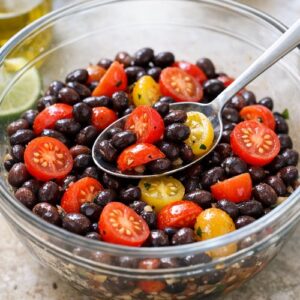
- While your sweet potatoes are roasting, make the filling. In a medium bowl, combine your drained and rinsed black beans, the halved cherry tomatoes, corn kernels, diced red onion, minced garlic, and chopped cilantro. Toss everything together gently—you're mixing, not aggressively stirring. Now dress the mixture: drizzle with the remaining 2 teaspoons of olive oil and the lime juice. Sprinkle with sea salt, a small pinch of black pepper, and a tiny pinch of chili flakes if you're using them. Toss gently until everything is coated and flavors are beginning to blend. The lime juice will brighten the tomatoes and cilantro; you'll notice the smell shift toward something fresher and more alive. Here's a professional tip: This mixture can sit for up to 30 minutes before serving, and it actually gets better as it sits—the flavors continue mingling and developing. If you're prepping ahead, this is your make-ahead champion.
Step 4: Prepare Your Guacamole
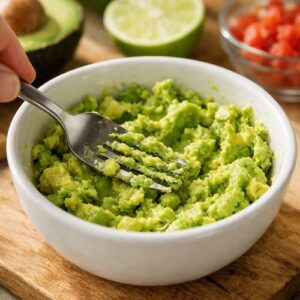
- While the potatoes finish cooking, halve your avocado lengthwise, remove the pit, and scoop the flesh into a small bowl. Using a fork, mash it until you reach your desired consistency—I like mine slightly chunky with some creamy parts, but that's personal preference. Immediately add 2 teaspoons of lime juice and a pinch of sea salt, then mix gently. The lime juice serves two purposes: it prevents the avocado from browning quickly, and it adds bright acidity that balances the richness of the avocado. If you're making this more than 30 minutes ahead, press plastic wrap directly onto the guacamole surface to minimize air exposure.
Step 5: Make Your Yogurt Drizzle
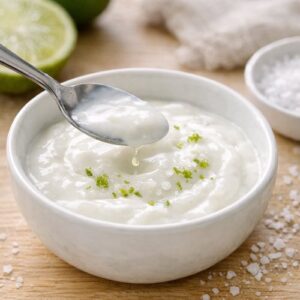
- In another small bowl, combine your coconut yogurt (or dairy yogurt alternative), the remaining ½ teaspoon of lime juice, and a tiny pinch of sea salt. Whisk together until smooth. This becomes your cooling, tangy drizzle—it balances the earthiness of the beans and the richness of the avocado. The lime juice cuts through any heaviness and adds brightness. This yogurt mixture can also be made ahead and refrigerated for up to 3 days. It's one of those versatile components that works on grain bowls, roasted vegetables, or even as a dip for raw vegetables.
Step 6: Assemble and Serve
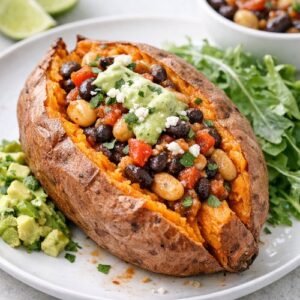
- Once your sweet potatoes are perfectly tender, remove them from the oven and let them cool for 2 to 3 minutes (they'll be very hot). Slice each potato in half lengthwise, creating two long, flat surfaces. Using a fork or spoon, gently fluff the flesh inside without tearing the skin—you want the inside to be light and fluffy, almost like you've loosened it up for the toppings. Spoon your seasoned black bean mixture generously into each sweet potato half. Top each one with a generous dollop of your mashed avocado. Finally, drizzle with the yogurt mixture. You can also sprinkle a tiny bit of extra cilantro on top if you like, or a few extra lime wedges for someone to squeeze fresh juice over everything. Serve immediately while the sweet potatoes are still warm and the guacamole is fresh. The contrast between the warm potato, the cool avocado, and the tangy yogurt is part of what makes this dish feel so complete.
Notes
- Don't skip the rinsing step with canned beans - This removes roughly 40% of the sodium from the can, making a significant difference in the overall sodium content of the finished dish. It only takes 30 seconds under running water and makes a real nutritional difference.
- Choose sweet potatoes that are similar in size - This ensures they roast evenly. If you only have varying sizes, separate them and remove smaller ones a few minutes earlier. Uneven cooking is the #1 mistake I see with roasted vegetables.
- Make lime juice your secret weapon - Acid is what makes home cooking taste like restaurant food. The lime juice here isn't just a garnish; it's the element that makes every other flavor pop. Don't skip it or substitute with lemon (though lemon can work in a pinch).
- Taste and adjust seasoning as you go - My salt recommendations are starting points. Your taste preferences matter more than my recipe. Taste the bean mixture before you assemble, and adjust if needed. This is how you learn to cook intuitively.
- Room-temperature avocado makes better guacamole - If your avocado came from the refrigerator, let it sit on the counter for 30 minutes before using. Cold avocado is harder to mash and doesn't incorporate with lime juice as smoothly.
- Double the bean mixture and use it throughout the week - This filling is delicious on salads, mixed into rice bowls, as a topping for grain toast, or even stuffed into bell peppers. Making double means one dinner plus two additional meals from your effort.