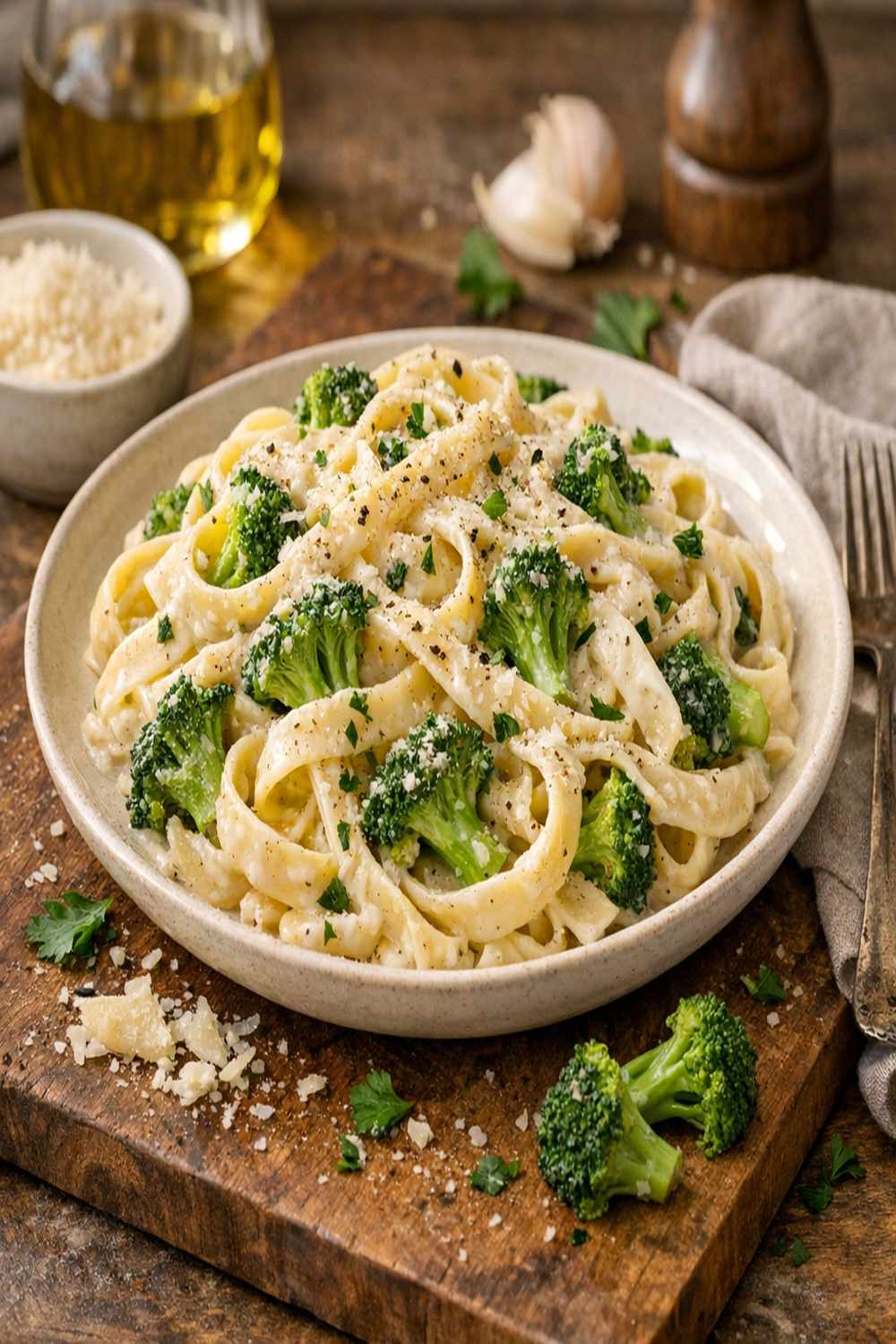

Ingredients
Method
Step 1: Bring Water to a Boil and Begin Vegetables
- Fill a large pot about three-quarters full with water and set it over high heat. You want this to come to a rolling, vigorous boil—this takes about 8-10 minutes. While you're waiting, don't just stand there. Use this time to chop your broccoli florets into consistent bite-sized pieces (about 1.5 inches each) and mince your garlic. Once the water reaches a full boil, add about 1.5 teaspoons of salt. The water should taste like the sea—this is your only chance to season the pasta itself.
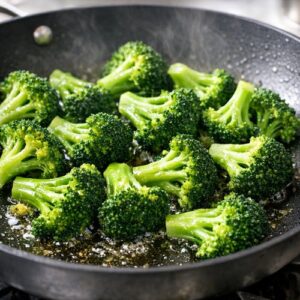
Step 2: Cook the Broccoli Until Bright and Tender-Crisp
- While the pasta water heats, place a large skillet over medium-high heat and add 1 tablespoon of olive oil. Once the oil shimmers (this takes about 60 seconds), add your chopped broccoli and season lightly with salt and pepper. Don't move it around constantly—let it sit for 2-3 minutes so the bottom edges caramelize slightly. This develops deeper flavor. After about 4 minutes, when the broccoli has turned a vibrant bright green and the bottom pieces show golden-brown edges, add ¼ cup water to the skillet. This steam-finishes the broccoli. Continue cooking uncovered for another 2-3 minutes until the water has mostly evaporated and the broccoli is crisp-tender—you want it to still have a slight bite, not mushy. Transfer the cooked broccoli to a medium bowl and set it aside. You'll use this same skillet for the chicken next, so don't wash it. All those brown broccoli bits will flavor everything coming next.
Step 3: Cook the Fettuccine Pasta
- By now your pot of salted water should be at a full rolling boil. Add the fettuccine and cook according to the package directions—usually 8-10 minutes for standard pasta. Stir it once after about 2 minutes to prevent sticking, then let it cook undisturbed. When the pasta is just barely al dente (still with a slight firmness when you bite it), reserve 1 cup of the starchy cooking water before draining. This water is liquid gold for adjusting sauce consistency later.
Step 4: Cook the Chicken Until Golden and Cooked Through
- Return the skillet (still holding all those broccoli bits) to medium-high heat and add the remaining tablespoon of olive oil. Once the oil is hot enough that it shimmers, add your cubed chicken in a single, even layer. This is important: don't stir immediately. Let the chicken sit untouched for 3-4 minutes so the bottom side gets golden and develops flavor. Season with a pinch of salt and pepper. Now start turning the pieces—I use tongs rather than a spatula so I don't break up the pieces. Continue cooking for another 3-4 minutes, turning occasionally, until the chicken is golden brown on all sides and cooked completely through (no pink in the center). Total cooking time is about 7 minutes. Transfer the cooked chicken to the bowl with your broccoli. Again, don't wash the skillet. You're building flavor with every step.

Step 5: Make the Creamy Alfredo Sauce
- This is where the magic happens, and where many home cooks run into trouble. Keep the heat at medium (not high, not low—medium is your friend here). Add the 4 tablespoons of butter to the skillet and let it melt completely, about 1 minute. You'll hear it sizzle gently. Add your minced garlic and cook for exactly 30 seconds, stirring constantly. You want just enough time for the garlic to become fragrant without turning brown or bitter. If it browns, your sauce will taste burnt, so don't skip this attention to timing. Pour in the heavy cream slowly while scraping the bottom of the skillet with a wooden spoon to release all those browned bits (this is called deglazing, and it adds incredible depth). Let the cream warm through for about 1 minute—it should look steamy but not yet boiling. Now comes the crucial part: reduce the heat to low. Add your grated parmesan cheese in handfuls, stirring constantly after each addition. The constant stirring prevents the cheese from clumping. The sauce should look smooth and silky, just beginning to bubble gently at the edges after all the cheese is incorporated. This takes about 2 minutes total.
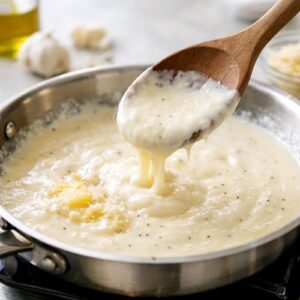
Step 6: Combine Everything and Adjust Consistency
- Add the drained fettuccine directly to the skillet with the sauce. Using tongs or two wooden spoons, toss the pasta gently but thoroughly so every noodle gets coated in that creamy sauce. This takes about 1-2 minutes of steady tossing. Now add the cooked broccoli and chicken back in. Toss everything together until it's evenly distributed. If the sauce looks too thick (it should be creamy but still flow slightly), add your reserved pasta water a few tablespoons at a time, tossing between additions, until you reach your desired consistency. Usually 2-3 tablespoons of pasta water is plenty.
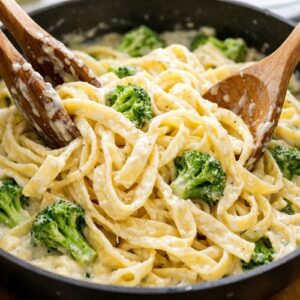
Step 7: Serve Immediately While Hot
- Divide the creamy broccoli alfredo among serving bowls or plates immediately. The dish is best eaten right away while everything is piping hot and the sauce is at its silkiest. Top each serving with a handful of freshly grated parmesan cheese and a crack of black pepper.
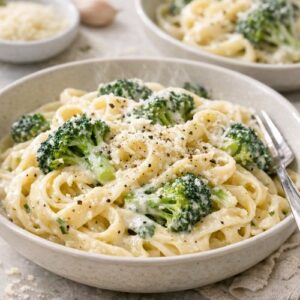
Notes
- Don't skip deglazing the pan - Those brown bits stuck to the skillet are pure flavor. When you add cream and scrape with a wooden spoon, you're dissolving those bits into the sauce. This is what makes homemade taste better than a cream-heavy version without proper technique.
- Keep your heat moderate throughout - High heat will break your sauce and make it look grainy or separated. Medium heat for cooking protein and veggies, low heat when the cream is involved. This is non-negotiable.
- Stir constantly when adding cheese - Parmesan can clump if it hits hot liquid all at once without stirring. By adding it in handfuls and stirring between each addition, you ensure a smooth emulsion.
- Taste and adjust seasoning at the very end - Don't over-salt early on. Taste the finished dish and adjust salt and pepper after everything is combined, since the pasta water, broccoli, chicken, and cheese all contribute salt.
- Use fresh-grated parmesan when possible - The pre-shredded versions have anti-caking agents that can make your sauce slightly grainy. If you only have pre-shredded, it still works, but freshly grated from a block is noticeably silkier.
- Reserve pasta water before draining - I can't emphasize this enough. That starchy water is what helps the sauce cling to every noodle and creates that restaurant-quality coating. Don't skip this step.