This post contains affiliate links. As an Amazon Associate I earn from qualifying purchases.
If you’ve been searching for a restaurant-quality pasta dinner that won’t break the bank, you’ve found it. This creamy broccoli alfredo with chicken is the kind of meal that makes weeknight cooking feel special—without the special price tag. I pair this with a simple green salad and a slice of crusty bread to round out the plate, keeping everything affordable and satisfying. Like my baked creamy chicken recipe, this dish brings comfort food home without the delivery fees.
How I Fell in Love With Making Alfredo at Home
I still remember the first time I tried to recreate alfredo sauce in my tiny apartment kitchen near Boston. My roommate had ordered it from the Italian place down the street, and I was convinced I could never replicate that silky, restaurant-style sauce at home. The price tag alone—$18 for two people—felt outrageous on a dietitian’s student budget.
But I was determined. I started with basic butter, cream, and cheese, and honestly, my first attempt was a grainy disaster. I added the parmesan too quickly, didn’t keep the heat low enough, and ended up with something that looked more like scrambled eggs than sauce. But my roommate, bless her heart, still ate it and asked for seconds.
That failure taught me something crucial: technique matters more than fancy ingredients. Once I understood how to gently heat cream and cheese without breaking the emulsion, everything changed. Now, this recipe comes together in about 30 minutes, costs a fraction of what we used to spend, and tastes just as good as that expensive takeout—maybe better, because we made it ourselves.
What is Broccoli Alfredo Recipe?
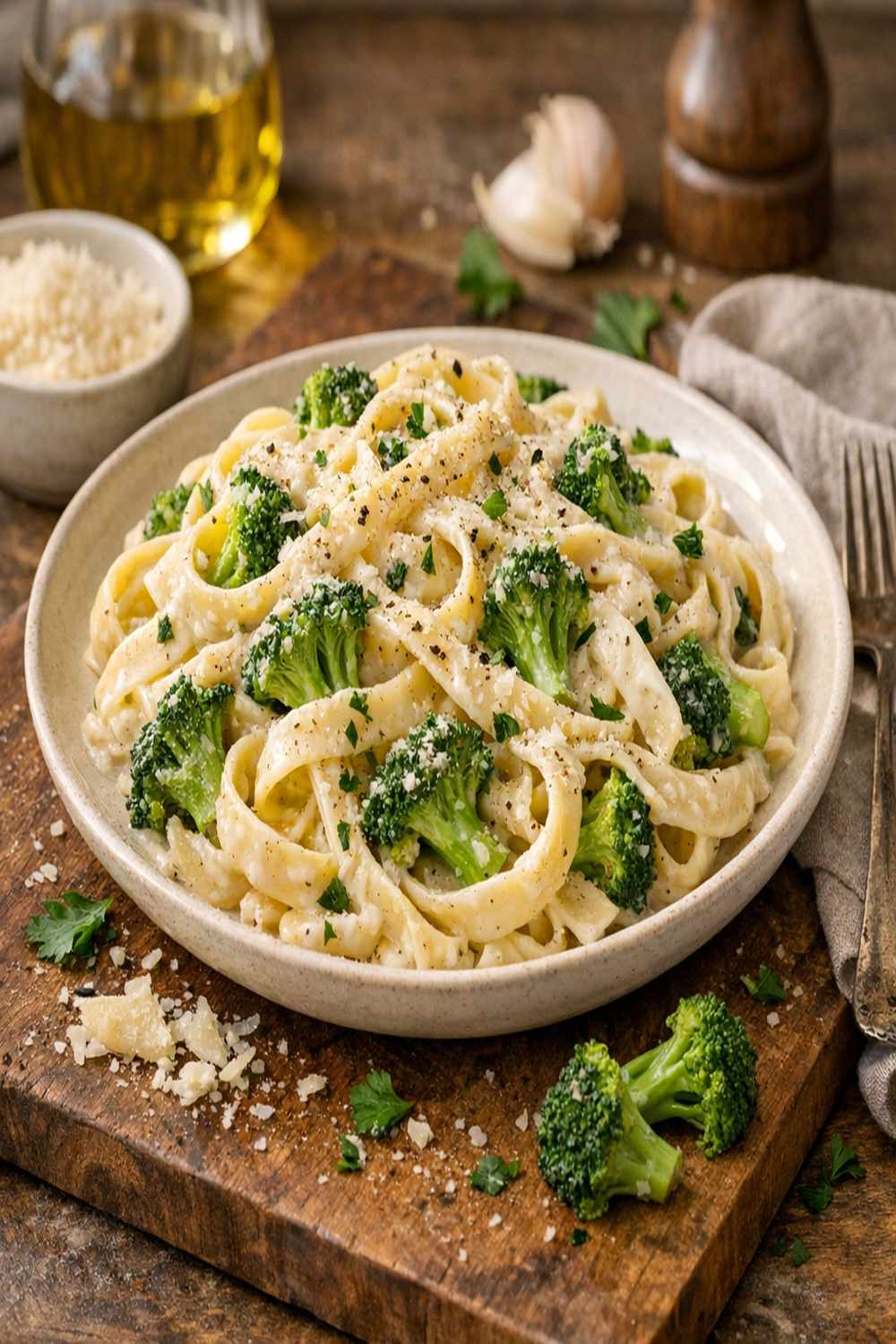
Broccoli alfredo is a modern twist on the classic Italian fettuccine alfredo, which originated in Rome in the early 1900s. The traditional version features just pasta, butter, cream, and parmesan cheese—pure simplicity. What makes this version special is the addition of bright green broccoli and tender chicken, transforming it into a complete, protein-rich meal without losing any of that luxurious creaminess.
The beauty of this dish lies in its versatility and affordability. While restaurant versions can cost $15-25 per serving, homemade versions typically run $2-3 per person when you use budget-friendly ingredient swaps. The key is understanding that expensive doesn’t equal better—proper technique and quality basic ingredients create magic.
Why You’ll Love This Broccoli Alfredo Recipe
- Ready in 30 minutes – This is a true weeknight dinner, not a weekend project. You’ll have hot plates on the table faster than most delivery arrives.
- Costs just $2-3 per serving – Using pantry basics and smart swaps means feeding a family of four for under $12 total, with leftovers built in.
- Complete protein and vegetables in one bowl – As a registered dietitian, I appreciate how this hits nutrition targets: lean chicken provides 25+ grams of protein per serving, while broccoli delivers fiber, vitamin C, and calcium alongside the pasta.
- Naturally kid-friendly – The creamy sauce coats everything beautifully, and even broccoli skeptics tend to enjoy it when it’s bathed in cheese sauce. My nieces always ask for seconds.
- Freezer-friendly for meal prep – Make double batches and freeze portions for nights when you truly have no energy to cook.
The Ingredients
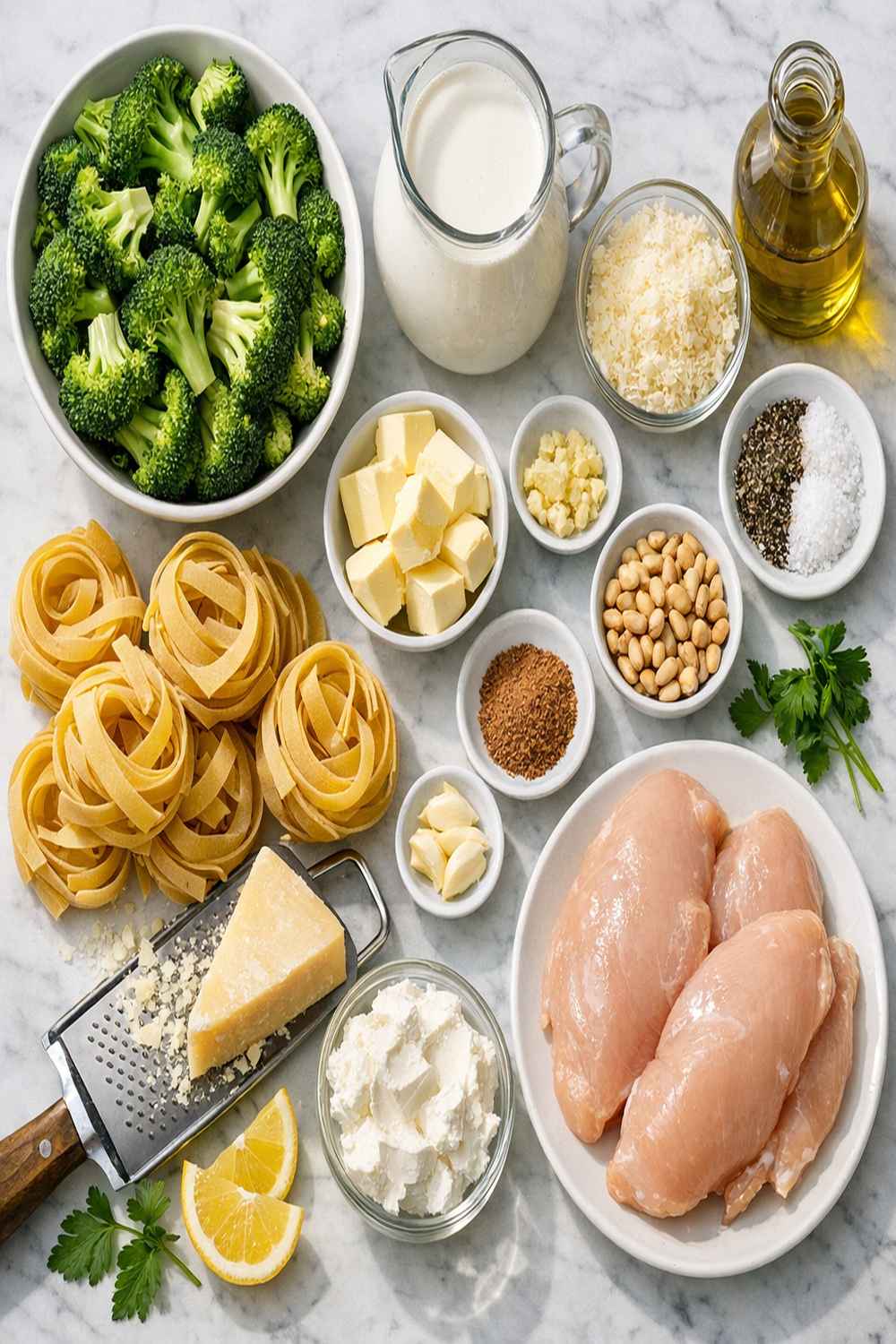
I’ve grouped these ingredients to make shopping easier, and I’m including my best budget-stretching swaps below each category. You’ll notice I’ve simplified the original ingredients list to focus on what actually makes a difference in the final dish.
For the Pasta and Protein
- ½ teaspoon sea salt (for seasoning the cooking water and finished dish)
- ¼ teaspoon black pepper (freshly ground tastes noticeably better)
- 1 pound fettuccine pasta (or any long pasta you have on hand—penne and rigatoni work beautifully)
- 1.5 pounds boneless, skinless chicken breasts (cut into 1-inch cubes for even cooking)
For the Vegetables
- 2 large heads fresh broccoli (chopped into bite-sized florets, about 4 cups total)
- 3 cloves fresh garlic (finely minced, or use 1 tablespoon jarred minced garlic in a pinch)
For the Alfredo Sauce
- 1 cup grated parmesan cheese (freshly grated from a wedge is ideal, but pre-shredded works—just avoid the green shaker cans with cellulose)
- ¼ cup reserved pasta water (the starch helps the sauce cling to noodles)
- 2 tablespoons olive oil (divided for cooking vegetables and chicken separately)
- 4 tablespoons unsalted butter (real butter creates the best emulsion—margarine won’t work here)
- 2 cups heavy cream (or use 1 cup heavy cream + 1 cup whole milk to cut costs while maintaining richness)
How to Make Broccoli Alfredo Recipe?
I’m walking you through this step-by-step with the same detail I’d use if we were cooking together in my kitchen. Pay attention to the small moments—the sizzle of vegetables, the color of the chicken, the gentle bubble of the cream sauce—these sensory cues tell you when something is done.
Step 1: Bring Water to a Boil and Begin Vegetables
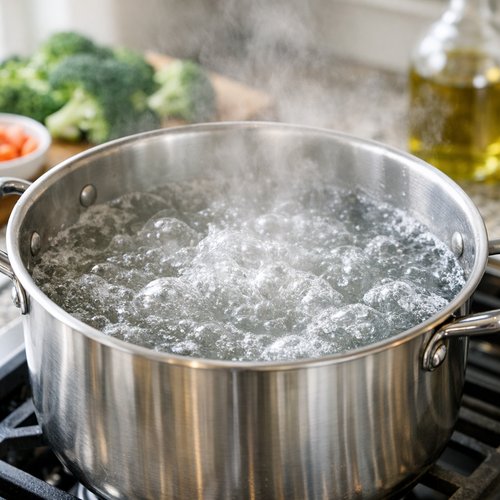
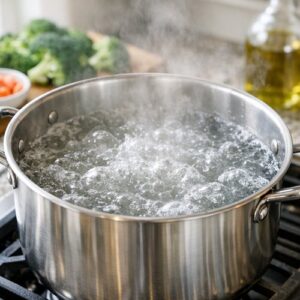
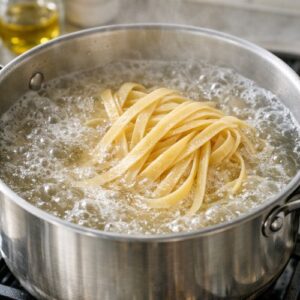
Fill a large pot about three-quarters full with water and set it over high heat. You want this to come to a rolling, vigorous boil—this takes about 8-10 minutes. While you’re waiting, don’t just stand there. Use this time to chop your broccoli florets into consistent bite-sized pieces (about 1.5 inches each) and mince your garlic.
Once the water reaches a full boil, add about 1.5 teaspoons of salt. The water should taste like the sea—this is your only chance to season the pasta itself.
Step 2: Cook the Broccoli Until Bright and Tender-Crisp
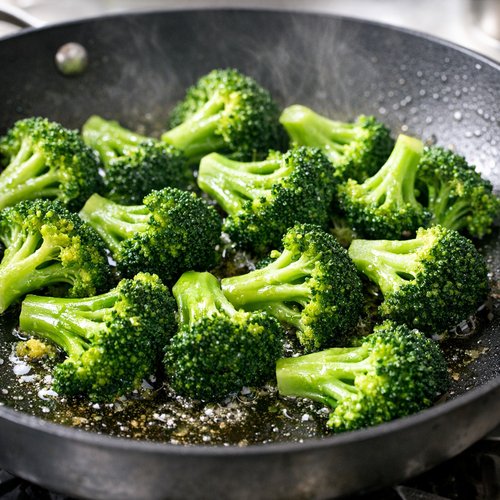
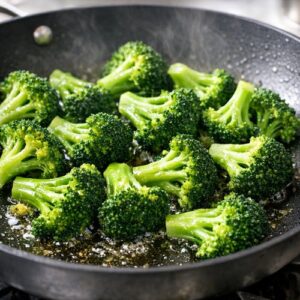
While the pasta water heats, place a large skillet over medium-high heat and add 1 tablespoon of olive oil. Once the oil shimmers (this takes about 60 seconds), add your chopped broccoli and season lightly with salt and pepper. Don’t move it around constantly—let it sit for 2-3 minutes so the bottom edges caramelize slightly. This develops deeper flavor.
After about 4 minutes, when the broccoli has turned a vibrant bright green and the bottom pieces show golden-brown edges, add ¼ cup water to the skillet. This steam-finishes the broccoli. Continue cooking uncovered for another 2-3 minutes until the water has mostly evaporated and the broccoli is crisp-tender—you want it to still have a slight bite, not mushy.
Transfer the cooked broccoli to a medium bowl and set it aside. You’ll use this same skillet for the chicken next, so don’t wash it. All those brown broccoli bits will flavor everything coming next.
Step 3: Cook the Fettuccine Pasta
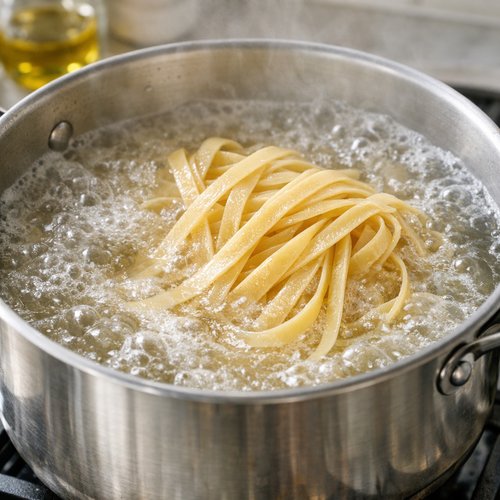
By now your pot of salted water should be at a full rolling boil. Add the fettuccine and cook according to the package directions—usually 8-10 minutes for standard pasta. Stir it once after about 2 minutes to prevent sticking, then let it cook undisturbed.
When the pasta is just barely al dente (still with a slight firmness when you bite it), reserve 1 cup of the starchy cooking water before draining. This water is liquid gold for adjusting sauce consistency later.
Step 4: Cook the Chicken Until Golden and Cooked Through
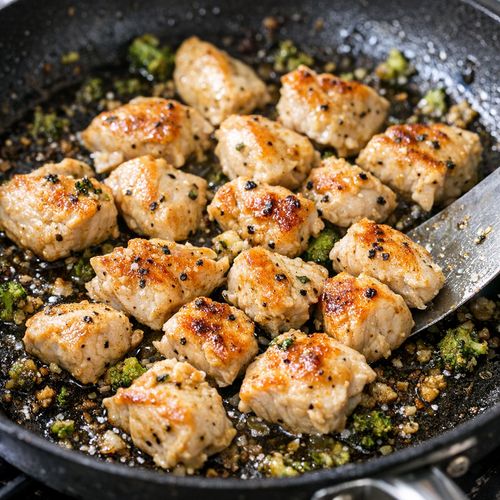
Return the skillet (still holding all those broccoli bits) to medium-high heat and add the remaining tablespoon of olive oil. Once the oil is hot enough that it shimmers, add your cubed chicken in a single, even layer. This is important: don’t stir immediately. Let the chicken sit untouched for 3-4 minutes so the bottom side gets golden and develops flavor.
Season with a pinch of salt and pepper. Now start turning the pieces—I use tongs rather than a spatula so I don’t break up the pieces. Continue cooking for another 3-4 minutes, turning occasionally, until the chicken is golden brown on all sides and cooked completely through (no pink in the center). Total cooking time is about 7 minutes.
Transfer the cooked chicken to the bowl with your broccoli. Again, don’t wash the skillet. You’re building flavor with every step.
Step 5: Make the Creamy Alfredo Sauce
This is where the magic happens, and where many home cooks run into trouble. Keep the heat at medium (not high, not low—medium is your friend here). Add the 4 tablespoons of butter to the skillet and let it melt completely, about 1 minute. You’ll hear it sizzle gently.
Add your minced garlic and cook for exactly 30 seconds, stirring constantly. You want just enough time for the garlic to become fragrant without turning brown or bitter. If it browns, your sauce will taste burnt, so don’t skip this attention to timing.
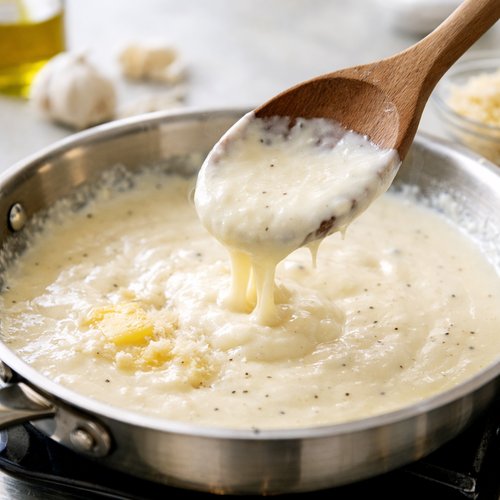
Pour in the heavy cream slowly while scraping the bottom of the skillet with a wooden spoon to release all those browned bits (this is called deglazing, and it adds incredible depth). Let the cream warm through for about 1 minute—it should look steamy but not yet boiling.
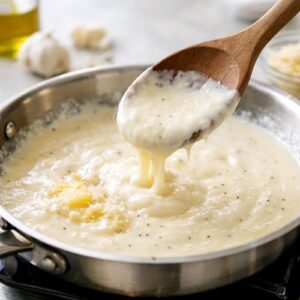
Now comes the crucial part: reduce the heat to low. Add your grated parmesan cheese in handfuls, stirring constantly after each addition. The constant stirring prevents the cheese from clumping. The sauce should look smooth and silky, just beginning to bubble gently at the edges after all the cheese is incorporated. This takes about 2 minutes total.
Step 6: Combine Everything and Adjust Consistency
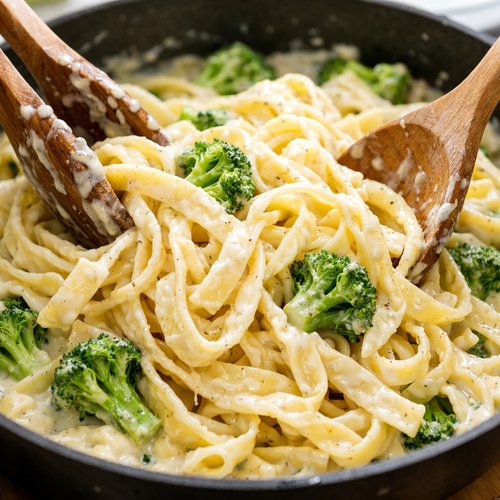
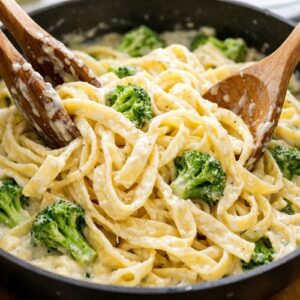
Add the drained fettuccine directly to the skillet with the sauce. Using tongs or two wooden spoons, toss the pasta gently but thoroughly so every noodle gets coated in that creamy sauce. This takes about 1-2 minutes of steady tossing.
Now add the cooked broccoli and chicken back in. Toss everything together until it’s evenly distributed. If the sauce looks too thick (it should be creamy but still flow slightly), add your reserved pasta water a few tablespoons at a time, tossing between additions, until you reach your desired consistency. Usually 2-3 tablespoons of pasta water is plenty.
Step 7: Serve Immediately While Hot
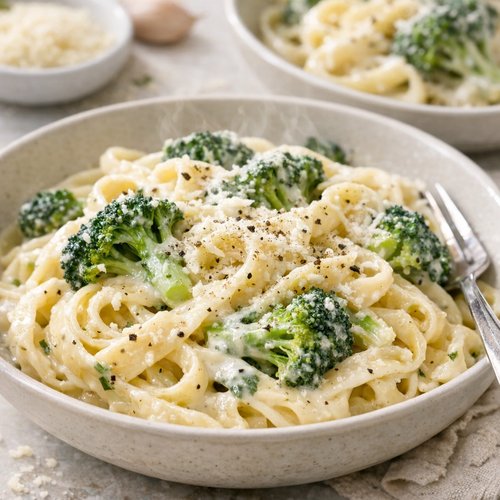
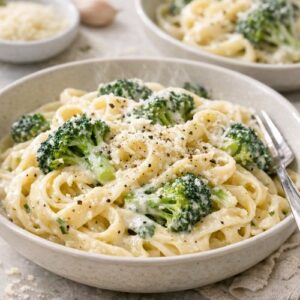
Divide the creamy broccoli alfredo among serving bowls or plates immediately. The dish is best eaten right away while everything is piping hot and the sauce is at its silkiest. Top each serving with a handful of freshly grated parmesan cheese and a crack of black pepper.
Expert’s Nutritional Tip
As a registered dietitian, I want to highlight something important about this dish: the combination of protein from chicken, starch from pasta, and vegetables from broccoli creates what we call a balanced plate in a single bowl. The protein keeps you satisfied longer, preventing the blood sugar spike you’d get from pasta alone. The broccoli adds fiber (about 3 grams per serving) and vitamin C, which helps your body absorb the iron in the chicken.
The parmesan cheese isn’t just about flavor—it provides calcium and additional protein. If you’re concerned about fat intake, the 1:1 swap of heavy cream with whole milk I mentioned in the ingredients reduces calories by about 50 per serving while maintaining creaminess. You won’t notice a difference in texture because the cheese and butter still provide richness.
Tips and Tricks
- Don’t skip deglazing the pan – Those brown bits stuck to the skillet are pure flavor. When you add cream and scrape with a wooden spoon, you’re dissolving those bits into the sauce. This is what makes homemade taste better than a cream-heavy version without proper technique.
- Keep your heat moderate throughout – High heat will break your sauce and make it look grainy or separated. Medium heat for cooking protein and veggies, low heat when the cream is involved. This is non-negotiable.
- Stir constantly when adding cheese – Parmesan can clump if it hits hot liquid all at once without stirring. By adding it in handfuls and stirring between each addition, you ensure a smooth emulsion.
- Taste and adjust seasoning at the very end – Don’t over-salt early on. Taste the finished dish and adjust salt and pepper after everything is combined, since the pasta water, broccoli, chicken, and cheese all contribute salt.
- Use fresh-grated parmesan when possible – The pre-shredded versions have anti-caking agents that can make your sauce slightly grainy. If you only have pre-shredded, it still works, but freshly grated from a block is noticeably silkier.
- Reserve pasta water before draining – I can’t emphasize this enough. That starchy water is what helps the sauce cling to every noodle and creates that restaurant-quality coating. Don’t skip this step.
Make-Ahead Guide and Meal Prep
This recipe is one of my go-to meal prep dishes because it freezes beautifully and reheats well. Here’s my professional approach:
Prep components the day before: Chop your broccoli and chicken, mince your garlic, and grate your cheese. Store everything in separate containers in the refrigerator. When it’s time to cook, you’re just executing steps—no mid-recipe prep work.
Double the batch for freezing: The recipe as written serves 4. When you’re cooking anyway, make 8 servings. Cool the finished dish completely (about 20 minutes), then portion into individual containers or a 9×13 baking dish. Freeze for up to 3 months. Thaw overnight in the refrigerator before reheating.
Reheating instructions: Place frozen or thawed portions in an oven-safe skillet over low heat, stirring occasionally and adding 1-2 tablespoons of milk or cream to restore creaminess. Heat for about 10 minutes until warmed through. Alternatively, microwave individual portions in 1-minute intervals, stirring between each, until hot.
Why it freezes well: The cream-based sauce protects the pasta and vegetables from drying out during freezing. Unlike oil-based sauces that can separate, cream-based sauces maintain their texture beautifully.
Common Mistakes to Avoid
- Cooking the sauce at too high temperature – This is the number-one cause of grainy, separated alfredo. The cream can break and look curdled. If you see this happening, remove from heat immediately and whisk in a tablespoon of cold cream or milk to cool it down, then return to low heat.
- Not cooking the broccoli with enough color development – Raw broccoli tastes harsh and bitter in this sauce. Those 4 minutes of sautéing at medium-high heat develop natural sweetness and soften the flavor. Don’t skip this step or cook it at low heat.
- Overcooking the pasta – The pasta continues cooking slightly when tossed with hot sauce, so cook it just to al dente, not soft. Mushy pasta in a creamy sauce is the textural kiss of death.
- Adding cheese too quickly or at too high a temperature – This causes clumping every single time. Low heat plus gradual additions equals smooth sauce.
Seasonal Variations
Spring version: Replace half the broccoli with fresh asparagus cut into 2-inch pieces. Add 2 tablespoons of fresh lemon juice to the sauce for brightness. A handful of fresh peas added at the end brings color and sweetness.
Summer version: Use fresh corn kernels (about ¾ cup) instead of half the broccoli. Fresh corn paired with cream and parmesan is phenomenal. Add fresh basil at the very end.
Fall version: Add roasted mushrooms (cremini or cremini/shiitake mix, about 1.5 cups) cooked until golden before adding to the final dish. Mushrooms add earthiness that pairs beautifully with cheese sauce.
Winter version: Stick with the original recipe using broccoli, but add ½ cup of sun-dried tomatoes (the kind packed in oil, drained and chopped) to the sauce. The tanginess cuts through the richness.
Can I Store Broccoli Alfredo Recipe?
Absolutely. Proper storage keeps this dish fresh and flavorful for multiple days.
Refrigerator storage: Place cooled leftovers in an airtight container and refrigerate for up to 3 days. The sauce will thicken as it cools due to the fat content—this is completely normal.
Freezer storage: As mentioned in the Make-Ahead Guide, frozen portions keep for up to 3 months when properly stored in airtight containers or wrapped in plastic wrap and foil.
Reheating in the refrigerator: Thaw overnight, then reheat gently over low heat with a splash of milk to restore sauce consistency, or reheat in the microwave in 1-minute intervals. The texture will be slightly different from fresh (not quite as silky), but it’s still delicious.
Do not reheat at high temperatures. This will cause the sauce to break. Gentle, low heat is essential.
Nutrition Information
Based on USDA nutrition database standards, one serving (approximately 2 cups) of this broccoli alfredo with chicken contains:
- Calories: 595
- Protein: 38 grams (excellent for satiety and muscle maintenance)
- Carbohydrates: 45 grams (from pasta)
- Fat: 28 grams (mostly from cream and butter, but includes heart-healthy olive oil)
- Fiber: 3 grams (from broccoli)
- Calcium: 420 mg (about 40% of daily recommended intake, from cheese and cream)
- Vitamin C: 85 mg (about 100% of daily recommended intake, from broccoli)
This meal meets the USDA MyPlate guidelines by including protein, vegetables, and grains in a single dish. The combination of high protein (38g) and fiber (3g) creates lasting satiety—most people feel full for 4+ hours after eating this.
What Can I Serve With Broccoli Alfredo Recipe?
While this dish is complete on its own, a few simple sides make it feel more restaurant-like. I keep my sides light and fresh to balance the richness of the cream sauce.
- Simple green salad with lemon vinaigrette – The acidity cuts through the creaminess beautifully. Toss fresh greens (spinach or arugula work best) with 2 tablespoons lemon juice, 1 tablespoon olive oil, and salt. The brightness is essential.
- Garlic bread or crusty bread – Use day-old bread, slice it lengthwise, brush with olive oil and minced garlic, then toast in a 400°F oven for 5 minutes. Perfect for soaking up extra sauce.
- Roasted vegetables – Try my roasted cauliflower tacos with chipotle romesco technique (without the taco shells) for a different vegetable side that won’t compete with the alfredo.
- Steamed green beans with garlic – A more delicate vegetable side that adds color without heaviness.
- Sparkling water with lemon or wine – Drink something light and crisp to cleanse your palate between bites of rich, creamy pasta.
Substitutes
- Heavy cream to whole milk ratio (50/50 or 60/40) – If you want to reduce fat and calories, replace half the heavy cream with whole milk. The sauce will be slightly less rich but still delicious. Never use skim milk—the lack of fat creates a thin, watery sauce.
- Chicken to shrimp or white fish – Cut cooking time in half since shrimp and white fish cook much faster than chicken. Pan-sear shrimp for 2-3 minutes total, white fish for 3-4 minutes. The sauce and pasta remain exactly the same.
- Broccoli to other vegetables – Asparagus, green beans, spinach, mushrooms, zucchini, or bell peppers all work beautifully. Adjust cooking times based on how long each vegetable needs to soften.
- Fettuccine to other pasta shapes – Penne, rigatoni, shells, or even spaghetti work fine. Avoid tiny pasta shapes like orzo—they get lost in the sauce.
- Parmesan to pecorino Romano – Pecorino is sharper and slightly saltier, so use about ¾ cup instead of 1 cup. It creates a more peppery sauce.
- Butter to olive oil – You can replace the butter with 4 tablespoons of olive oil for a dairy-free version. The sauce won’t be quite as silky, but it still tastes very good. Make sure the olive oil is mild-flavored, not extra virgin, which can taste bitter.
- Real parmesan to nutritional yeast (for vegan version) – Use ¾ cup nutritional yeast in place of parmesan. You’ll lose some of the traditional flavor, but it creates a surprisingly creamy, cheesy-tasting sauce with no dairy.

Broccoli Alfredo Recipe
Ingredients
Method
- Fill a large pot about three-quarters full with water and set it over high heat. You want this to come to a rolling, vigorous boil—this takes about 8-10 minutes. While you're waiting, don't just stand there. Use this time to chop your broccoli florets into consistent bite-sized pieces (about 1.5 inches each) and mince your garlic. Once the water reaches a full boil, add about 1.5 teaspoons of salt. The water should taste like the sea—this is your only chance to season the pasta itself.
- While the pasta water heats, place a large skillet over medium-high heat and add 1 tablespoon of olive oil. Once the oil shimmers (this takes about 60 seconds), add your chopped broccoli and season lightly with salt and pepper. Don't move it around constantly—let it sit for 2-3 minutes so the bottom edges caramelize slightly. This develops deeper flavor. After about 4 minutes, when the broccoli has turned a vibrant bright green and the bottom pieces show golden-brown edges, add ¼ cup water to the skillet. This steam-finishes the broccoli. Continue cooking uncovered for another 2-3 minutes until the water has mostly evaporated and the broccoli is crisp-tender—you want it to still have a slight bite, not mushy. Transfer the cooked broccoli to a medium bowl and set it aside. You'll use this same skillet for the chicken next, so don't wash it. All those brown broccoli bits will flavor everything coming next.
- By now your pot of salted water should be at a full rolling boil. Add the fettuccine and cook according to the package directions—usually 8-10 minutes for standard pasta. Stir it once after about 2 minutes to prevent sticking, then let it cook undisturbed. When the pasta is just barely al dente (still with a slight firmness when you bite it), reserve 1 cup of the starchy cooking water before draining. This water is liquid gold for adjusting sauce consistency later.
- Return the skillet (still holding all those broccoli bits) to medium-high heat and add the remaining tablespoon of olive oil. Once the oil is hot enough that it shimmers, add your cubed chicken in a single, even layer. This is important: don't stir immediately. Let the chicken sit untouched for 3-4 minutes so the bottom side gets golden and develops flavor. Season with a pinch of salt and pepper. Now start turning the pieces—I use tongs rather than a spatula so I don't break up the pieces. Continue cooking for another 3-4 minutes, turning occasionally, until the chicken is golden brown on all sides and cooked completely through (no pink in the center). Total cooking time is about 7 minutes. Transfer the cooked chicken to the bowl with your broccoli. Again, don't wash the skillet. You're building flavor with every step.

- This is where the magic happens, and where many home cooks run into trouble. Keep the heat at medium (not high, not low—medium is your friend here). Add the 4 tablespoons of butter to the skillet and let it melt completely, about 1 minute. You'll hear it sizzle gently. Add your minced garlic and cook for exactly 30 seconds, stirring constantly. You want just enough time for the garlic to become fragrant without turning brown or bitter. If it browns, your sauce will taste burnt, so don't skip this attention to timing. Pour in the heavy cream slowly while scraping the bottom of the skillet with a wooden spoon to release all those browned bits (this is called deglazing, and it adds incredible depth). Let the cream warm through for about 1 minute—it should look steamy but not yet boiling. Now comes the crucial part: reduce the heat to low. Add your grated parmesan cheese in handfuls, stirring constantly after each addition. The constant stirring prevents the cheese from clumping. The sauce should look smooth and silky, just beginning to bubble gently at the edges after all the cheese is incorporated. This takes about 2 minutes total.
- Add the drained fettuccine directly to the skillet with the sauce. Using tongs or two wooden spoons, toss the pasta gently but thoroughly so every noodle gets coated in that creamy sauce. This takes about 1-2 minutes of steady tossing. Now add the cooked broccoli and chicken back in. Toss everything together until it's evenly distributed. If the sauce looks too thick (it should be creamy but still flow slightly), add your reserved pasta water a few tablespoons at a time, tossing between additions, until you reach your desired consistency. Usually 2-3 tablespoons of pasta water is plenty.
- Divide the creamy broccoli alfredo among serving bowls or plates immediately. The dish is best eaten right away while everything is piping hot and the sauce is at its silkiest. Top each serving with a handful of freshly grated parmesan cheese and a crack of black pepper.
Notes
FAQs
Can I make this recipe without heavy cream?
Yes, with some adjustments. Replace the heavy cream with a combination of whole milk and a cornstarch slurry (1 tablespoon cornstarch mixed with 2 tablespoons cold water). When the milk is steaming, whisk in the cornstarch mixture slowly while stirring constantly. This creates thickness without heavy cream. You lose some of the traditional richness, but it’s still very good and significantly cheaper. Another option is using evaporated milk (the canned kind), which has a naturally creamy texture closer to heavy cream than regular milk.
Why is my sauce grainy or broken?
This happens when the cheese is added too quickly or the heat is too high. If you see graininess, immediately remove the pan from heat and whisk in 1-2 tablespoons of cold heavy cream or milk. This cools the mixture slightly and often brings it back together. Return to low heat and stir constantly. Next time, remember: low heat, gradual cheese additions, constant stirring. This is non-negotiable for success.
Can I use pre-cooked rotisserie chicken to save time?
Absolutely—this is one of my favorite shortcuts. Shred or cube about 2 cups of rotisserie chicken meat and add it directly after making the sauce, at the end of cooking. This saves you 10 minutes of active cooking time. The flavor is slightly different (rotisserie has its own seasoning), but many people prefer it. Look for rotisserie chicken on sale and stock up for meal prep.
What if I don’t have fresh garlic?
Jarred minced garlic works fine in a pinch—use 1 tablespoon as a substitute for 3 cloves. Garlic powder (1 teaspoon) is your backup if neither fresh nor jarred is available, though the flavor will be slightly more muted. Avoid garlic salt, which adds extra sodium you don’t need.
Can I make this in advance and reheat it for dinner?
Yes, this reheats beautifully when you follow proper technique. Make it completely, cool it to room temperature, then store in the refrigerator for up to 3 days or freezer for up to 3 months. When reheating, do it slowly over low heat, stirring occasionally and adding 1-2 tablespoons of milk or cream to restore silkiness. Microwave reheating works too—heat in 1-minute intervals, stirring between each, to prevent hot spots. The texture when reheated is slightly less silky than fresh but still genuinely delicious.
More Recipes You’ll Love
- Baked Creamy Chicken Recipe – Another elegant weeknight dinner using similar cream sauce technique, perfect when you want something faster than stovetop cooking.
- Simple Delicious Coconut Curry – If you loved the creamy sauce concept but want to explore different flavors, this curry shows how pantry basics create restaurant-quality depth.
- Roasted Cauliflower Tacos with Chipotle Romesco – A completely different application of vegetable-forward cooking that’s just as satisfying and budget-conscious.
- Bacon Quiche Recipe Crustless – Another cream-based dish that proves eggs and dairy don’t have to be expensive to taste special.
Making this broccoli alfredo from scratch has genuinely changed how I approach dinner. What used to feel like a luxury—something you waited for delivery day to enjoy—is now something I can pull together on a Tuesday night with ingredients I always have on hand. The technique is the real star here, not expensive specialty items. Once you understand how to make a proper alfredo sauce, you unlock a whole world of creamy pastas and dishes that feel restaurant-quality but cost a fraction of takeout.
I’d love to know how this turns out for you. Don’t forget to mention @affordablefoodideas if you try this recipe! Tag me in your photos or share your own ingredient swaps in the comments. This community grows stronger when we share what works in our own kitchens, and I read every single comment.
Thank you for being part of this journey toward meals that nourish both your body and your budget.