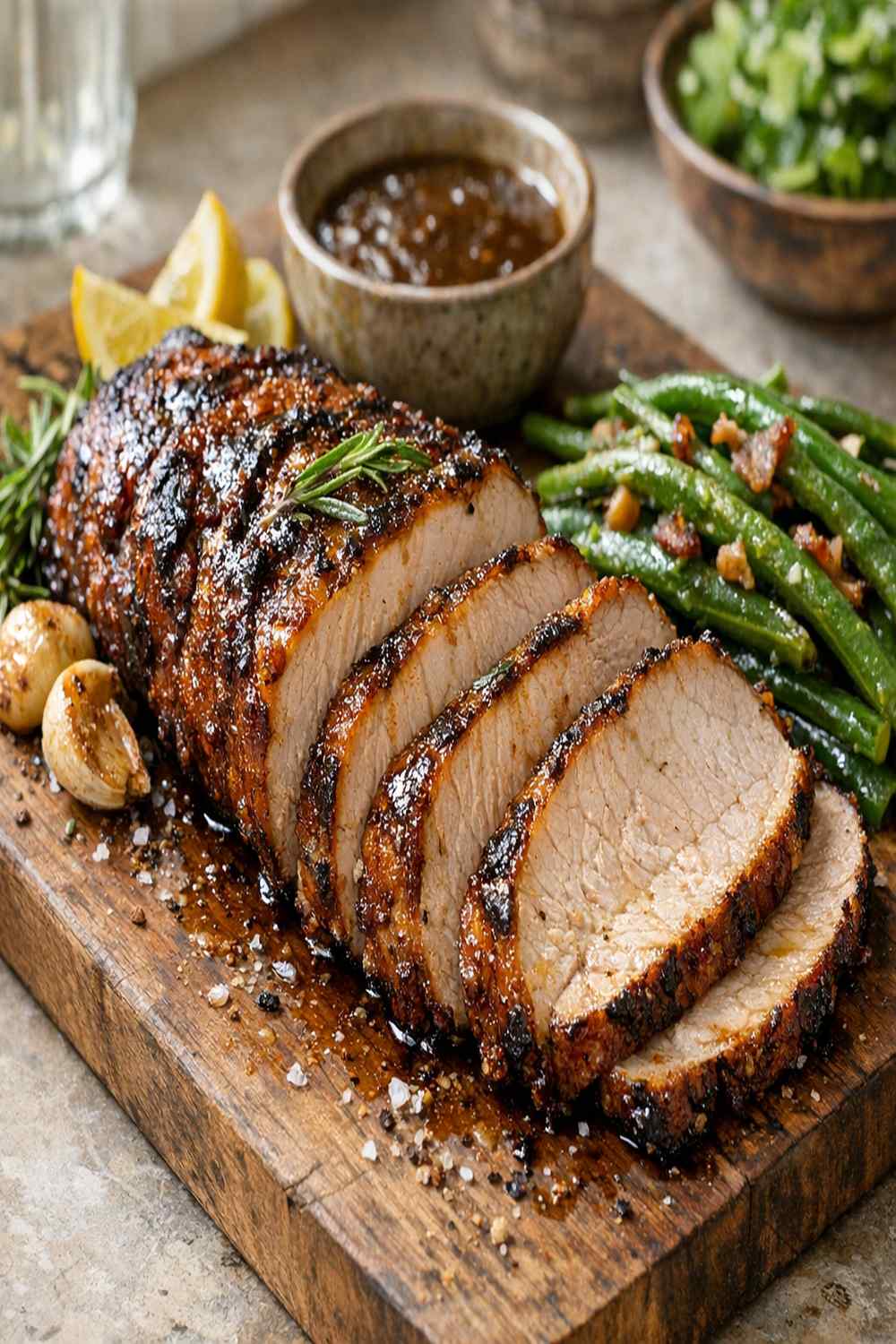

Ingredients
Method
Step 1: Prepare Your Pork and Vegetables
- Start by removing your pork loin from the refrigerator 30 minutes before cooking. This is critical—cold meat won't brown evenly because the surface moisture prevents the Maillard reaction from occurring properly. While it reaches room temperature, peel and cut your carrots into thick 3-inch pieces, slice your sweet potatoes lengthwise into ½-inch planks, and cut your apples into thick slices. Pat the pork completely dry with paper towels—any surface moisture will create steam instead of browning.
Step 2: Season and Sear the Pork
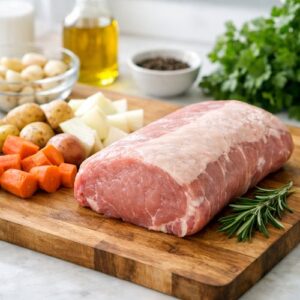
- Combine your salt, black pepper, and Italian seasoning in a small bowl, then rub this mixture evenly across all surfaces of the pork loin. Heat your olive oil in a large oven-safe skillet over medium-high heat until it shimmers (about 2-3 minutes). Place the pork in the pan and sear for 3 minutes per side, until you achieve a deep golden-brown crust. This browning creates hundreds of new flavor compounds through the Maillard reaction and seals in moisture.
Step 3: Build Your Vegetable Foundation
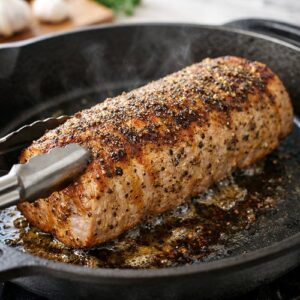
- Remove the pork from the skillet and arrange your sweet potato slices, carrot pieces, and apple slices around the perimeter of the pan in a single layer. The pork will sit on top of this vegetable bed, which serves two purposes: it elevates the meat so hot air circulates underneath, and it catches the rendered pork fat and glaze to develop deep caramelization. Don't overcrowd the pan—you want vegetables touching the pan bottom, not stacked on top of each other.
Step 4: Create and Apply the Glaze
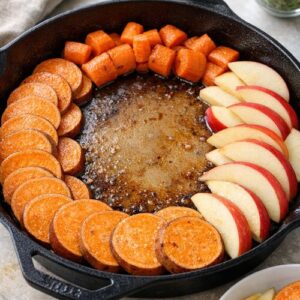
- In a small bowl, whisk together your 3 tablespoons of Dijon mustard with 1/3 cup brown sugar until you achieve a paste consistency. Use a pastry brush or the back of a spoon to coat the top and sides of the pork with this mixture. Reserve the remaining ½ cup of brown sugar for the second glaze application—this layering technique ensures deep caramelization without burning.
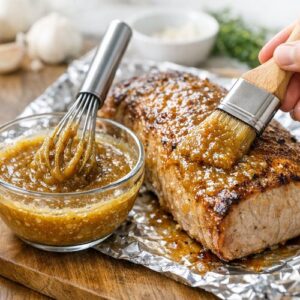
Step 5: Initial Roast
- Place your skillet in a preheated 375°F oven and roast for 25 minutes. At this point, the glaze will begin setting and the vegetables will start softening. The pork's internal temperature should read approximately 145°F when checked with an instant-read thermometer inserted into the thickest part.
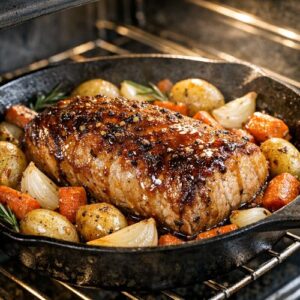
Step 6: Apply Final Glaze and Complete Roasting
- Remove the skillet from the oven and sprinkle the remaining ½ cup of brown sugar evenly over the pork loin. Return to the oven for an additional 12-15 minutes until the pork reaches 150°F internally (slightly higher than the USDA minimum of 145°F for better texture). The second glaze layer will caramelize into a mahogany-colored crust.
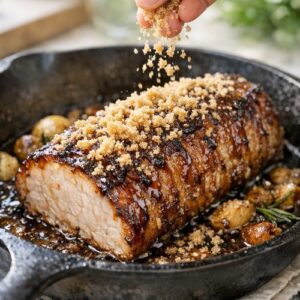
Step 7: Rest and Finish
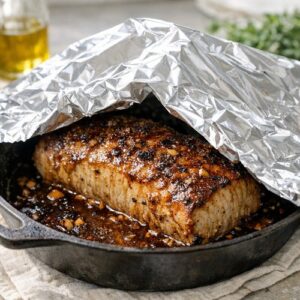
- Remove the skillet from the oven and tent loosely with aluminum foil. Let the pork rest for 10 minutes—this allows carryover cooking to bring the internal temperature to a perfect 160°F while the muscle fibers relax and reabsorb their released moisture. You'll notice the juices will redistribute throughout the meat rather than pouring out when you cut it. Garnish with fresh parsley and serve directly from the skillet.
Notes
- Use a meat thermometer without fail - This eliminates guesswork and prevents the dry, overcooked pork that gives lean cuts a bad reputation. The USDA's safe minimum internal temperature for pork is 145°F, but many professional chefs prefer 150-160°F for better texture and juiciness
- Let your pork come to room temperature - Cold meat cooks unevenly; the exterior overdoes before the interior reaches the proper temperature. This 30-minute window also allows the glaze to adhere better since room-temperature surfaces accept coatings more readily
- Don't skip the searing step - This high-heat browning creates the flavorful crust that protects moisture. Even if you're rushed, invest 6 minutes in this step; it transforms an ordinary roast into something restaurant-quality
- Arrange vegetables by cooking time - Sweet potatoes need the longest cooking; place them near the edges where heat is more moderate. Apples are quickest; place them closer to the center where they can roast without falling apart
- Save your pan drippings - Once you remove the pork and vegetables, deglaze the skillet with ½ cup of low-sodium broth, scraping up the browned bits. This creates a simple sauce richer in umami than anything you could buy bottled