This post contains affiliate links. As an Amazon Associate I earn from qualifying purchases.
I’ll never forget the first time my mom made pork loin for our family dinner back in Massachusetts. It was the late 1980s, and we were stretching every dollar, but she glazed that roast with something magical—brown sugar, mustard, and whatever spices we had on hand. The kitchen filled with this warm, caramelized aroma that made my siblings abandon their homework at the kitchen table. We weren’t eating fancy; we were eating intentionally. That same principle guides my work today as a registered dietitian, and this brown sugar pork loin recipe is my way of proving that affordable, nourishing meals don’t require a gourmet budget. Let me show you the food science that makes this dish work—and how to master it in your own kitchen while keeping costs manageable.
The Science Behind Brown Sugar Pork Loin Recipe
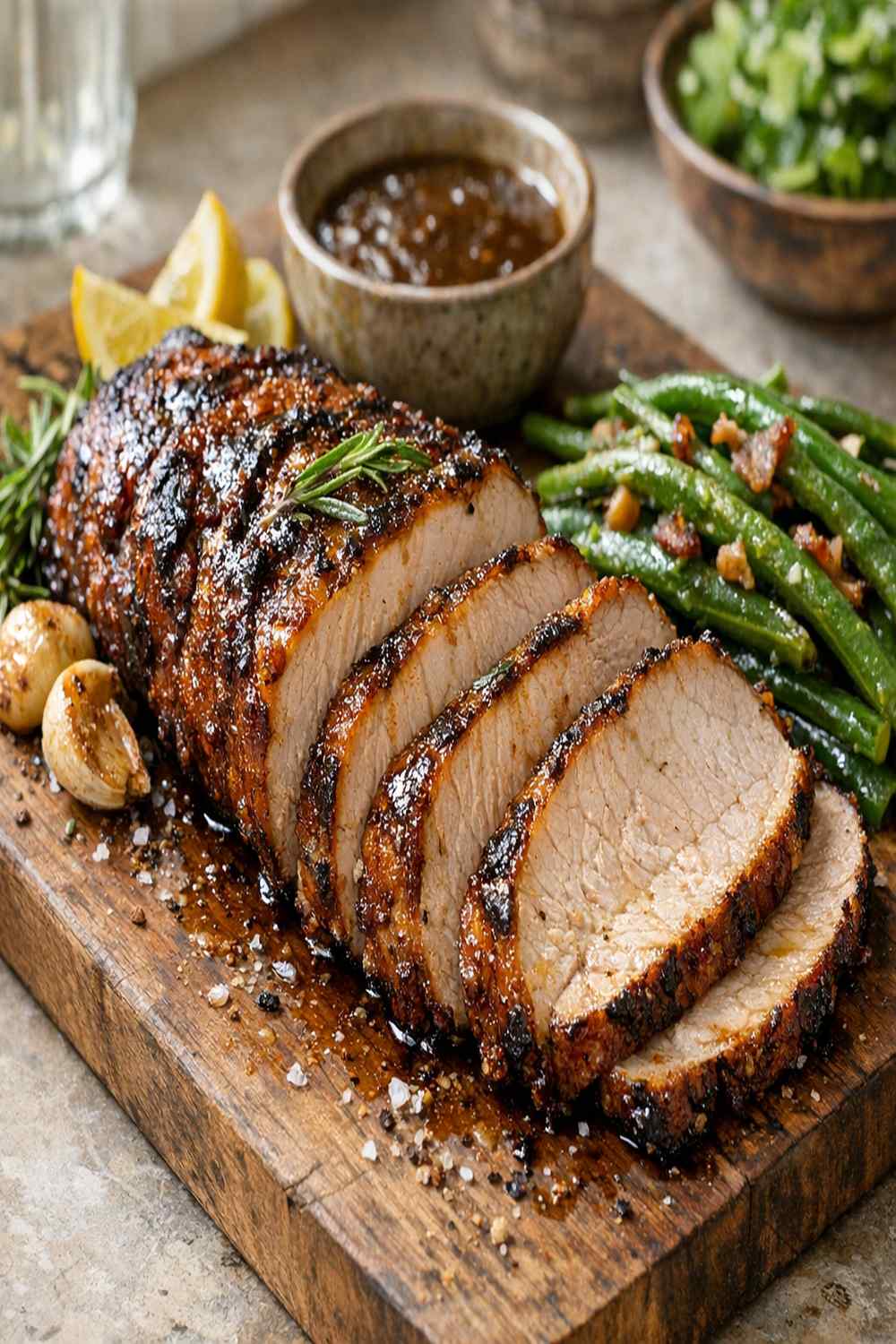
What makes this pork loin recipe so successful isn’t luck—it’s understanding the Maillard reaction, a complex chemical process where proteins and reducing sugars bond under heat to create new flavor compounds and that gorgeous mahogany crust. When you apply a brown sugar glaze to pork, you’re harnessing centuries of culinary wisdom backed by modern food science.
Pork loin is an interesting protein because it’s naturally lean, which means it can dry out if overcooked. The browning crust acts as a moisture barrier, sealing in the pork’s natural juices while the vegetables around it soften and concentrate their flavors. The mustard in the glaze also plays a crucial role—its acids help break down connective tissue while its emulsifiers keep the glaze clinging to the meat instead of sliding off.
From a nutritional standpoint, this one-pan approach means fewer dishes and better preservation of water-soluble vitamins in the roasting vegetables. You’ll capture nutrients in the pan drippings that you can use for gravy or sauces.
Why This Recipe Is Nutritionally Superior
When I developed this recipe for my nutrition practice, I focused on delivering maximum nutrient density per dollar spent. Pork loin is an exceptional protein choice—USDA data shows it contains all nine essential amino acids plus selenium, a mineral critical for thyroid function that many Americans underconsume. The roasted vegetables add fiber, phytonutrients, and complex carbohydrates that stabilize blood sugar throughout your afternoon.
- Lean Protein (26g per 3.5 oz serving) – Supports muscle maintenance and repair with minimal saturated fat compared to fattier cuts
- Selenium (35% DV per serving) – Acts as a cofactor for glutathione peroxidase, your body’s primary antioxidant enzyme system
- Vitamin A from Sweet Potatoes (400% DV) – Essential for vision, immune function, and skin integrity
- Dietary Fiber (4g from vegetables) – Promotes satiety and supports beneficial gut bacteria populations
- Vitamin C from Carrots (8mg) – Enhances non-heme iron absorption from the plant-based components of your meal
Ingredient Deep Dive
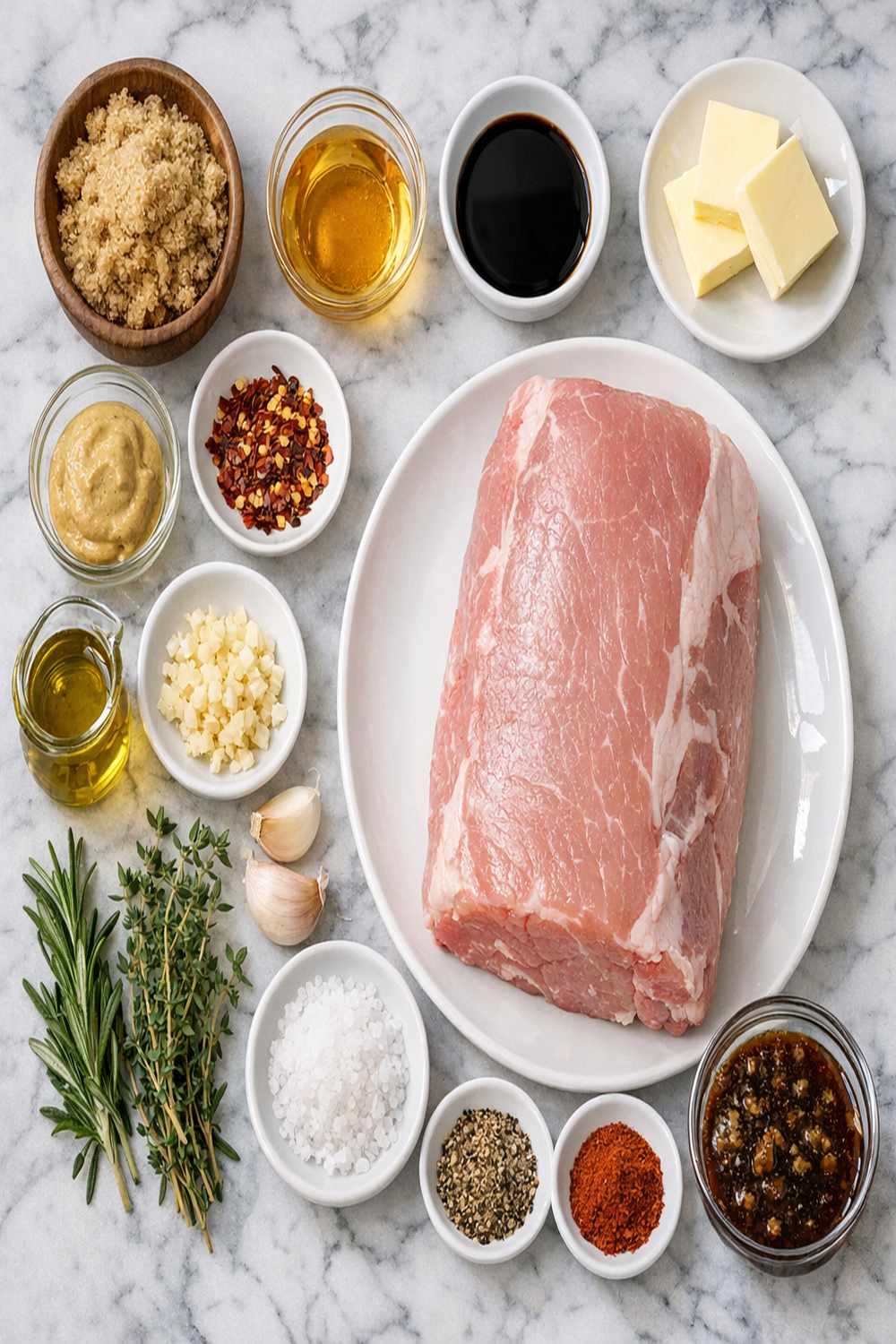
Each ingredient in this recipe serves a specific functional purpose beyond just flavor. Let me break down exactly what each component does—because understanding the “why” makes you a better cook and helps you understand when substitutions will work.
- 3 tablespoons Dijon mustard (its emulsifying properties keep the glaze adhered to the pork while its acidity tenderizes connective tissue)
- ½ teaspoon fresh-ground black pepper (contains piperine, which enhances nutrient absorption and adds pungent heat that balances sweetness)
- 1 pound carrots, cut into thick strips (provide beta-carotene and natural sweetness that complements the glaze without additional added sugar)
- 1 teaspoon sea salt (draws moisture to the surface for better browning while controlling sodium levels more precisely than table salt)
- 1 tablespoon fresh parsley, chopped (provides color, a fresh finish, and vitamin K for bone health)
- 2 medium sweet potatoes, peeled and sliced lengthwise (add starch for texture contrast and beta-carotene for additional nutritional density)
- 2 granny smith apples, peeled, cored and sliced thickly (their malic acid balances sweetness while tannins provide subtle astringency; optional but recommended for complexity)
- 2 tablespoons extra virgin olive oil (creates the initial browning crust and carries fat-soluble flavors from seasonings into the meat)
- 1 teaspoon dried Italian seasoning (oregano, basil, and marjoram provide antimicrobial compounds while adding herbal complexity without extra sodium)
- 3 pounds pork loin (boneless center-cut, your primary protein providing amino acids and B vitamins; choose USDA Select or Choice grade for tenderness without excess fat)
- 1/3 cup packed dark molasses-based brown sugar (provides moisture during cooking and creates caramelization through the Maillard reaction; darker varieties have deeper molasses flavor)
- ½ cup additional brown sugar for the glaze layer (creates the final glossy finish and develops caramelization during the second half of roasting)
The Technique: How to Make Brown Sugar Pork Loin Recipe Properly
This recipe succeeds because we’re using two distinct cooking phases: a high-temperature sear followed by moderate roasting. This two-stage approach ensures that the exterior develops flavor through browning while the interior stays moist. The vegetables roast in the drippings, absorbing the pork’s rendered fat and the glaze’s caramelized sugars.
Step 1: Prepare Your Pork and Vegetables
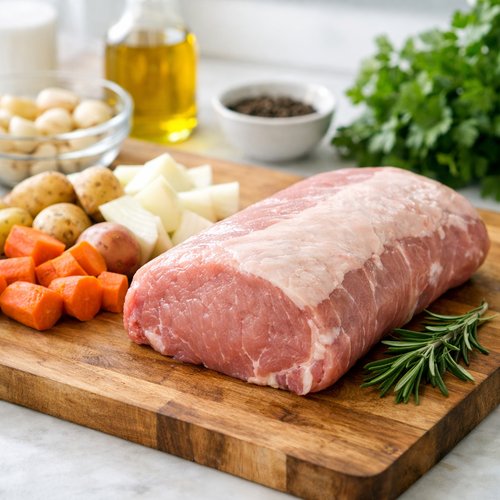
Start by removing your pork loin from the refrigerator 30 minutes before cooking. This is critical—cold meat won’t brown evenly because the surface moisture prevents the Maillard reaction from occurring properly. While it reaches room temperature, peel and cut your carrots into thick 3-inch pieces, slice your sweet potatoes lengthwise into ½-inch planks, and cut your apples into thick slices. Pat the pork completely dry with paper towels—any surface moisture will create steam instead of browning.
Step 2: Season and Sear the Pork
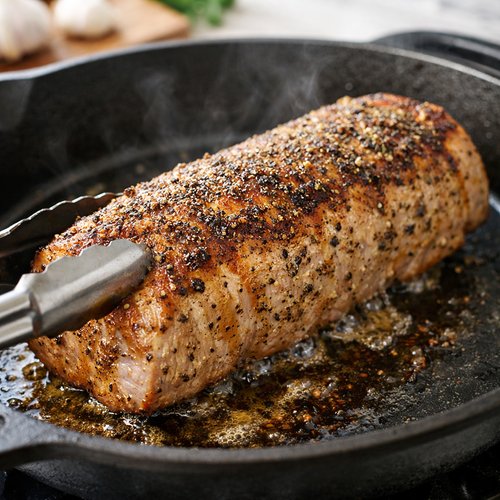
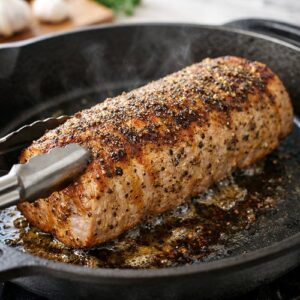
Combine your salt, black pepper, and Italian seasoning in a small bowl, then rub this mixture evenly across all surfaces of the pork loin. Heat your olive oil in a large oven-safe skillet over medium-high heat until it shimmers (about 2-3 minutes). Place the pork in the pan and sear for 3 minutes per side, until you achieve a deep golden-brown crust. This browning creates hundreds of new flavor compounds through the Maillard reaction and seals in moisture.
Step 3: Build Your Vegetable Foundation
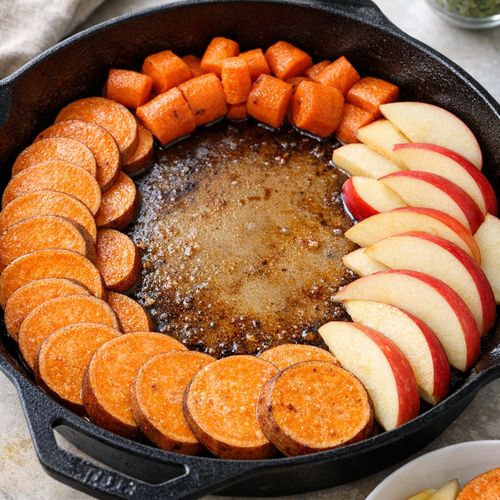
Remove the pork from the skillet and arrange your sweet potato slices, carrot pieces, and apple slices around the perimeter of the pan in a single layer. The pork will sit on top of this vegetable bed, which serves two purposes: it elevates the meat so hot air circulates underneath, and it catches the rendered pork fat and glaze to develop deep caramelization. Don’t overcrowd the pan—you want vegetables touching the pan bottom, not stacked on top of each other.
Step 4: Create and Apply the Glaze
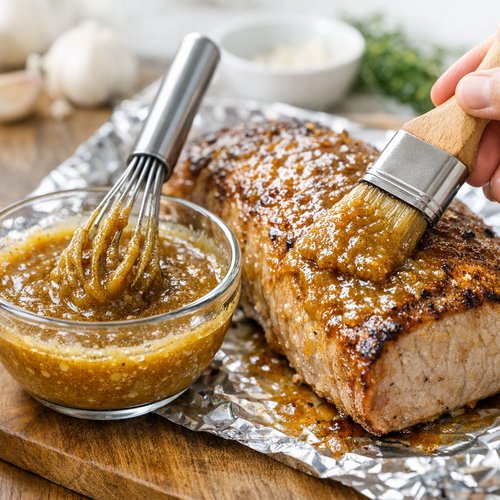
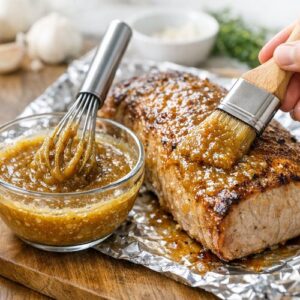
In a small bowl, whisk together your 3 tablespoons of Dijon mustard with 1/3 cup brown sugar until you achieve a paste consistency. Use a pastry brush or the back of a spoon to coat the top and sides of the pork with this mixture. Reserve the remaining ½ cup of brown sugar for the second glaze application—this layering technique ensures deep caramelization without burning.
Step 5: Initial Roast
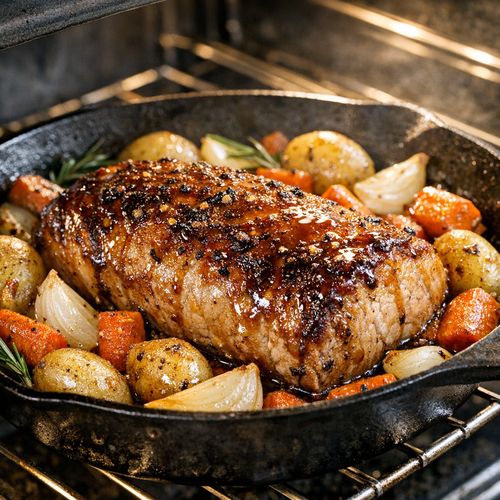
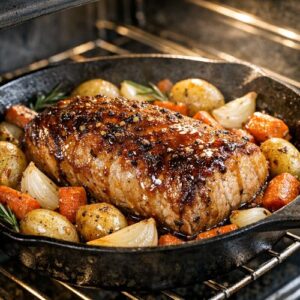
Place your skillet in a preheated 375°F oven and roast for 25 minutes. At this point, the glaze will begin setting and the vegetables will start softening. The pork’s internal temperature should read approximately 145°F when checked with an instant-read thermometer inserted into the thickest part.
Step 6: Apply Final Glaze and Complete Roasting
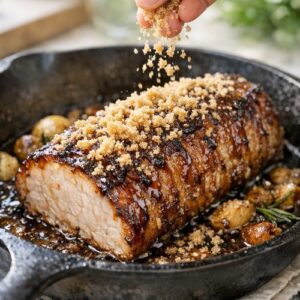
Remove the skillet from the oven and sprinkle the remaining ½ cup of brown sugar evenly over the pork loin. Return to the oven for an additional 12-15 minutes until the pork reaches 150°F internally (slightly higher than the USDA minimum of 145°F for better texture). The second glaze layer will caramelize into a mahogany-colored crust.
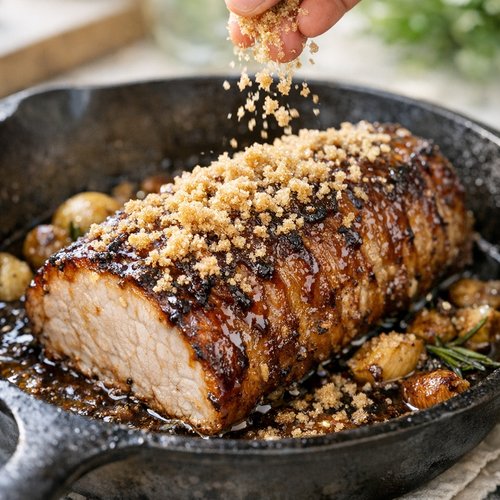
Step 7: Rest and Finish
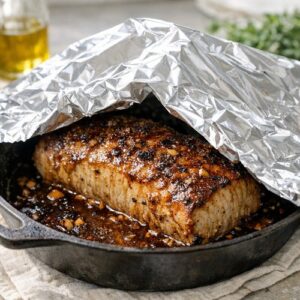
Remove the skillet from the oven and tent loosely with aluminum foil. Let the pork rest for 10 minutes—this allows carryover cooking to bring the internal temperature to a perfect 160°F while the muscle fibers relax and reabsorb their released moisture. You’ll notice the juices will redistribute throughout the meat rather than pouring out when you cut it. Garnish with fresh parsley and serve directly from the skillet.
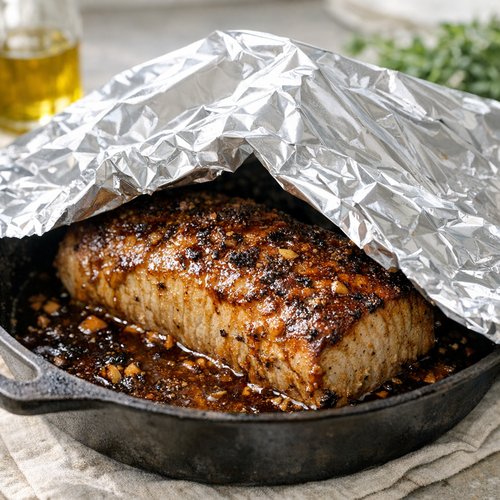
Professional Tips From the Kitchen
- Use a meat thermometer without fail – This eliminates guesswork and prevents the dry, overcooked pork that gives lean cuts a bad reputation. The USDA’s safe minimum internal temperature for pork is 145°F, but many professional chefs prefer 150-160°F for better texture and juiciness
- Let your pork come to room temperature – Cold meat cooks unevenly; the exterior overdoes before the interior reaches the proper temperature. This 30-minute window also allows the glaze to adhere better since room-temperature surfaces accept coatings more readily
- Don’t skip the searing step – This high-heat browning creates the flavorful crust that protects moisture. Even if you’re rushed, invest 6 minutes in this step; it transforms an ordinary roast into something restaurant-quality
- Arrange vegetables by cooking time – Sweet potatoes need the longest cooking; place them near the edges where heat is more moderate. Apples are quickest; place them closer to the center where they can roast without falling apart
- Save your pan drippings – Once you remove the pork and vegetables, deglaze the skillet with ½ cup of low-sodium broth, scraping up the browned bits. This creates a simple sauce richer in umami than anything you could buy bottled
Ingredient Substitutions and Their Impact
- White or yellow onions instead of apples -> Onions become sweeter during roasting (their starches convert to sugars), creating a milder sweetness that some families prefer. You’ll lose the apple’s malic acid brightness, so the dish becomes slightly heavier and more savory. Nutritionally, you lose about 3g of fiber per apple substituted
- Honey or maple syrup instead of brown sugar -> Liquid sweeteners caramelize at lower temperatures and may burn before your pork finishes cooking. Use sparingly (2-3 tablespoons maximum) and apply only in the final 5 minutes. Your glaze will be thinner and less visually appealing, but the flavor complexity increases. Cost-wise, honey and maple are typically 2-3x more expensive than brown sugar
- Yellow mustard instead of Dijon -> You’ll save money (yellow mustard costs 40-50% less), but you lose the subtle complexity and acidity. The glaze will be slightly thinner because yellow mustard contains less emulsifier. The result is still delicious—more nostalgic, less sophisticated
- Russet potatoes instead of sweet potatoes -> Russets cook at a similar rate and absorb flavors equally well. You’ll lose the nutritional advantage of sweet potatoes’ beta-carotene (about 400% DV per serving), but you’ll save 15-20% on ingredient costs. The starchy interior texture becomes more creamy than sweet potatoes’ firmer crumb
- Regular sugar instead of brown sugar -> This completely changes your glaze’s chemistry. Regular sugar crystallizes differently during caramelization, creating a grainier texture rather than the smooth, glossy finish brown sugar provides. Flavor becomes one-dimensional without molasses’ underlying umami depth. Not recommended unless you’re truly desperate
Dietary Adaptations
Gluten-Free: This recipe is naturally gluten-free as written. Dijon mustard typically contains no gluten, but always verify the label since some brands add thickeners. Your vegetables, pork, and seasonings contain no gluten. Serve with gluten-free grains if needed.
Low-Carb or Keto: The apples and brown sugar add approximately 25g carbohydrates per serving. To adapt: omit the apples entirely, reduce brown sugar to just 2 tablespoons for browning, and use monk fruit sweetener in a 1:1 ratio for the final glaze. Nutritionally, you’ll reduce the recipe to roughly 8g net carbs per serving while maintaining flavor through the mustard and rendered fat from the pork. The sweet potatoes contribute most carbs (24g per medium potato), so substitute with cauliflower steaks for a 6g carb alternative.
Dairy-Free: This recipe is naturally dairy-free. No modifications needed.
Paleo-Friendly: Eliminate the brown sugar entirely and create a glaze using 3 tablespoons maple syrup, 2 tablespoons Dijon mustard, and 1 teaspoon raw honey. The result is less sweet but maintains the tangy-savory profile. Use ghee instead of olive oil if you prefer. This adaptation increases the fat content from 8g to approximately 12g per serving, keeping you in ketosis if that’s your goal.
Can I Store Brown Sugar Pork Loin Recipe?
This recipe stores beautifully because the protein and vegetables are fully cooked and the glaze creates a protective layer. Refrigeration: Store in an airtight container for up to 4 days. The pork will remain moist because the gelatin from connective tissue reabsorbs during cooling, actually improving texture. Reheating to 165°F in a 350°F oven (covered with foil to prevent drying) takes about 12-15 minutes for a 2-pound portion.
Freezing: Wrap individual portions tightly in plastic wrap, then foil, and freeze for up to 3 months. The quality remains excellent because pork’s fat content insulates against freezer burn better than lean chicken. Thaw overnight in the refrigerator rather than at room temperature to minimize bacterial growth. Reheating frozen pork takes about 30 minutes in a 350°F oven.
Make-Ahead Guide: You can prepare this dish through Step 4 (glaze application) up to 8 hours ahead. Store the seasoned, seared pork on top of vegetables in an airtight container in the refrigerator. When ready to cook, remove from refrigeration 15 minutes before roasting (to account for the temperature loss) and increase initial roasting time by 5 minutes. This approach is perfect for busy weeknights—you’ve done the hardest work when your schedule is lighter.
Nutrition Information
Per serving (1/4 of recipe, approximately 8 oz pork plus 1 cup vegetables): Calories: 385 | Protein: 42g | Carbohydrates: 28g | Dietary Fiber: 4g | Total Fat: 12g | Saturated Fat: 3.5g | Sodium: 580mg. Based on USDA FoodData Central nutritional databases for pork loin, carrots, sweet potatoes, and apples.
This macronutrient profile makes the dish ideal for most dietary goals. The protein-to-carbohydrate ratio of roughly 3:2 supports stable blood sugar while keeping you satisfied for 4-5 hours. If you’re following a higher-fat diet, increase the olive oil to 3 tablespoons (adding 120 calories and 14g fat per serving). The fiber content from vegetables supports healthy cholesterol levels and digestive function—the 4g of fiber per serving represents about 16% of the daily adequate intake value that USDA nutrition guidelines recommend.
Expert’s Nutritional Tip: The Molasses Advantage
As a registered dietitian working with families trying to maximize nutrition on limited budgets, I want you to understand why dark brown sugar (not light brown sugar) matters here. During brown sugar production, molasses—the byproduct after sugar crystallization—gets mixed back into the crystals. Dark brown sugar contains more molasses, which provides trace minerals like potassium (64mg per tablespoon), calcium (42mg), and iron (0.9mg). These amounts seem small individually, but in a meal designed for affordability, every micronutrient counts. Light brown sugar provides roughly 30% less mineral content, so if budget allows, choose dark molasses-based brown sugar. Your body absorbs these minerals more readily because they’re bound to organic acids in the molasses itself.
Common Mistakes to Avoid
Mistake 1: Skipping the resting period – This is where home cooks lose juiciness. The pork reaches 150°F internally, then carryover cooking (heat continuing to diffuse inward) brings it to 160°F during the resting period. If you cut immediately, all those juices escape onto the cutting board instead of staying in the meat. Those 10 minutes are non-negotiable.
Mistake 2: Using cold pork from the refrigerator – Pork that goes straight from the fridge into the oven will cook unevenly. The exterior overdoes before the interior reaches 150°F, resulting in a dry, gray crust. That 30-minute room-temperature rest ensures even heat penetration and proper browning.
Mistake 3: Crowding vegetables in the pan – If vegetables are stacked or overlapping, the undersides steam rather than roast. They need direct contact with the hot pan bottom to develop caramelization and concentrate their natural sugars. Arrange them in a single layer with 1-2 inches of space between pieces.
Mistake 4: Not patting the pork dry – Surface moisture creates steam instead of browning. Even 30 seconds with paper towels makes a massive difference in crust development. This is why professional kitchens use paper towels obsessively—moisture is the enemy of browning.
What Can I Serve With Brown Sugar Pork Loin Recipe?
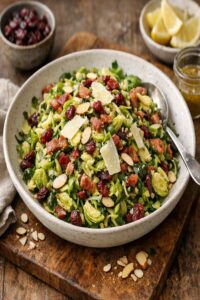
The beauty of this one-pan dish is that the vegetables roast alongside the pork, so you technically don’t need sides. However, I love pairing this meal with components that echo its flavor profile or provide textural contrast. The pork’s sweet-savory glaze pairs beautifully with bitter greens—the contrast engages multiple taste receptors and prevents flavor fatigue. Consider roasted Brussels sprouts with a balsamic finish, which adds umami depth that mirrors the pork’s richness.
A simple grain like quinoa or farro absorbs the pan drippings beautifully and adds protein and fiber. If you’re serving a crowd, brown rice (which costs 60% less than quinoa) works equally well—the slight earthiness balances the glaze’s sweetness. I’ve also had success with creamy cauliflower puree as a lower-carb alternative; its mild flavor gets out of the way while its starch content complements the pork’s lean protein.
For sauces, I often make a simple reduction by deglazing the pan with low-sodium broth and reducing it over medium heat for 3-4 minutes. This concentrates the pork drippings’ flavors and creates a sophisticated pan sauce you could never buy bottled. If you want something more adventurous, try creating a barbecue sauce without ketchup using the pan drippings as your base—the natural pork fat creates incredible mouthfeel.
- Roasted Brussels sprouts with balsamic glaze – Their sulfurous compounds (from cruciferous vegetable chemistry) contrast the pork’s sweetness while balsamic provides acidity that cleanses your palate between bites
- Creamy mustard sauce – Whisk Dijon mustard with Greek yogurt (or mayo for non-dairy) to echo the pork’s existing mustard note while adding richness without additional cooking
- Simple green salad with lemon vinaigrette – Acid and bitterness provide textural and flavor contrast, while the greens’ natural iron complements the pork’s heme iron for better overall nutrient absorption
- Quinoa pilaf with roasted vegetables – Quinoa’s complete amino acid profile means you’ve created a protein-rich meal even without additional meat, making this perfect for stretching the pork loin across multiple meals
Seasonal Variations
Spring (March-May): Replace carrots with thin asparagus spears and use fresh green apples instead of Granny Smiths. Their sharper tartness signals the season’s brightness. Swap sweet potatoes for new potatoes (thinner slices since they’re smaller). Add fresh thyme to your seasoning blend instead of dried Italian herbs. The total cooking time decreases by 3-4 minutes since new potatoes are more tender than storage sweet potatoes.
Summer (June-August): Use zucchini slices instead of some vegetables for a lighter, fresher profile. Summer apples like Honeycrisp work beautifully. Reduce brown sugar slightly (use 1/4 cup plus 1/3 cup instead of 1/3 cup plus 1/2 cup) because summer produce is naturally sweeter. Add fresh basil to the parsley garnish for brightness. This version feels less heavy during warm weather.
Fall (September-November): This is peak season for this recipe—carrots and apples are at their cheapest and most flavorful. Add dried sage to your herb blend (1/2 teaspoon). Include butternut squash chunks alongside sweet potatoes. Increase brown sugar back to original amounts since fall apples are tarter. Add cinnamon (1/4 teaspoon) to the glaze mixture for subtle spice.
Winter (December-February): Root vegetables are your ally during winter when fresh produce prices peak. Substitute parsnips for half the carrots—their natural sweetness reduces your brown sugar needs by 2 tablespoons. Use storage apples like Fujis (they store well) or omit them entirely. Add dried rosemary and thyme to your seasonings. This version becomes more savory-focused, warming, and grounding.

Brown Sugar Pork Loin Recipe
Ingredients
Method
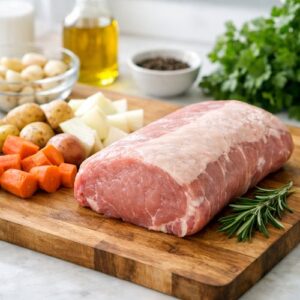
- Start by removing your pork loin from the refrigerator 30 minutes before cooking. This is critical—cold meat won't brown evenly because the surface moisture prevents the Maillard reaction from occurring properly. While it reaches room temperature, peel and cut your carrots into thick 3-inch pieces, slice your sweet potatoes lengthwise into ½-inch planks, and cut your apples into thick slices. Pat the pork completely dry with paper towels—any surface moisture will create steam instead of browning.
- Combine your salt, black pepper, and Italian seasoning in a small bowl, then rub this mixture evenly across all surfaces of the pork loin. Heat your olive oil in a large oven-safe skillet over medium-high heat until it shimmers (about 2-3 minutes). Place the pork in the pan and sear for 3 minutes per side, until you achieve a deep golden-brown crust. This browning creates hundreds of new flavor compounds through the Maillard reaction and seals in moisture.
- Remove the pork from the skillet and arrange your sweet potato slices, carrot pieces, and apple slices around the perimeter of the pan in a single layer. The pork will sit on top of this vegetable bed, which serves two purposes: it elevates the meat so hot air circulates underneath, and it catches the rendered pork fat and glaze to develop deep caramelization. Don't overcrowd the pan—you want vegetables touching the pan bottom, not stacked on top of each other.
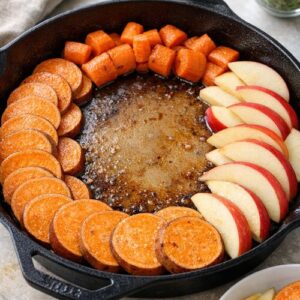
- In a small bowl, whisk together your 3 tablespoons of Dijon mustard with 1/3 cup brown sugar until you achieve a paste consistency. Use a pastry brush or the back of a spoon to coat the top and sides of the pork with this mixture. Reserve the remaining ½ cup of brown sugar for the second glaze application—this layering technique ensures deep caramelization without burning.
- Place your skillet in a preheated 375°F oven and roast for 25 minutes. At this point, the glaze will begin setting and the vegetables will start softening. The pork's internal temperature should read approximately 145°F when checked with an instant-read thermometer inserted into the thickest part.
- Remove the skillet from the oven and sprinkle the remaining ½ cup of brown sugar evenly over the pork loin. Return to the oven for an additional 12-15 minutes until the pork reaches 150°F internally (slightly higher than the USDA minimum of 145°F for better texture). The second glaze layer will caramelize into a mahogany-colored crust.
- Remove the skillet from the oven and tent loosely with aluminum foil. Let the pork rest for 10 minutes—this allows carryover cooking to bring the internal temperature to a perfect 160°F while the muscle fibers relax and reabsorb their released moisture. You'll notice the juices will redistribute throughout the meat rather than pouring out when you cut it. Garnish with fresh parsley and serve directly from the skillet.
Notes
FAQs
What’s the difference between pork loin and pork tenderloin, and which should I use?
Pork loin (sometimes called center-cut loin or pork loin roast) is the larger, less expensive cut I recommend for this recipe. It weighs 2-4 pounds and has a slightly higher fat content that keeps it moist during longer cooking. Pork tenderloin is a smaller, extremely lean cut (about 1 pound) from a different part of the animal. It cooks much faster (about 15-20 minutes total) and costs 2-3x more per pound. For this recipe’s 40-minute cooking time, pork loin’s greater size and higher fat content actually make it superior—tenderloin would overcook and become tough. If you only have tenderloin available, reduce cooking time by 15 minutes and check internal temperature frequently.
Can I make this recipe in a slow cooker or Instant Pot?
You can, but you’ll sacrifice the caramelized crust that creates most of this dish’s flavor. In a slow cooker on low for 6-8 hours, the pork becomes mushy and the glaze never caramelizes. If you must use a slow cooker, sear the pork first in a skillet (don’t skip this step!), then cook on low for 4 hours with the glaze and vegetables. For an Instant Pot, pressure cook on high for 20 minutes (in a 1:1 liquid-to-time ratio), then quick-release pressure and sear the pork under the broiler with the glaze. Neither method replicates the oven roasting results, but they’re acceptable weeknight shortcuts if time is critically limited.
How can I reduce the sodium content further?
The primary sodium sources are the salt (400mg per teaspoon) and Dijon mustard (typically 400-500mg per tablespoon). To reduce sodium by 50%, use half the salt (1/2 teaspoon) and switch to low-sodium Dijon mustard (check labels—some brands contain 200mg per tablespoon versus standard 400mg). The trade-off is that you lose some of the salty contrast that amplifies sweet flavors, so the glaze may taste overly sweet. Compensate by increasing black pepper and Italian herbs slightly. The final sodium content would drop from approximately 580mg per serving to roughly 290-320mg, well within DASH diet recommendations.
Why does my glaze burn on the edges while the center stays pale?
You’re likely roasting at too high a temperature. Ensure your oven temperature is actually 375°F by using an oven thermometer (many home ovens run 25-50°F hotter than their dial indicates). Additionally, your pork might be sitting too close to the heat source. If you’re using a lower oven rack, move to the center position. Finally, check that your skillet isn’t tilting—an uneven pan conducts heat differently across its surface. If the glaze still burns despite these adjustments, tent just the darkened areas loosely with foil after the first glaze application.
Can I cook the pork to a lower temperature for food safety?
Yes, but with understanding. The USDA’s safe minimum internal temperature for pork is 145°F, and that’s what I recommend for general cooking. However, research shows that trichinella (the parasite of concern) dies at 140°F when held for 3 minutes. If you’re using pork from a reliable source and want a slightly pinker interior for maximum juiciness, 150°F internal temperature (which requires only a few minutes carryover cooking) is safe. If you cook to below 145°F, you’re taking on food safety risk that I, as a dietitian, cannot recommend. Stick with 145°F minimum for safety, then rest 10 minutes to bring it to 155°F for optimal tenderness and food safety.
Make-Ahead Guide
Three Days Ahead: Shop for ingredients. Choose a pork loin that’s uniform in thickness (avoid pieces with a thin tapered end that will overcook). Pre-cut your vegetables and store in separate airtight containers with damp paper towels to maintain crispness. This step saves 20 minutes of prep on cooking day.
One Day Ahead: Mix your dry seasonings (salt, pepper, Italian seasoning) in a small container. Mix your first glaze (mustard plus 1/3 cup brown sugar) in a small jar. These components keep refrigerated for up to a week, reducing your cooking-day steps to just assembly and oven time.
Two Hours Before Cooking: Remove your pork from the refrigerator to reach room temperature. Set up your skillet on the counter to be ready. This eliminates the rushed feeling during cooking.
Meal Prep for the Week: This recipe makes great leftovers for lunch plates. Slice cooled pork into ½-inch thick slices and store with vegetables in divided containers. Pair with fresh greens and a simple vinaigrette for composed lunch bowls. Pork stays moist for up to 4 days and works cold or reheated to 165°F.
More Recipes You’ll Love
- Baked Creamy Chicken Recipe – Another one-pan protein dish with similar technique but milder, family-friendly flavors
- Baked Beans Recipe on the Stovetop – A complementary side that pairs beautifully with roasted pork and costs mere pennies per serving
- my weeknight pasta – Uses seasonal spring vegetables alongside a lean protein for a lighter alternative to heavy meat dishes
- This Homemade Cabbage Recipe – Worth adding to your recipe collection.
- My Weeknight Chicken Recipe – Worth adding to your recipe collection.
Common Mistakes to Avoid: A Quick Recap
You now understand the science and technique behind restaurant-quality brown sugar pork loin. The key mistakes—skipping the rest, using cold pork, crowding vegetables, and neglecting to dry the surface—are all fixable with intention. Each error directly reduces the Maillard reaction’s effectiveness or prevents proper moisture retention. Master these details, and you’ll produce a pork loin that rivals expensive restaurants while costing a fraction of the price.
This recipe represents everything I believe in as a registered dietitian: affordable nutrition that tastes incredible. When families taste quality food they’ve prepared themselves, something shifts. They realize that health isn’t a luxury reserved for expensive groceries—it’s available through technique, knowledge, and intention. That’s the meal my mom taught me decades ago, and it’s the meal I’m honored to pass along to you.
Make this brown sugar pork loin soon, pay attention to the details that make it exceptional, and notice how your family responds to something made with care. Don’t forget to mention @affordablefoodideas if you try this recipe! I’d love to hear how it turns out in your kitchen.