
This post contains affiliate links. As an Amazon Associate I earn from qualifying purchases.
I’m going to be honest with you—when you’re juggling work, family, and a hundred other commitments, the last thing you want to do is stand in your kitchen every single evening deciding what’s for dinner. That’s why I’m sharing my go-to Cajun chicken meal prep strategy with you today. Make this once on Sunday, and you’ll have nourishing, flavorful meals ready to grab all week long. If you’re looking for other quick protein options, my Air Fryer Drumsticks Recipe is equally time-saving, but this one-pan chicken dish is my secret weapon for beating the dinner-time scramble.
Cajun Chicken Recipe Meal Prep: Cook Once, Eat All Week
Ten years ago, I was standing in my small kitchen in Waltham on a Tuesday night, completely exhausted. I’d just finished a long shift at the clinic, and my family was hungry. I kept defaulting to takeout—expensive takeout—because the thought of cooking felt overwhelming. That’s when something clicked. I realized that if I spent just two hours on a Sunday cooking strategically, I could transform my entire week. The next weekend, I made a big batch of seasoned chicken with rice, and suddenly my weeknights felt manageable again. My grocery bills dropped, my family ate better, and I actually felt in control. That Sunday cooking session changed everything for me, and now it’s the foundation of how I help others eat well without stress or financial strain.
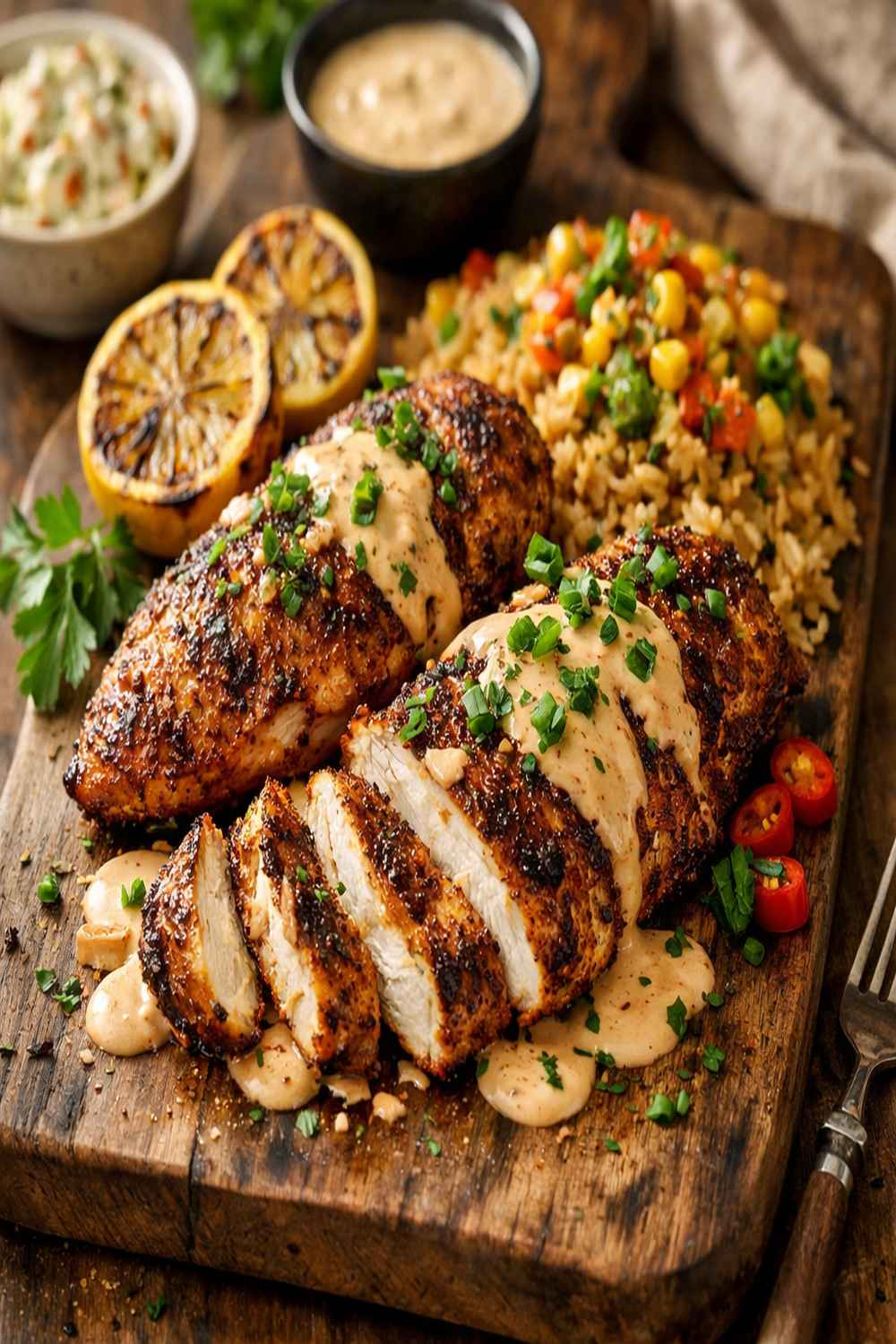
Why This Recipe Is Perfect for Meal Prep
- One-Pan Efficiency – Everything cooks together in a single skillet, meaning you’re only cleaning one dish and spending about 30 minutes total hands-on time to create five days of lunches
- Exceptional Storage Life – The rice and chicken hold beautifully in the refrigerator for up to five days, and the flavors actually deepen over time, so Monday’s portion tastes even better than Sunday’s
- Endless Transformation Potential – The same base batch transforms into completely different meals throughout the week without any boredom, from grain bowls to wraps to standalone plates
Your Weekly Meal Plan With This Recipe
Here’s exactly how I structure my week using one batch of this Cajun chicken. The beauty of meal prep isn’t just about having food ready—it’s about having flexibility built in. Each day uses the same base recipe but presents it differently, which keeps your palate engaged and prevents that monotonous “meal prep fatigue” that derails so many people.
- Monday Lunch – Serve a generous scoop of warm chicken and rice with fresh cilantro and a lime wedge, exactly as it comes from your storage container. Add a side salad if you have greens on hand
- Tuesday Dinner – Layer your Cajun chicken mixture into whole wheat tortillas with avocado, shredded lettuce, and a squeeze of lime for quick tacos that feel totally different from Monday
- Wednesday Lunch – Create a vibrant grain bowl by placing your chicken-rice base in a bowl, topping with extra diced mango, fresh cilantro, and a drizzle of extra-virgin olive oil for brightness
- Thursday Dinner – Mix your chicken with a splash of low-sodium broth to create a soupier consistency, ladle over cauliflower rice or regular rice for those nights when you want something lighter
- Friday Lunch – Shred any remaining chicken and fold it into a quick lettuce wrap with avocado and cilantro for a low-carb option, or serve over sweet potato for something heartier
The Ingredients – Scaled for a Full Week
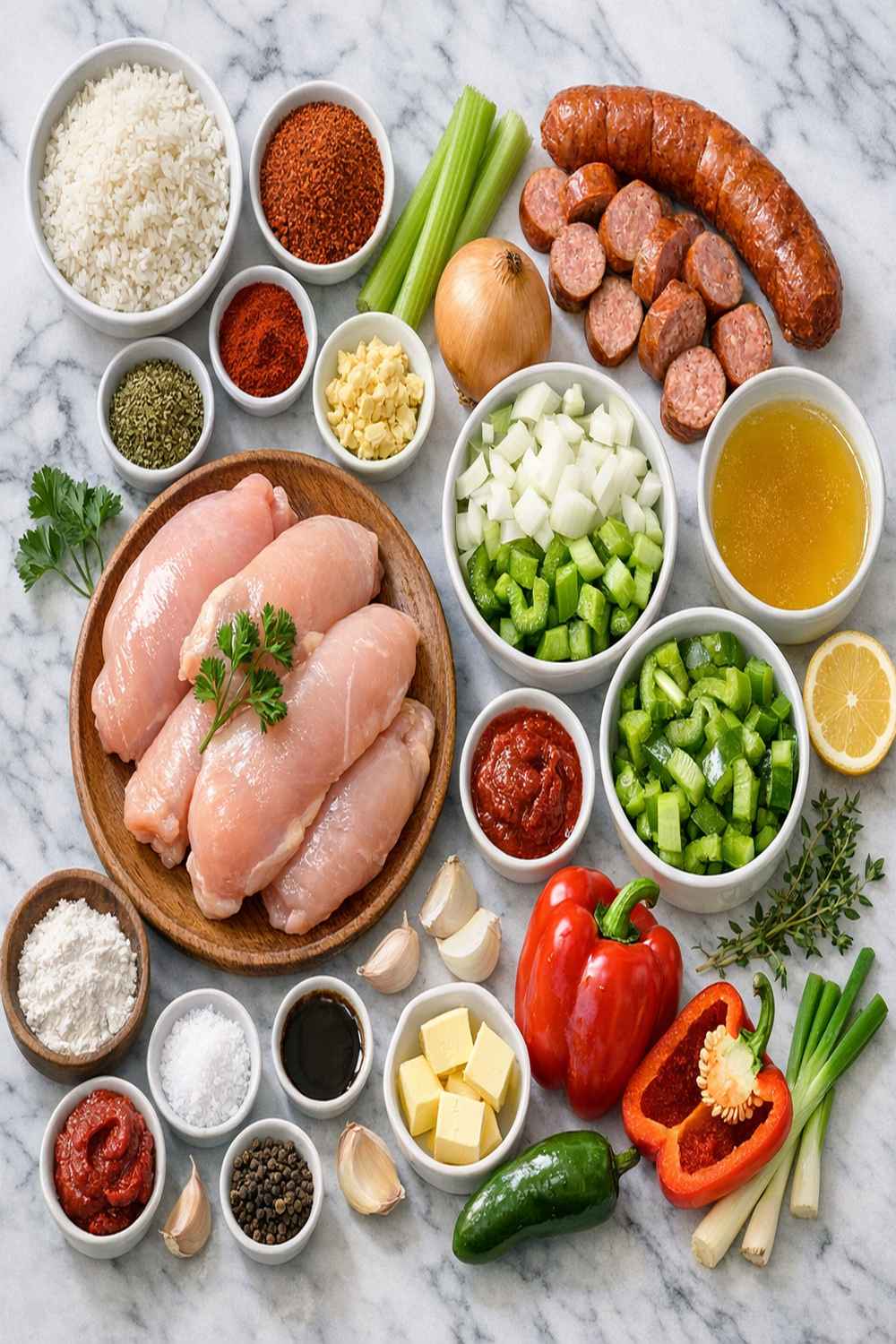
I’m scaling these ingredients to create approximately six generous servings—enough for lunches and dinners throughout your week with some flexibility for extra portions or sharing with family members. All of these ingredients are pantry staples in my kitchen, and I’ve included my favorite budget-conscious swaps because eating well shouldn’t drain your wallet.
- 6 boneless, skinless chicken breasts or thighs (thighs are actually cheaper per pound and stay more moist during storage)
- 4 tablespoons unsalted butter (or use 2 tablespoons butter plus 2 tablespoons coconut oil to extend your supply and reduce cost)
- 3 tablespoons raw honey (the subtle sweetness balances the spice beautifully, and a little goes a long way)
- 2 red or yellow bell peppers, diced (buy whatever color is on sale that week—the nutrition is identical)
- 3 limes, cut into wedges (essential for brightness; skip if limes are expensive and substitute fresh lemon juice)
- Sea salt and freshly ground black pepper to taste (these two seasonings are non-negotiable in my kitchen—they elevate everything)
- 3 ripe mangoes, diced and divided (optional, but adds natural sweetness and vitamin C; if out of season, frozen mango works just as well and costs less)
- 2 tablespoons extra-virgin olive oil (divided between cooking and finishing for optimal flavor without doubling fat content)
- 2 celery stalks, thinly sliced (often sold in bulk at farmers markets for under $1 for a whole bunch)
- 2 cups long-grain white rice, uncooked (brown rice works too and provides more fiber, though it requires 5 additional minutes of cooking time)
- 1 large bunch fresh cilantro, chopped (freeze extra in ice cube trays with a bit of oil to use throughout the month)
- 5 cups low-sodium chicken broth (homemade broth is free if you save vegetable scraps in your freezer, or use water with bouillon cubes at a fraction of the cost)
- 4 teaspoons Cajun seasoning blend (make your own with paprika, garlic powder, onion powder, cayenne, oregano, and black pepper to save 60% compared to store-bought containers)
- 3 cloves fresh garlic, minced (or use pre-minced garlic in a jar if time is your most valuable resource)
The Meal Prep Process: How to Make Cajun Chicken Recipe in Bulk
I’ve systematized this process down to the minute over years of working with busy families. The key to efficient meal prep is preparation—what we call “mise en place” in kitchen terminology. Everything prepped before you start cooking means zero scrambling and maximum flow. Set a timer, follow along, and you’ll be done faster than ordering takeout.
Step 1: Prep All Your Vegetables While Your Pan Heats
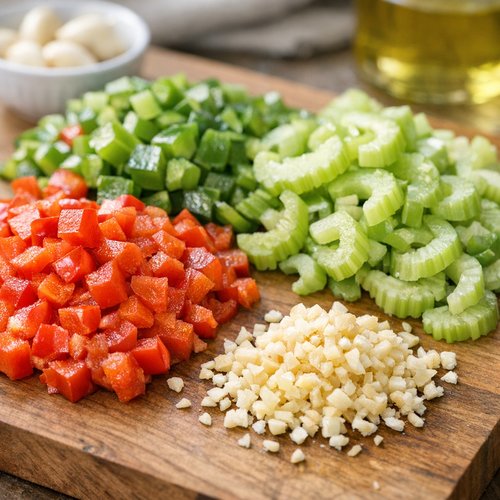
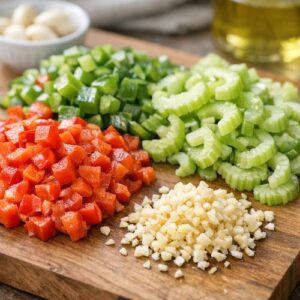
Before you touch a single piece of chicken or turn on the heat, dice both bell peppers, slice your celery into thin half-moons, and mince your garlic. Arrange them in small bowls on your counter. This takes about five minutes and sets the entire workflow in motion. While you’re doing this, place your large skillet over medium heat—it’s preheating passively while your hands are busy. I learned this trick years ago: passive cooking steps save precious minutes.
Step 2: Season Your Chicken Generously and Develop a Golden Crust
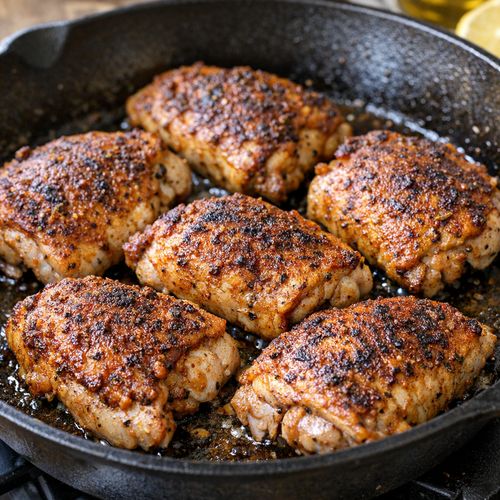
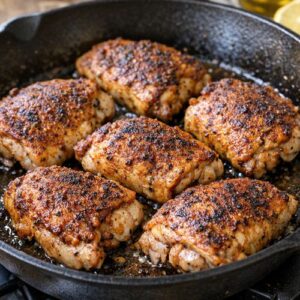
Pat your six chicken breasts or thighs dry with paper towels—this is crucial because moisture prevents browning, and browning develops flavor. Brush each piece lightly with olive oil on both sides, then sprinkle generously with your Cajun seasoning blend, making sure you coat all surfaces. When your skillet is properly heated (a drop of water should sizzle immediately), add your seasoned chicken. Don’t move it for one full minute on each side. You’re building what’s called the Maillard reaction, which creates deep, complex flavors that make people ask for your recipe. Brown for two minutes per side—six minutes total—then transfer to a clean plate.
Step 3: Build Your Flavor Base in the Same Pan
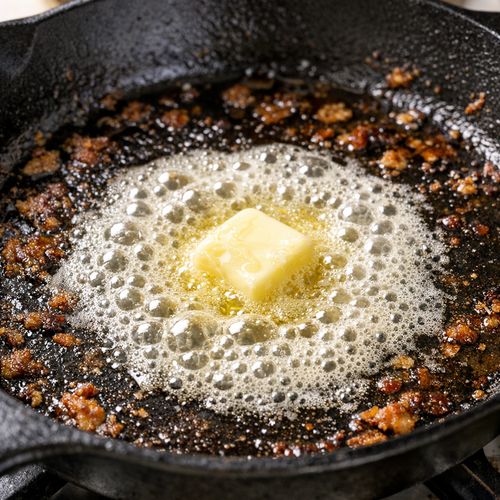
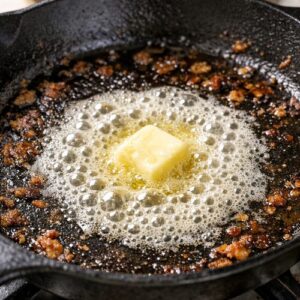
Without washing the skillet—those browned bits are liquid gold for flavor—reduce heat to medium-low and add your butter. Once melted and foaming slightly, immediately stir in your honey, which will caramelize slightly and create a beautiful glaze base. This takes 30 seconds. Add your prepped celery, bell peppers, and garlic directly to this mixture and sauté for exactly two minutes, stirring frequently. You’re not fully cooking these vegetables; you’re just waking them up and infusing them with all those brown bits stuck to your pan.
Step 4: Add Your Rice and Liquid in Proper Ratio
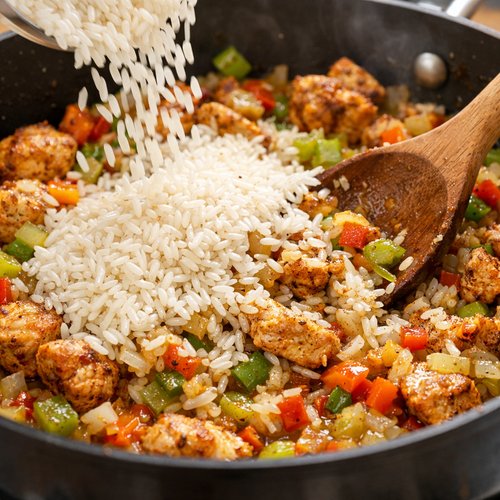
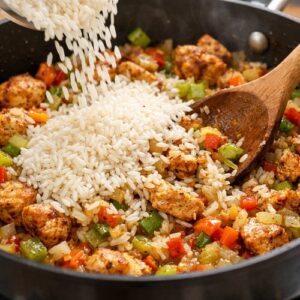
Pour your uncooked rice directly into the pan with your vegetables and butter mixture. Stir constantly for one minute—this toasts the rice slightly and prevents clumping during cooking. Add your 5 cups of low-sodium chicken broth and remaining two teaspoons of Cajun seasoning. Stir everything together until the liquid is evenly distributed. Bring everything to a rolling boil, which takes about three minutes. You’ll see the liquid reduce slightly and the rice begin to absorb it.
Step 5: Return Your Chicken and Cook Covered Until Complete
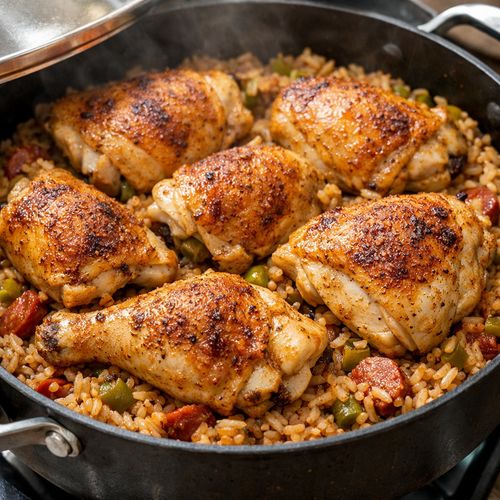
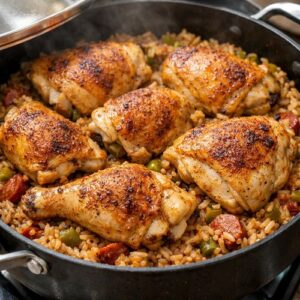
Reduce your heat to the lowest setting (medium-low on most stoves) and carefully place your six chicken pieces directly on top of the rice. Don’t submerge them—let them nestle into the rice with some exposed. Cover your skillet tightly with a lid or even heavy-duty aluminum foil. Set a timer for 18 minutes if using chicken breasts or 20 minutes if using thighs. Do not lift the lid during this time. While this is cooking, I prepare my storage containers and chop my cilantro and mango. Multitasking without actually multitasking—that’s the meal prep mentality.
Step 6: The Critical Check and Final Fluff
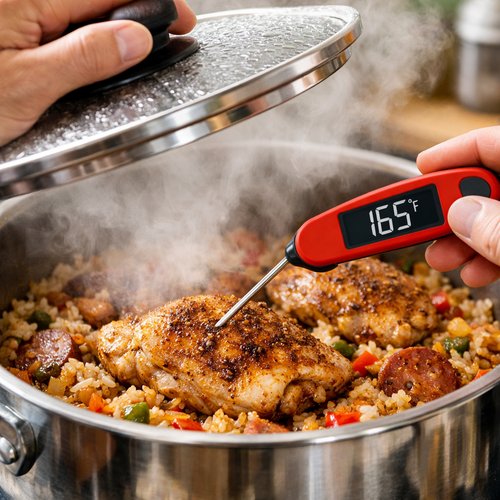
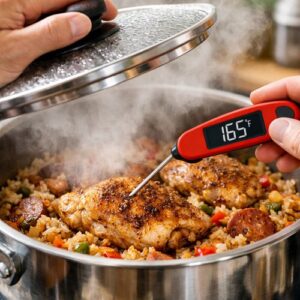
After your timer sounds, remove the lid carefully—steam rises quickly and can burn you. Check that your chicken reaches an internal temperature of 165°F using an instant-read thermometer. The rice should be tender and have absorbed most of the liquid, with maybe a thin layer of liquid still visible at the bottom of the pan (this is normal and adds moisture for storage). Using a fork, gently fluff your rice, being careful not to break up your chicken. Let everything rest uncovered for two minutes. This resting period prevents condensation in your storage containers.
Storage and Organization System
- Glass Storage Containers with Dividers – Invest in divided glass meal prep containers (around $30-40 for a set of three). They’re microwave-safe, last for years, and glass doesn’t absorb odors or stain like plastic. I portion my chicken and rice into one section, with cilantro and mango in separate compartments to keep everything fresh and prevent sogginess
- Strategic Portioning by Serving Size – Divide your batch into six equal portions immediately after the recipe finishes cooking. One chicken breast plus approximately 1 cup of rice mixture per container makes a complete, balanced meal. If you’re cooking for a family of four, you might portion into four containers plus one extra for flexibility
- Detailed Labeling System – Use a permanent marker to write the date cooked and the expiration date (five days from the cook date) directly on the container lid. I also write “Reheat: Microwave 2 min, stir, 1 min more” on the label so anyone in my family can grab and heat without asking questions
How to Reheat Without Losing Quality
Microwave Method (Fastest – 3 minutes total): Transfer your container to the microwave and heat covered for two minutes. Stir everything gently to redistribute heat evenly, then microwave uncovered for one additional minute. The uncovered final minute prevents excess moisture buildup and restores a bit of texture to your rice. If your chicken seems dry, add a splash of water or broth before the final minute.
Stovetop Method (Best Quality – 5 minutes total): Transfer your portion to a skillet over medium heat. Add one tablespoon of water or broth to prevent sticking. Cover and heat for four minutes, stirring occasionally, until everything reaches your desired temperature. This method restores the most flavor and texture, especially if your rice has dried out slightly during storage. The gentle, even heat is worth the extra three minutes.
Oven Method (For Larger Batches – 8 minutes): If you’re reheating multiple portions for your family at once, preheat your oven to 350°F. Spread your Cajun chicken mixture in a covered baking dish, add two tablespoons of broth, and heat for seven to eight minutes. This method is hands-off and prevents the microwave’s hot spots that sometimes dry out rice.
Can I Freeze Cajun Chicken Recipe?
Absolutely, and this is where meal prep becomes truly powerful. You can freeze this recipe for up to three months without significant quality loss, though I recommend using it within two months for optimal flavor. Here’s my exact process: Allow your cooked Cajun chicken and rice to cool completely—about 30 minutes on your counter. Then transfer individual portions into freezer-safe containers or even gallon-size freezer bags, removing as much air as possible. Label clearly with the date and contents. Lay flat in your freezer to save space.
Thawing Instructions: Transfer your frozen container to your refrigerator the night before you plan to eat it—this slow thaw maintains the best texture and prevents bacterial growth. The next day, reheat using the microwave or stovetop method above, adding an extra minute or two since the food is starting from cold rather than refrigerated. In a pinch, you can reheat directly from frozen on the stovetop over medium heat, stirring frequently and adding two tablespoons of broth, taking about eight to ten minutes total.
I freeze two portions from every batch I make. This strategy means I always have an emergency backup meal when plans change or unexpected guests arrive. It’s the safety net that makes meal prep truly sustainable rather than something you abandon after two weeks.
Nutrition Information
Per serving (1 chicken breast plus 1 cup rice mixture): 485 calories, 38g protein, 52g carbohydrates, 9g fat (2.5g saturated), 3.2g fiber, 680mg sodium. This nutrition profile aligns with USDA guidelines for a balanced meal, providing nearly 50% of your daily protein requirement while keeping calories in a sustainable range for weight management. The combination of lean protein and whole-grain rice creates a sustained energy release, preventing the blood sugar spikes that lead to afternoon energy crashes.
What I find most valuable about this recipe from a nutritional standpoint is the micronutrient density. One serving provides 85% of your daily vitamin C requirement (from the bell peppers), 35% of your daily iron, and meaningful amounts of B vitamins from the rice and chicken. The cilantro and mango add polyphenols—powerful plant compounds that reduce inflammation throughout your body. Over a full week of eating this recipe, you’re not just getting adequate nutrition; you’re actively supporting your immune system and long-term health.
Expert’s Nutritional Tip: The Power of Spice in This Recipe
As a registered dietitian, I need to highlight something that excites me about Cajun seasoning: the spices in this blend—particularly capsaicin from cayenne and curcumin-related compounds—have measurable metabolic effects. Research published through USDA nutrition databases shows that consuming spiced foods increases thermogenesis (your body’s heat production) by approximately 5-10%, which means your body actually burns slightly more calories digesting and processing this meal compared to mild versions. Beyond metabolism, these spices are powerful anti-inflammatory compounds. This isn’t just delicious food; it’s functional nutrition. I always encourage my clients to think about spices not as flavor alone but as medicine you eat.
What to Pair With Cajun Chicken Recipe Throughout the Week
The true art of meal prep isn’t eating the same thing five days in a row—it’s using a consistent base with varying complements to create completely different dining experiences. Here’s how I keep things interesting:
- Monday Lunch – Serve alongside a crisp green salad with lime vinaigrette. The acidity cuts through the richness beautifully and adds fresh vegetables your body needs
- Tuesday Dinner – Offer with avocado slices, shredded purple cabbage, and a dollop of Greek yogurt (instead of sour cream, which saves calories and adds protein). It transforms into something completely fresh
- Wednesday Lunch – Layer into a grain bowl with additional fresh cilantro, diced mango, and roasted sweet potato for a complete, colorful meal that looks restaurant-quality
- Thursday Dinner – Mix with additional low-sodium broth and serve as a hearty stew with crusty whole grain bread for dipping. My Baked Creamy Chicken Recipe uses similar principles if you want to swap Thursday for variety
- Friday Lunch – Shred your chicken and serve in lettuce wraps with avocado, or serve over cauliflower rice for a lower-carb option, or pair with roasted broccoli if you want something green and substantial
Make-Ahead Guide: Preparing for Maximum Efficiency
The true secret to consistent meal prep isn’t willpower—it’s removing obstacles. Here’s what I do the day before my Sunday cooking session: I shop, wash all my vegetables, and store them in my refrigerator’s crisper drawer. I write out my recipe on an index card and place it next to my stove. I get my storage containers and lids from the cabinet and stack them on the counter. I even set my table with the containers open so I can portion directly from the skillet without searching. This 15-minute preparation session means that when Sunday afternoon arrives, I’m genuinely ready—not scrambling to find ingredients or tools.
I also portion out my Cajun seasoning blend into a small prep bowl rather than measuring from a large container multiple times. Pre-measuring everything—even ingredients you’ll use multiple times—cuts your total cooking time by five minutes and prevents measurement errors that throw off the final flavor balance.
Common Mistakes to Avoid When Making This Recipe
- Skipping the Chicken Browning Step – Some people, trying to save time, add raw chicken directly to the rice and broth. This creates steamed chicken with zero flavor development and a pale, sad appearance. Those two minutes of browning in the skillet are not optional; they’re the foundation of everything that makes this dish taste special. The Maillard reaction—the browning process—creates hundreds of new flavor compounds that can’t be replicated any other way
- Using Chicken Breasts That Are Too Large – If your chicken breasts are enormous (over seven ounces), they won’t cook evenly in the 18-20 minute window. You’ll get a cooked exterior with a raw center. Either pound them to uniform thickness before cooking or cut larger breasts in half horizontally. Uniform thickness is one of the most underrated cooking principles in home kitchens
- Lifting the Lid During Cooking – This is the hardest part for me, even after years of cooking. Every time you lift that lid, steam escapes and you’re setting yourself back several minutes. The rice needs that uninterrupted steam to cook properly. Trust the process and set a timer you’ll respect
- Adding the Mango Too Far in Advance – Fresh mango begins breaking down within a few hours of cutting, especially if exposed to the acidic rice. I chop mango the morning I plan to eat that portion, or keep it separate in my storage container and only mix it in right before serving. This single step keeps your mango tasting fresh rather than mushy throughout the week
Seasonal Variations: Adapting This Recipe Year-Round
Summer Variation: When fresh corn is in season (June through August), replace half your rice with corn kernels—it adds sweetness and texture while reducing carbohydrate density slightly. The corn pairs beautifully with the mango and cilantro. Add extra lime juice to make everything taste bright and summery
Fall/Winter Variation: Substitute diced butternut squash or sweet potato for the mango (roast them separately first). The warm sweetness is perfect for cooler months and provides different micronutrients. Add a teaspoon of smoked paprika to your Cajun seasoning for deeper, earthier flavors that feel more autumnal
Spring Variation: Replace some bell pepper with asparagus or fresh green beans, added during the last five minutes of cooking. Fresh spring vegetables are lighter but still nutritious. This is also when I add the most cilantro—early spring cilantro is tender and vibrant
Year-Round Budget Variation: If mango isn’t available or is expensive, use canned pineapple chunks (drained, rinsed to remove excess syrup) or frozen mango (thawed and drained). Frozen produces often provide better value per serving and work beautifully in meal prep since they’re already portioned

Cajun Food Chicken Recipe
Ingredients
Method
- Before you touch a single piece of chicken or turn on the heat, dice both bell peppers, slice your celery into thin half-moons, and mince your garlic. Arrange them in small bowls on your counter. This takes about five minutes and sets the entire workflow in motion. While you're doing this, place your large skillet over medium heat—it's preheating passively while your hands are busy. I learned this trick years ago: passive cooking steps save precious minutes.
- Pat your six chicken breasts or thighs dry with paper towels—this is crucial because moisture prevents browning, and browning develops flavor. Brush each piece lightly with olive oil on both sides, then sprinkle generously with your Cajun seasoning blend, making sure you coat all surfaces. When your skillet is properly heated (a drop of water should sizzle immediately), add your seasoned chicken. Don't move it for one full minute on each side. You're building what's called the Maillard reaction, which creates deep, complex flavors that make people ask for your recipe. Brown for two minutes per side—six minutes total—then transfer to a clean plate.
- Without washing the skillet—those browned bits are liquid gold for flavor—reduce heat to medium-low and add your butter. Once melted and foaming slightly, immediately stir in your honey, which will caramelize slightly and create a beautiful glaze base. This takes 30 seconds. Add your prepped celery, bell peppers, and garlic directly to this mixture and sauté for exactly two minutes, stirring frequently. You're not fully cooking these vegetables; you're just waking them up and infusing them with all those brown bits stuck to your pan.
- Pour your uncooked rice directly into the pan with your vegetables and butter mixture. Stir constantly for one minute—this toasts the rice slightly and prevents clumping during cooking. Add your 5 cups of low-sodium chicken broth and remaining two teaspoons of Cajun seasoning. Stir everything together until the liquid is evenly distributed. Bring everything to a rolling boil, which takes about three minutes. You'll see the liquid reduce slightly and the rice begin to absorb it.
- Reduce your heat to the lowest setting (medium-low on most stoves) and carefully place your six chicken pieces directly on top of the rice. Don't submerge them—let them nestle into the rice with some exposed. Cover your skillet tightly with a lid or even heavy-duty aluminum foil. Set a timer for 18 minutes if using chicken breasts or 20 minutes if using thighs. Do not lift the lid during this time. While this is cooking, I prepare my storage containers and chop my cilantro and mango. Multitasking without actually multitasking—that's the meal prep mentality.
- After your timer sounds, remove the lid carefully—steam rises quickly and can burn you. Check that your chicken reaches an internal temperature of 165°F using an instant-read thermometer. The rice should be tender and have absorbed most of the liquid, with maybe a thin layer of liquid still visible at the bottom of the pan (this is normal and adds moisture for storage). Using a fork, gently fluff your rice, being careful not to break up your chicken. Let everything rest uncovered for two minutes. This resting period prevents condensation in your storage containers.
FAQs
Can I Make This Recipe Without the Cajun Seasoning Blend?
Absolutely. If you don’t have Cajun seasoning, combine two teaspoons paprika, one teaspoon garlic powder, one teaspoon onion powder, ½ teaspoon cayenne pepper, ½ teaspoon oregano, and ½ teaspoon black pepper. Mix together and use the same amount called for in the recipe. This homemade blend costs a fraction of store-bought and tastes significantly better. I make a large batch and store it in an airtight glass jar for a month—instant seasoning blend whenever I need it.
What’s the Best Way to Store Cilantro So It Lasts the Entire Week?
Fresh cilantro is delicate, but here’s my trick: Wash it and pat it completely dry. Wrap loosely in paper towels and place in a sealed plastic bag in your refrigerator’s crisper drawer. Stored this way, cilantro lasts five to six days. Alternatively, chop extra cilantro at prep time and freeze it in ice cube trays with a bit of water or broth. Pop out cubes and add to your portions right before serving—it won’t be fresh cilantro texture, but the flavor is preserved beautifully.
Can I Use Brown Rice Instead of White Rice for More Fiber?
Yes, and I actually recommend it from a nutritional standpoint. Brown rice contains the bran layer, which provides fiber that keeps you fuller longer. The tradeoff: increase your cooking liquid to 5¾ cups instead of 5 cups, and increase cooking time to 23-25 minutes instead of 18-20 minutes. Everything else in the recipe remains identical. Your meal prep becomes slightly longer, but the sustained energy and digestive benefits are worth it.
How Do I Know When My Chicken Is Fully Cooked Through?
An instant-read thermometer is your friend—check that the thickest part of the chicken (usually the center of the breast) reaches 165°F, which is the USDA safe temperature. If you don’t have a thermometer, slice into the thickest part and look for no pink color and clear juices running out. The thermometer method is more reliable, especially with large breasts, and costs less than $15—it’s an investment that pays dividends.
Is This Recipe Freezer-Friendly, and How Long Does It Last?
Yes, it’s completely freezer-friendly for up to three months (though I recommend two months maximum for best quality). The texture of both chicken and rice holds well when thawed slowly in your refrigerator. I divide my batch into individual portions and freeze immediately, so I can grab exactly what I need without thawing everything. This is the secret to sustainable meal prep—having variety available without creating waste.
Can I Double This Recipe to Make Enough for Two Weeks?
Theoretically yes, but practically I recommend making two separate batches. Doubling requires a much larger skillet or cooking in two batches anyway, and your rice might not cook evenly in an overcrowded pan. Plus, making a fresh batch midweek ensures the second week tastes optimally fresh. I actually make this recipe weekly because it’s become such a routine that the 30 minutes of hands-on time feels like meditation rather than a chore.
More Meal Prep Recipes You’ll Love
- Andouille Recipe – another Cajun-inspired protein option for when you want to shake up your chicken routine
- Ramen Noodle Boil Recipe – a budget-friendly meal prep option that’s equally versatile throughout the week
- my weeknight pasta – a vegetable-forward meal prep that pairs beautifully with proteins
When you commit to meal prep, you’re not just saving time and money—you’re taking back control of your week. You’re deciding what goes into your body instead of letting convenience dictate your choices. You’re saying yes to nourishment and no to stress. This Cajun chicken recipe has been my anchor for years, the thing I return to when life gets chaotic. I hope it becomes yours too.
Here’s what I want you to do right now: Pick a Sunday afternoon in the next two weeks. Block off two hours on your calendar. Get your ingredients. Make this recipe. Then tag me and tell me how it transformed your week. Don’t forget to mention @affordablefoodideas if you try this recipe!