This post contains affiliate links. As an Amazon Associate I earn from qualifying purchases.
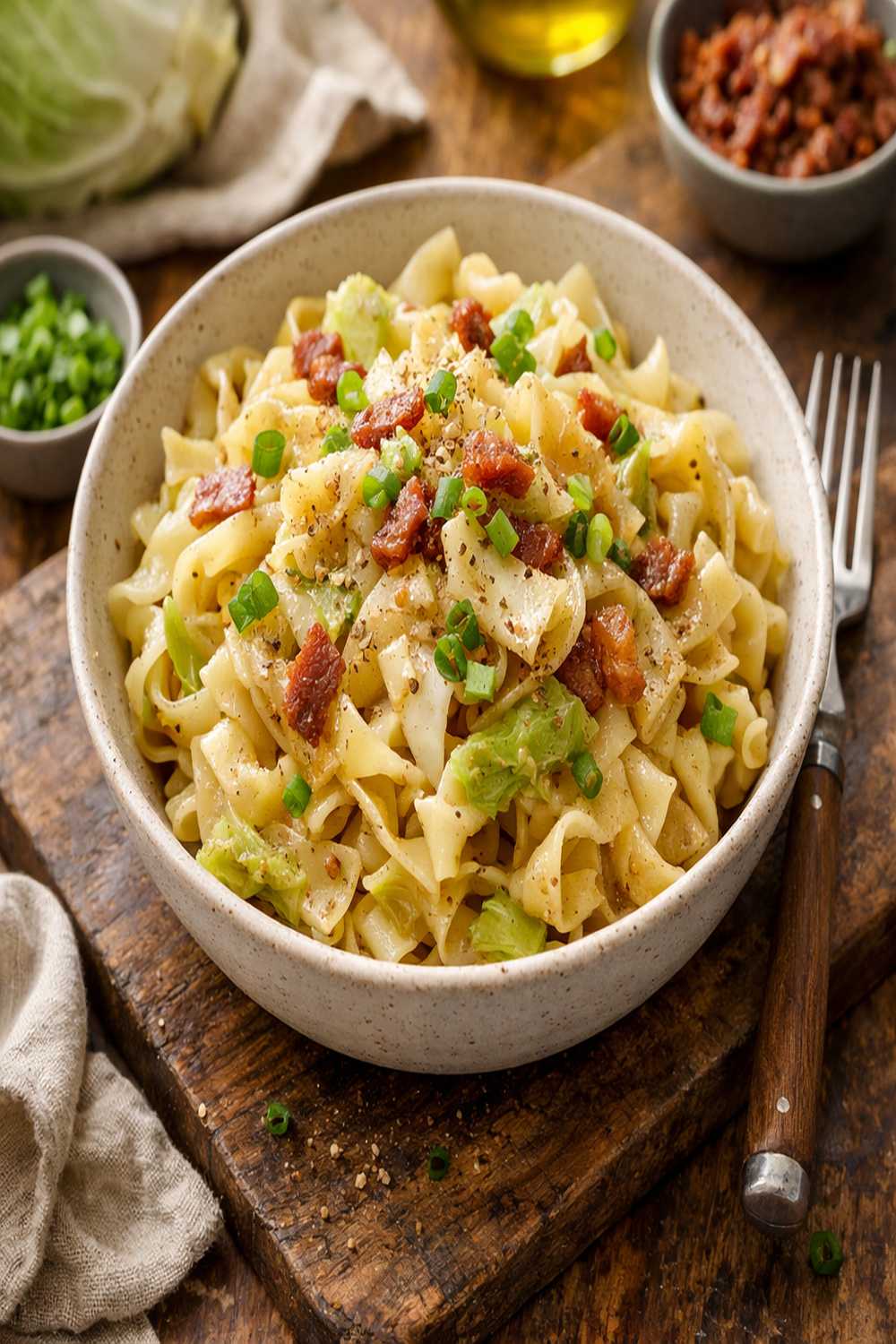
I still remember standing in my grandmother’s kitchen on a Saturday afternoon, watching her transform a simple head of cabbage, a package of egg noodles, and some leftover sausage into something that fed our entire extended family for less than fifteen dollars. That memory shaped everything I believe about food—that nourishing meals don’t require fancy techniques or expensive ingredients, just intention and a little kitchen wisdom.
Today, I’m sharing that same philosophy through this cabbage noodle skillet, a dish that bridges my small-town New England roots with real nutrition science. Whether you’re stretching a tight grocery budget or looking for a no-fuss weeknight dinner that actually tastes homemade, this recipe delivers.
It’s the kind of meal that reminds us why simple food, cooked with care, becomes the meals we remember forever. If you’re looking for other budget-conscious options, you might also enjoy my my favorite salad, which pairs beautifully alongside this skillet.
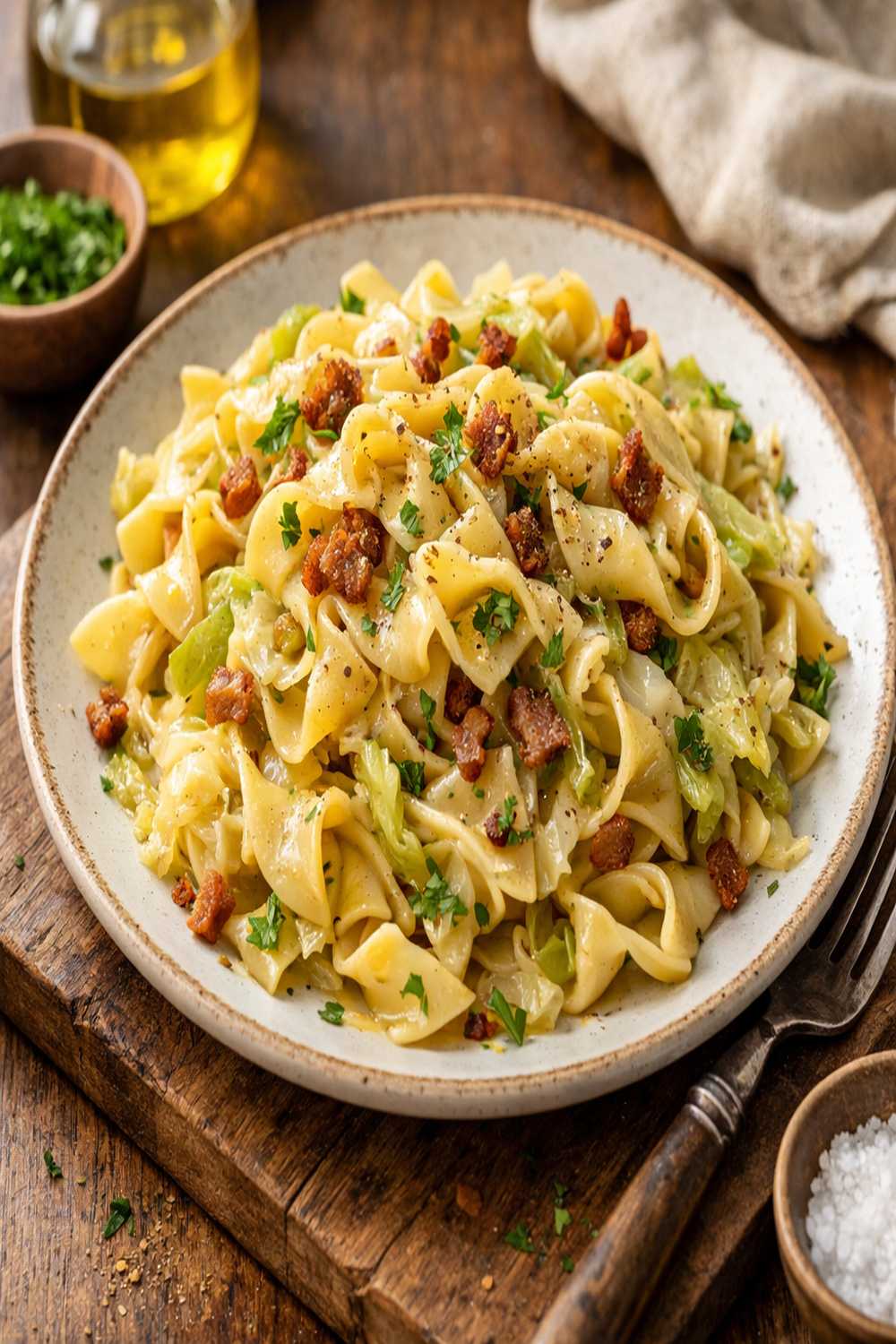
Authentic Cabbage Noodles: The Story Behind This Timeless Comfort Dish
When I first started my career as a registered dietitian, I was struck by how many families felt disconnected from their own food traditions. We’d grown so accustomed to believing that “healthy” eating meant expensive ingredients we couldn’t pronounce.
But sitting down with clients in my Waltham office, I kept hearing the same stories—memories of cabbage-based dishes their grandmothers made, meals that stretched dollars while nourishing bodies. That’s when I realized: this recipe wasn’t just about nostalgia. It was about reclaiming an approach to eating that actually worked for real families.
The cabbage noodle skillet represents something deeply resourceful in American culinary history. It emerged from immigrant communities—particularly Central and Eastern European families who brought their cabbage-forward traditions to New England and beyond. These weren’t fancy cooks working with luxury ingredients.
They were practical people who understood that a humble cruciferous vegetable, combined with affordable proteins and simple starches, created meals that satisfied both hunger and budget constraints. That philosophy has never gone out of style, and frankly, it’s needed now more than ever.
The History and Cultural Significance of Cabbage Noodles
Cabbage dishes have fed families across Europe for centuries, but the combination with egg noodles and smoked meat represents a particularly American evolution. In Central European traditions, you’d find similar combinations in Polish, Slovak, and Czech households where cabbage (fermented as sauerkraut or fresh) paired with pork products and starches created the foundation of winter eating.
When these communities immigrated to America in the late 1800s and early 1900s, they adapted their traditional cooking methods using whatever proteins were most affordable and accessible—hence the shift toward smoked sausage and kielbasa.
The post-World War II era cemented this dish’s place in American comfort food culture. As families moved to the suburbs and home cooking became more streamlined, the one-pan skillet meal rose to prominence.
This cabbage noodle combination perfectly captured that moment—economical, fast, and deeply satisfying. It shows up in community cookbooks, church potluck collections, and handwritten recipe cards passed down through generations across New England and the Midwest.
What makes this dish historically significant is its role in making nutritious eating accessible. Long before we had terms like “food insecurity” or “nutrition equity,” families were using cabbage’s remarkable affordability and nutritional density to keep their households fed.
That’s not a small thing. In a root vegetable or brassica, you’re getting fiber, vitamin C, vitamin K, and compounds that support digestive and cellular health—all for pennies per serving.
What Makes an Authentic Cabbage Noodles Recipe
Authenticity in this dish isn’t about following a single “correct” version—it’s about honoring the principles that made it work for families across generations and regions. After working with clients from dozens of cultural backgrounds and researching traditional preparations, I’ve identified the core elements that distinguish a truly satisfying version from one that feels thrown together.
- Fresh cabbage cooked low and slow – The vegetable should become tender and sweet, not remain raw or turn mushy. This requires gentle heat and patience, typically 10-15 minutes. When cabbage cooks properly, its natural sugars caramelize slightly, creating depth of flavor that no seasoning packet can replicate.
- Real butter and fat as flavor foundation – This isn’t a health contradiction; it’s nutrition science. Fat carries flavor and helps your body absorb fat-soluble vitamins from the cabbage and other vegetables. The traditional approach uses both oil (for high-heat cooking) and butter (for finishing), creating layers of richness that keep people satisfied.
- Smoked or cured proteins – Whether kielbasa, smoked sausage, or bacon, these proteins provide umami depth and traditional seasoning without requiring additional salt packets. They’re also shelf-stable and affordable—two qualities that made them foundational to family cooking.
- Egg noodles specifically – While you can adapt with other pasta, traditional preparations used egg noodles for their tender texture and slight richness. They absorb flavors better than dried pasta and cook quickly, fitting the practical timeline of weeknight cooking.
The Ingredients: Sourcing the Real Thing
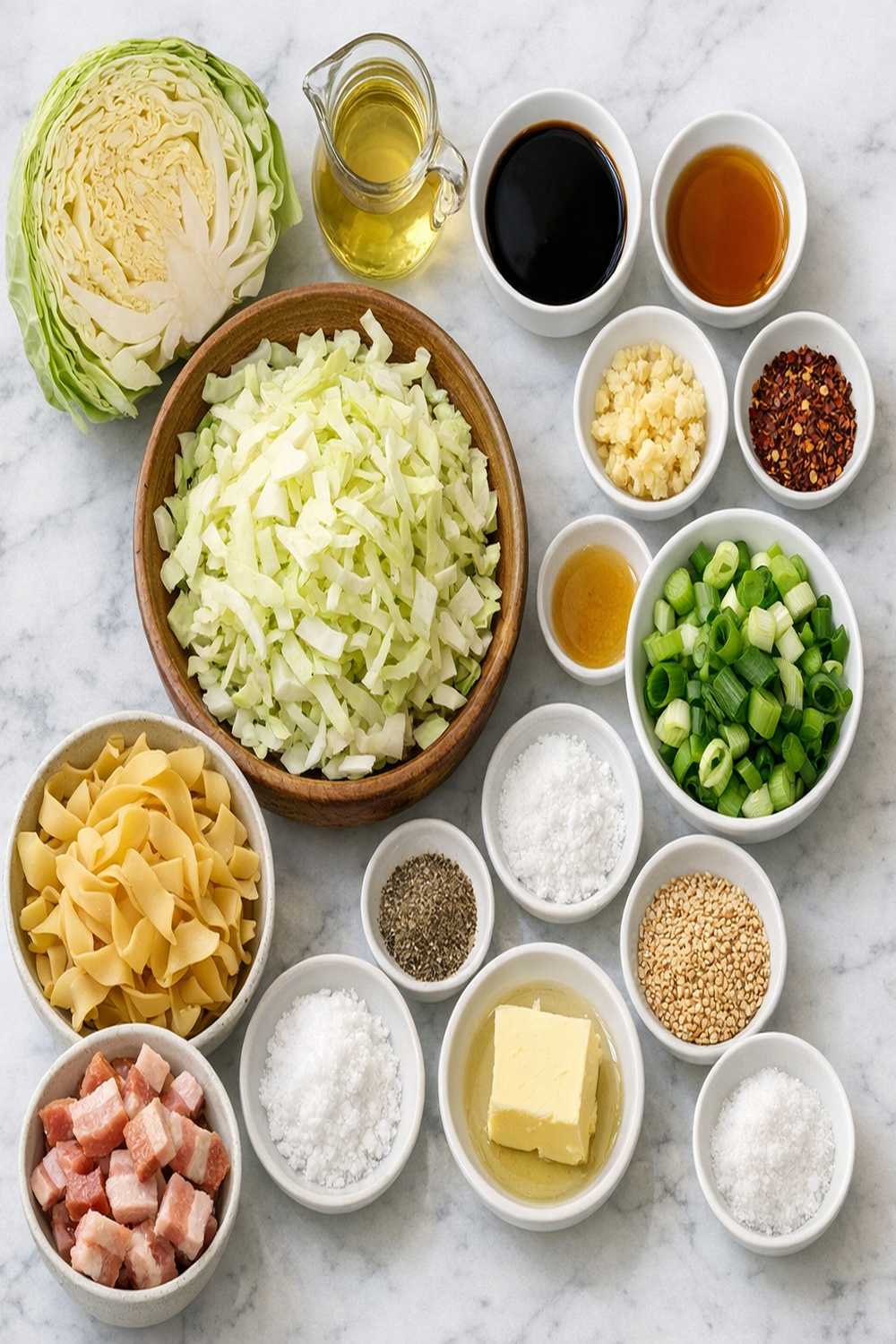
I’m always asked about ingredient substitutions and sourcing, especially around smoked meats. Here’s my honest take: this recipe works beautifully with whatever protein is most affordable in your area right now. In New England, kielbasa and smoked sausage are competitively priced. In other regions, you might find bacon more economical. Frozen vegetables are nutritionally equivalent to fresh and often significantly cheaper. That flexibility is actually the recipe’s strength—it adapts to your reality, not the other way around.
- Sea salt to taste (add gradually—smoked meat already contains sodium)
- 8 ounces egg noodles (measured dry, the traditional pasta choice that cooks tender and absorbs sauce)
- 12 ounces smoked kielbasa or sausage (sliced into rounds, whatever smoked meat is on sale in your area)
- ½ head green cabbage (chopped roughly into bite-sized pieces, approximately 6-7 cups, the heart of the dish)
- ⅔ cup frozen peas (thawed or frozen, adds vegetable nutrition and slight sweetness)
- ½ teaspoon freshly cracked black pepper (more traditional than pre-ground)
- 1 large yellow onion (diced into small pieces for even cooking and sweetness)
- 1 clove garlic (minced fresh, or ½ teaspoon garlic powder if fresh isn’t available)
- 1 teaspoon fresh dill (optional but traditional in Central European versions)
- ¼ cup salted butter (unsalted works but salted adds traditional seasoning depth)
- 2 tablespoons olive oil (divided, one portion for initial searing and one for the vegetable base)
Budget Note: This recipe costs approximately $8-12 depending on your location and current sales. Buy kielbasa when it’s marked down for quick sale. Cabbage is one of the most affordable vegetables year-round, averaging 50 cents to $1.50 per head. Egg noodles in bulk cost under 75 cents per pound. This meal proves that under $2.50 per serving buys you real nutrition and real flavor.
The Traditional Method: How to Make Authentic Cabbage Noodles
Cooking this dish authentically isn’t about complexity—it’s about respecting the ingredient interactions and building flavor in stages rather than throwing everything together simultaneously. From a nutritional standpoint, this method maximizes the bioavailability of vitamins in the cabbage and ensures proper development of the savory umami compounds that make this meal satisfying.
Step 1: Cook the Pasta Base
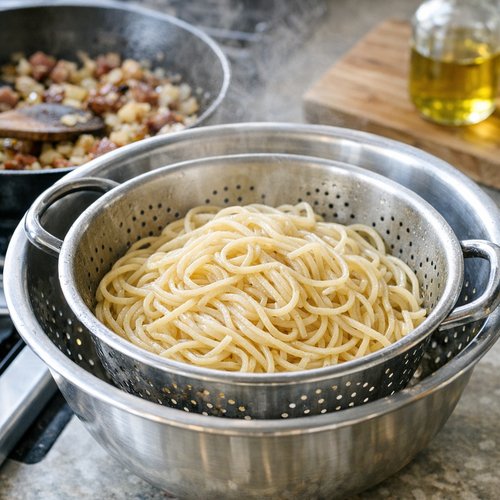
Start by bringing a large pot of salted water to a rolling boil—and yes, the water should taste like the sea. This is your only opportunity to season the noodles themselves, which means better flavor throughout the finished dish. Add your egg noodles and cook according to package directions, which typically ranges from 6-8 minutes. You want them tender but still holding their structure; they’ll finish cooking slightly when combined with the hot skillet ingredients.
Drain the noodles in a colander and set them aside. Do not rinse them—that starchy coating helps everything bind together beautifully. This is a specific technique passed down through generations of home cooks who understood that each component contributes to the whole.
Step 2: Build Umami with the Smoked Meat
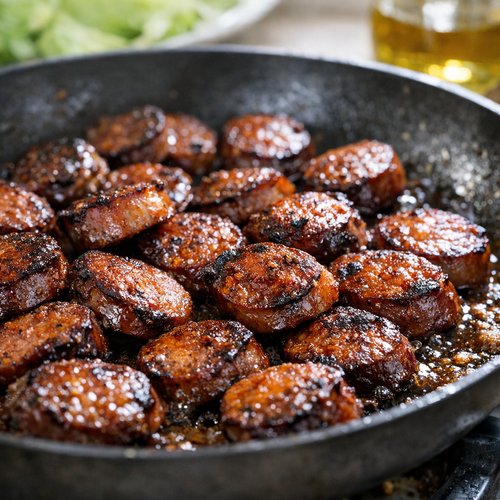
In your largest skillet (12-inch cast iron or stainless steel), heat 1 tablespoon of olive oil over medium-high heat. Once shimmering, add your sliced kielbasa or sausage and cook for approximately 3-4 minutes, stirring occasionally, until the edges are lightly browned. This step isn’t about cooking the meat through—it’s already cooked. Instead, you’re developing the outer edge flavors and rendering out some of the fat that will become your cooking medium.
This is an important distinction from rushed weeknight cooking. The Maillard reaction happening on those sausage surfaces creates complex flavors that cheap seasoning can’t replicate. Your nose will tell you when it’s right—you’ll smell that deep, savory aroma that makes people emerge from other rooms asking what you’re cooking.
Step 3: Create the Aromatic Foundation
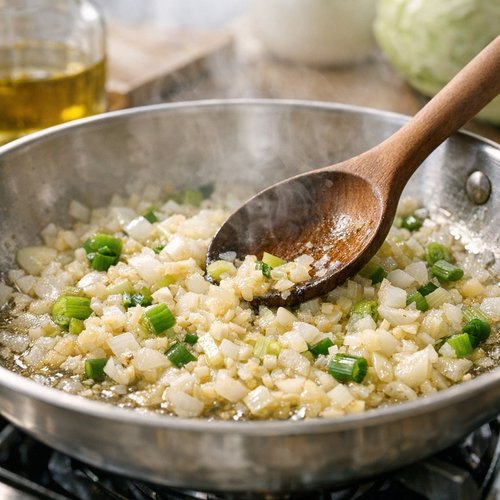
Add the remaining tablespoon of olive oil and the butter to the skillet with the browned sausage. Once the butter has melted and is foaming slightly, add your diced onion. Cook, stirring occasionally, for approximately 5 minutes until the onion becomes translucent and slightly softened. You’re not trying to caramelize it deeply at this stage—just soften it enough that it releases its aromatic compounds.
This is where cooking becomes sensory rather than merely mechanical. The smell of butter and onion combining should make you pause and appreciate what you’re building. This is the smell that has comforted families for generations.
Step 4: Add the Star of the Show—Cabbage
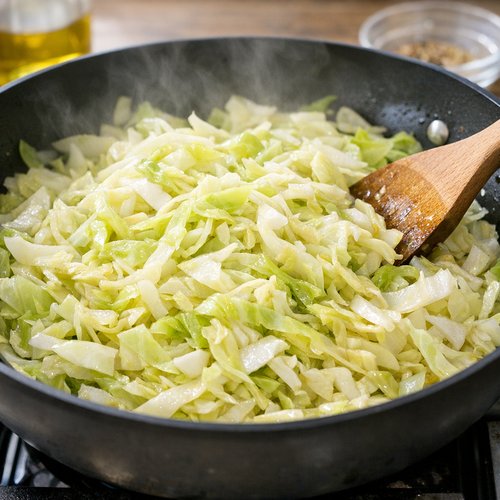
Now add your chopped cabbage and minced garlic to the skillet. Stir well so the cabbage gets coated with the butter and oil. This might seem like an enormous amount of vegetable—the skillet will be overflowing. That’s completely normal. As the cabbage cooks, it will reduce significantly, eventually creating a tender, savory foundation for your noodles.
Reduce heat to medium and cook, stirring every 2-3 minutes, for 10-15 minutes. The cabbage should become tender and begin to caramelize slightly on the edges. The cooking time varies slightly depending on how finely you chopped it and the specific heat output of your stove. You’ll know it’s ready when you can easily pierce a piece with a fork and the cabbage has lost its raw, crunchy texture.
From a nutrition perspective, this cooking method is excellent. You’re gently heating the cabbage, which actually increases the bioavailability of certain compounds like sulforaphane while preserving heat-sensitive vitamin C. The fat helps your body absorb fat-soluble vitamins A, D, E, and K from the vegetables.
Step 5: Combine and Finish
Add the cooked noodles and frozen peas to the skillet with the cabbage and sausage. Pour everything together and stir gently but thoroughly, ensuring the noodles get distributed throughout and the peas are heated through—about 2-3 minutes. The residual heat will warm everything while the vegetables’ juices create a light sauce.
Season with salt and pepper to taste. Start conservatively with salt since the smoked meat already brings sodium. If you’re using fresh dill, add it now—the warmth releases its oils and fragrance without destroying its delicate flavor compounds.
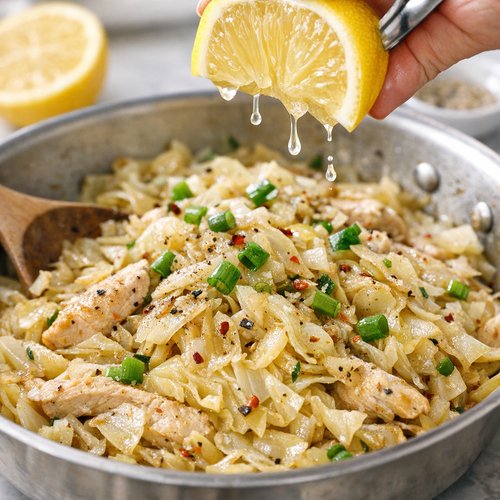
This is your moment to taste and adjust. Does it need more pepper? More salt? Does it taste a bit flat? Sometimes a squeeze of fresh lemon juice (about a tablespoon) brightens everything beautifully, adding brightness without additional calories or sodium. Some families add a splash of vinegar—another traditional addition that adds depth.
Regional Variations Around the World
What’s remarkable about cabbage and noodle combinations is how they appear across continents, each region adding its own signature. As a dietitian working with diverse communities, I’ve learned so much from these variations.
- Polish Tradition (Haluski) – The original inspiration for many American versions, Polish haluski combines fresh egg noodles with fried onions, crispy bacon, and fresh cabbage finished with sour cream. The sour cream creates a tangy complexity that balances the rich pork fat. This version tends to be slightly wetter than American preparations.
- German Preparation (Spätzle mit Kraut) – German versions often use spätzle (tiny egg pasta dumplings) rather than traditional noodles, paired with red or green cabbage that’s sometimes fermented as sauerkraut. The fermentation adds probiotic benefits and a distinctive sourness that aids digestion. Caraway seeds and juniper berries often appear in traditional German versions, adding herbal complexity.
- Jewish-American Deli Tradition – In communities across the Northeast, you’ll find versions that add tomato sauce to the cabbage and noodles, creating a slightly sweet and tangy dish. This represents cultural fusion—taking traditional cabbage preparations and combining them with tomato-based influence from Italian immigration patterns.
- Czech and Slovak Versions – These often include paprika, lending a subtle warmth and red color. Sometimes mushrooms appear alongside the cabbage, adding earthiness and additional umami depth. These versions reflect the abundant mushrooms in Central European forests.
Traditional Serving Customs
Historically, this dish appeared on the table as a main course, served in the center of the table in its cooking vessel, often a large cast iron skillet that kept everything warm. Family members would serve themselves directly, which meant the person doing the cooking wasn’t trapped in a plating station but could join everyone else at the table.
In many communities, this was—and is—what you’d serve at church gatherings, potluck suppers, and family reunions. It travels beautifully in a covered skillet, reheats without degradation, and tastes just as good at room temperature as it does hot. That practical versatility made it beloved across generations.
Traditionally, it was served with simple accompaniments: fresh rye bread for soaking up any juices, a sharp mustard on the side, and perhaps a simple green salad to cut the richness. Pickled vegetables—sauerkraut, pickled beets, or pickled cucumbers—often appeared alongside, their acidity and probiotics supporting digestion of the heavier elements. If you’re looking for a complementary side, try my Vietnamese Spring Rolls with Crispy Tofu, which provides a similarly fresh, crunchy contrast to the warm skillet.
Can I Store Cabbage Noodles?
One of the practical advantages of this dish is its excellent storage properties. Properly stored, this recipe keeps beautifully and actually develops more flavor as the components marry together overnight.
Refrigerator Storage: Transfer cooled skillet contents to an airtight container and refrigerate for up to 4 days. The cabbage becomes even more tender and the flavors deepen—this is actually an improvement over the first meal. Reheat gently on the stovetop over medium heat, stirring occasionally, adding a splash of water or broth if it seems dry.
Freezer Storage: This dish freezes well for up to 3 months. Cool completely before transferring to freezer-safe containers or bags, leaving slight headspace for expansion. Thaw overnight in the refrigerator and reheat as you would with refrigerated portions. Some people prefer freezing portions in individual containers for grab-and-go lunches.
Make-Ahead Advantage: You can prepare the cabbage mixture and sausage up to 2 days ahead without the noodles, storing them separately. Cook the noodles fresh shortly before serving, then combine everything. This approach gives you the convenience of prep-ahead cooking while maintaining ideal texture in the pasta.
Nutrition Information
Per serving (approximately 2 cups, makes 4 generous servings): approximately 485 calories | 28g protein | 24g fat (8g saturated) | 42g carbohydrate | 6g fiber | 8g sugar | 18mg vitamin C | 82mcg vitamin K | 4.2mg iron | 385mg sodium
From a nutritional standpoint, this dish offers several meaningful benefits. The cabbage provides substantial dietary fiber—approximately 2 grams per serving—supporting digestive health and feeding beneficial gut bacteria. Its vitamin K content (over 80 micrograms per serving) supports bone health and blood clotting function, particularly important for folks on certain medications.
The protein profile comes from both the smoked meat (approximately 12-14 grams per serving) and the eggs in the noodles, making this a truly satiating meal. According to USDA nutrition databases, meals with adequate protein create longer-lasting fullness, reducing overall calorie intake throughout the day. This is why people who’ve eaten this meal for generations remained satisfied on smaller food budgets.
The fat content—while seemingly high—deserves context. The saturated fat comes primarily from traditional butter and pork products, which our current nutrition science views with more nuance than previously. The fat supports the absorption of vitamins A, D, E, and K from the vegetables. Additionally, people report greater satisfaction from adequately-fatted foods, meaning they eat less total volume.
What’s often overlooked in nutrition analysis is that this single dish provides your entire daily value of vitamin K, nearly half your daily vitamin C (important for immune function), and a meaningful portion of daily minerals like iron and manganese. It’s genuinely nutrient-dense comfort food.
Expert’s Nutritional Tip: The Science Behind Cabbage’s Staying Power
Here’s what I’ve learned from years of clinical practice and nutrition research: cabbage’s reputation for supporting digestive health isn’t folklore. Cruciferous vegetables like cabbage contain sulforaphane, a compound that activates cellular protective pathways and supports your gut’s beneficial bacteria. Cooked cabbage actually increases the bioavailability of this compound compared to raw—making this traditional cooking method nutritionally superior to raw cabbage salads for digestive support.
Additionally, cabbage contains lactic acid bacteria naturally present on its leaves, which become more beneficial when the vegetable sits in the skillet with salt and fat. If you’re struggling with digestive issues or an unbalanced microbiome, this is exactly the kind of whole-food approach that supports healing better than any probiotic supplement. The combination of fiber, prebiotics (from the cabbage), and traditional preparation methods creates genuine nutritional synergy.
What Can I Serve With Cabbage Noodles?
While this skillet is genuinely a complete meal, traditional accompaniments elevate it further. Sharp mustard—whether brown mustard or Dijon—provides digestive support and cuts the richness beautifully. A simple Affordable Salad Recipe with vinaigrette adds brightness and textural contrast without additional expense.
- Rye or pumpernickel bread – The traditional pairing across Central and Eastern European communities, these denser breads complement the skillet’s richness and provide excellent fiber. They’re also often more affordable than white bread.
- Pickled vegetables – Homemade or store-bought sauerkraut, pickled beets, or pickled cucumbers provide probiotic support and sharp acidity that balances the dish’s richness. They’re also remarkably inexpensive when bought in bulk.
- Sour cream or Greek yogurt – A dollop on top adds cooling creaminess and tangy flavor. In Polish traditions, this is standard. Greek yogurt offers higher protein content while maintaining the traditional tangy element.
- Simple green salad with vinaigrette – Raw greens provide enzymatic support for digestion and textural contrast. A basic vinaigrette (oil, vinegar, salt, pepper) costs pennies but makes significant flavor impact.
- Crusty bread or rolls – For soaking up any accumulated juices, particularly if you add vinegar or lemon juice to brighten the dish.
Make-Ahead Guide: Strategic Meal Prep
I encourage clients to think about this recipe strategically across the week. You have several options depending on your lifestyle and available time:
Full Batch Prep: Make the complete recipe on Sunday afternoon. Cool it completely, divide into four containers, and refrigerate. Each evening, simply reheat gently on the stovetop or microwave. This approach requires only 5 minutes of active time during the week—perfect for busy families or solo cooks managing multiple obligations.
Component Prep: Prepare the cabbage-sausage mixture up to 2 days ahead without the noodles. Store in a container in the refrigerator. On cooking days, boil fresh noodles and combine with the pre-made base. This approach maintains better pasta texture while preserving the convenience of having vegetables and protein ready.
Freezer Strategy: Double the recipe and freeze half in individual portions. Label with contents and date (use within 3 months). You’ve essentially created emergency meals requiring only reheating. This approach works particularly well for unexpected schedule disruptions or weeks when cooking feels impossible.
Ingredient Prep: At the start of your week, chop cabbage and onion, storing them in separate airtight containers. Measure dry noodles into portions. This takes about 15 minutes but dramatically reduces cooking resistance when you’re tired after work.
Common Mistakes to Avoid
Mistake #1: Rinsing the Cooked Noodles – This removes the starch coating that helps everything bind together beautifully. The finished dish becomes watery rather than creamy. Resist the urge to rinse unless you’re specifically making a cold pasta salad.
Mistake #2: Cooking the Cabbage Until Mushy – There’s a window between tender and falling apart. If cooked too long, cabbage loses both texture and nutritional compounds. Aim for tender but still retaining slight structure, which typically takes 10-15 minutes depending on how finely you chopped it.
Mistake #3: Adding All Ingredients Simultaneously – This creates muddy flavor rather than layered complexity. Building the dish in stages—sausage first, then aromatics, then cabbage—creates depth that rushed cooking can’t replicate. This isn’t about fussiness; it’s about chemistry.
Mistake #4: Underseasoning Out of Caution – Because smoked meat contains sodium, people often fear over-salting. But adequate seasoning isn’t unhealthy; it’s the difference between bland food that feels unsatisfying and flavorful food that genuinely nourishes. Taste as you go and add pepper generously—black pepper has genuine health compounds and creates perception of flavor that helps your brain register satisfaction.
Seasonal Variations: Adapting Year-Round
Spring Version: Replace frozen peas with fresh spring peas if available, and add fresh dill or tarragon at the end. Include thinly sliced fresh radishes for peppery crunch and spring brightness. The fresh herbs lighten the dish despite using the same base.
Summer Preparation: While cabbage is affordable year-round, in summer add freshly minced dill and parsley, finishing with fresh lemon juice instead of vinegar. Serve at room temperature as a cold pasta salad—the flavors actually become more pronounced. Include fresh corn kernels if they’re on sale.
Fall Adaptation: Add diced bell peppers (affordable in fall) and replace some butter with apple cider for subtle sweetness. The slight tangy apple notes mirror fall spice preparations. Finish with crispy fried sage leaves for herbaceous depth.
Winter Version: This is the dish’s natural season. Add more butter than summer versions, perhaps a splash of apple cider vinegar, and increase cooking time slightly to develop deeper caramelization on the cabbage. Include crispy bacon for additional richness and texture contrast.

Cabbage Noodles Recipe
Ingredients
Method
- Start by bringing a large pot of salted water to a rolling boil—and yes, the water should taste like the sea. This is your only opportunity to season the noodles themselves, which means better flavor throughout the finished dish. Add your egg noodles and cook according to package directions, which typically ranges from 6-8 minutes. You want them tender but still holding their structure; they’ll finish cooking slightly when combined with the hot skillet ingredients. Drain the noodles in a colander and set them aside. Do not rinse them—that starchy coating helps everything bind together beautifully. This is a specific technique passed down through generations of home cooks who understood that each component contributes to the whole.
- In your largest skillet (12-inch cast iron or stainless steel), heat 1 tablespoon of olive oil over medium-high heat. Once shimmering, add your sliced kielbasa or sausage and cook for approximately 3-4 minutes, stirring occasionally, until the edges are lightly browned. This step isn’t about cooking the meat through—it’s already cooked. Instead, you’re developing the outer edge flavors and rendering out some of the fat that will become your cooking medium. This is an important distinction from rushed weeknight cooking. The Maillard reaction happening on those sausage surfaces creates complex flavors that cheap seasoning can’t replicate. Your nose will tell you when it’s right—you’ll smell that deep, savory aroma that makes people emerge from other rooms asking what you’re cooking.
- Add the remaining tablespoon of olive oil and the butter to the skillet with the browned sausage. Once the butter has melted and is foaming slightly, add your diced onion. Cook, stirring occasionally, for approximately 5 minutes until the onion becomes translucent and slightly softened. You’re not trying to caramelize it deeply at this stage—just soften it enough that it releases its aromatic compounds. This is where cooking becomes sensory rather than merely mechanical. The smell of butter and onion combining should make you pause and appreciate what you’re building. This is the smell that has comforted families for generations.
- Now add your chopped cabbage and minced garlic to the skillet. Stir well so the cabbage gets coated with the butter and oil. This might seem like an enormous amount of vegetable—the skillet will be overflowing. That’s completely normal. As the cabbage cooks, it will reduce significantly, eventually creating a tender, savory foundation for your noodles. Reduce heat to medium and cook, stirring every 2-3 minutes, for 10-15 minutes. The cabbage should become tender and begin to caramelize slightly on the edges. The cooking time varies slightly depending on how finely you chopped it and the specific heat output of your stove. You’ll know it’s ready when you can easily pierce a piece with a fork and the cabbage has lost its raw, crunchy texture. From a nutrition perspective, this cooking method is excellent. You’re gently heating the cabbage, which actually increases the bioavailability of certain compounds like sulforaphane while preserving heat-sensitive vitamin C. The fat helps your body absorb fat-soluble vitamins A, D, E, and K from the vegetables.
- Add the cooked noodles and frozen peas to the skillet with the cabbage and sausage. Pour everything together and stir gently but thoroughly, ensuring the noodles get distributed throughout and the peas are heated through—about 2-3 minutes. The residual heat will warm everything while the vegetables’ juices create a light sauce. Season with salt and pepper to taste. Start conservatively with salt since the smoked meat already brings sodium. If you’re using fresh dill, add it now—the warmth releases its oils and fragrance without destroying its delicate flavor compounds. This is your moment to taste and adjust. Does it need more pepper? More salt? Does it taste a bit flat? Sometimes a squeeze of fresh lemon juice (about a tablespoon) brightens everything beautifully, adding brightness without additional calories or sodium. Some families add a splash of vinegar—another traditional addition that adds depth.
FAQs
Can I Make This Recipe Vegetarian or Vegan?
Absolutely. Replace the smoked sausage with smoked tofu (surprisingly affordable at most stores), or use additional mushrooms—cremini, shiitake, or oyster mushrooms—which provide similar umami depth. For vegan, replace the butter with vegan butter or additional olive oil (use 3 tablespoons total fat instead of 2 tablespoons oil plus ¼ cup butter). The dish changes character slightly without the smoke and pork richness, but it’s genuinely delicious. Some cooks add smoked paprika or liquid smoke (just ¼ teaspoon) to mimic that depth you’d get from sausage.
What’s the Difference Between This and Haluski or Other Traditional Names?
The terminology varies significantly by region and family tradition. “Haluski” technically refers to potato and cabbage dishes in some traditions, though the term gets used broadly across different cabbage-noodle combinations. “Pigs and cabbage” appears in American diner traditions. The core concept—smoked meat, cabbage, starch, and fat—remains consistent across naming conventions. My version represents the home-cooking tradition rather than strictly authentic culinary terminology. Regional grandmothers might call this something completely different in their own kitchen traditions, and that’s perfectly valid.
I Can’t Find Kielbasa—What Smoked Meat Works Best?
The best option is whatever smoked meat is most affordable in your area currently. Smoked sausage works beautifully. Polish kielbasa and regular kielbasa are virtually interchangeable. Canadian bacon (smoked back bacon) works but provides less volume for your budget. Bacon is excellent if that’s what’s on sale—you’ll need roughly 8 ounces of bacon strips. Some families use smoked ham, diced into cubes. The principle is identical: use what’s available and affordable, knowing your savings translate directly to better ingredients elsewhere in your meal plan.
How Do I Know When the Cabbage Is Done Cooking?
You’ll know through both visual and texture cues. Visually, the raw pale green should transform to a slightly deeper, more muted green with some golden-brown edges where cabbage contacted the hot skillet. Texture-wise, a fork should easily pierce any piece you test, with no crunch or rawness remaining. The smell will also shift from sharp and slightly sulfurous (raw cabbage’s characteristic smell) to sweet and almost caramelized. If you’re unsure, it’s better to cook slightly longer than shorter—mushy cabbage still tastes good, while undercooked cabbage throws off the entire dish’s texture profile.
Why Do You Recommend This Specifically for Budget Cooking?
Because cost-per-serving math matters when you’re making real food decisions. A head of cabbage costs between 50 cents and $1.50 depending on season and location. Egg noodles average less than 75 cents per pound. Frozen peas cost around $1 per bag. Even quality smoked sausage rarely exceeds $3.50 per pound, meaning 12 ounces (three-quarters of a typical package) costs under $3. The complete recipe, serving four people generously, typically costs $8-12 total. That’s $2-3 per person for a complete, nutritionally dense meal with protein, vegetables, and carbohydrates. From a registered dietitian perspective, this meal-to-cost ratio is exceptional and represents exactly the kind of food decision that helps families thrive on realistic budgets.
More Recipes From This Tradition
- my weeknight pasta – Another seasonal pasta dish celebrating affordable vegetables with simple technique
- Aglio Spaghetti Recipe – The minimalist pasta tradition proving that fewer ingredients create better focus on quality cooking
- Baked Creamy Chicken Recipe – A similar one-pan approach to comfort cooking with accessible ingredients
This recipe represents something I’ve witnessed repeatedly throughout my career as a registered dietitian—the way that simple, traditional food actually outperforms complicated nutritional interventions. The families who thrive on limited budgets aren’t the ones buying expensive supplements or trendy foods. They’re the ones who understand that cabbage has been feeding humans for thousands of years, that eggs noodles provide affordable complete protein, and that taking time to cook intentionally creates both nutrition and belonging.
Food is cultural memory made edible. Every time you make this cabbage noodle skillet, you’re honoring generations of people who fed their families with resourcefulness, creativity, and deep care. You’re teaching your own family that simple food, cooked with intention, is worth time and attention. You’re proving that the intersection of nutrition and budget isn’t a compromise—it’s actually where the best food lives.
Don’t forget to mention @affordablefoodideas if you try this recipe! I’d genuinely love to hear how it shows up in your kitchen, what variations you create, and what memories it builds for your family.