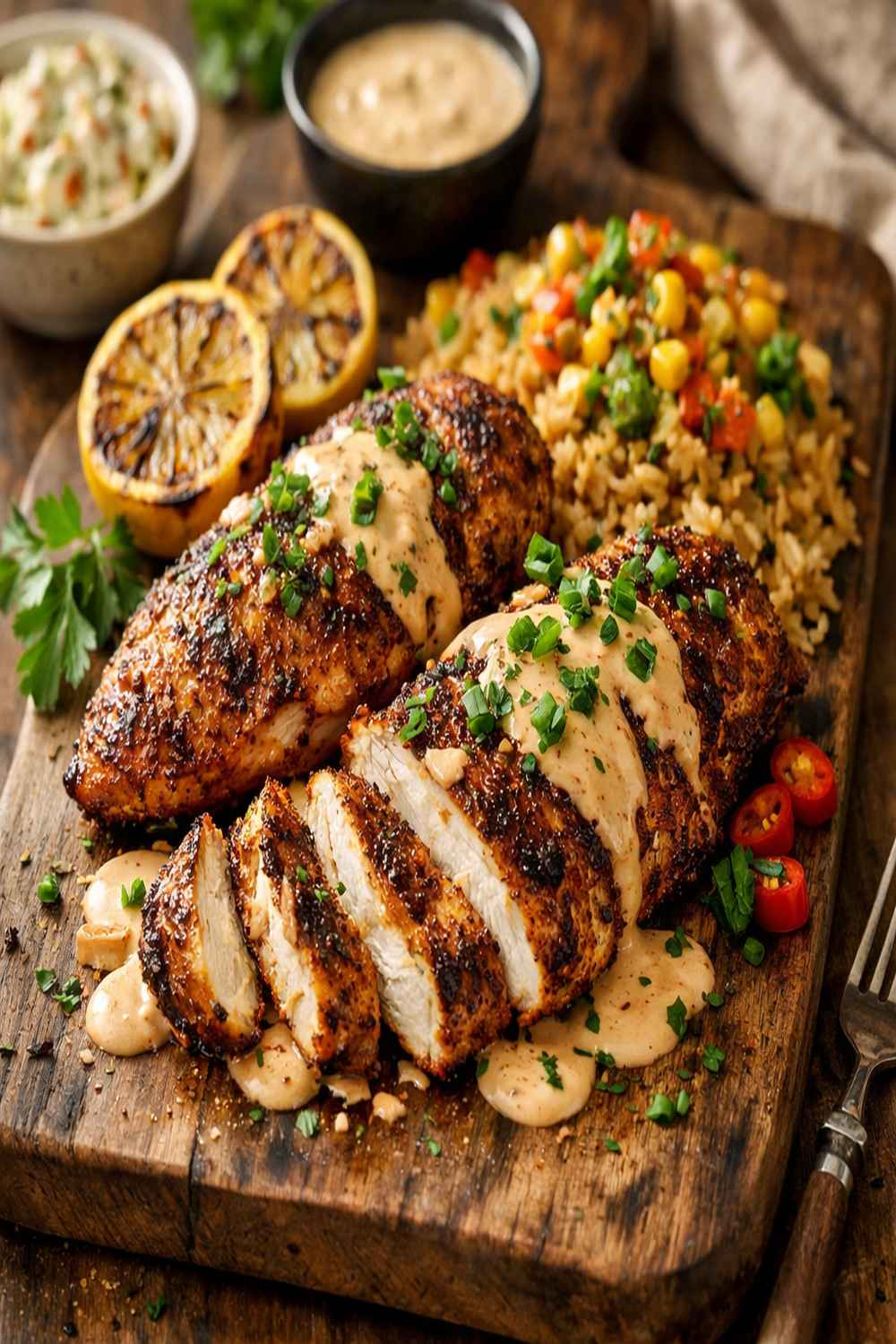

Ingredients
Method
Step 1: Prep All Your Vegetables While Your Pan Heats
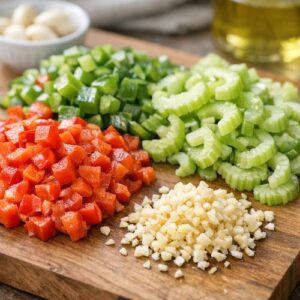
- Before you touch a single piece of chicken or turn on the heat, dice both bell peppers, slice your celery into thin half-moons, and mince your garlic. Arrange them in small bowls on your counter. This takes about five minutes and sets the entire workflow in motion. While you're doing this, place your large skillet over medium heat—it's preheating passively while your hands are busy. I learned this trick years ago: passive cooking steps save precious minutes.
Step 2: Season Your Chicken Generously and Develop a Golden Crust
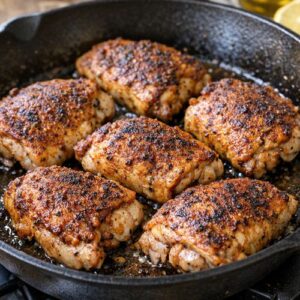
- Pat your six chicken breasts or thighs dry with paper towels—this is crucial because moisture prevents browning, and browning develops flavor. Brush each piece lightly with olive oil on both sides, then sprinkle generously with your Cajun seasoning blend, making sure you coat all surfaces. When your skillet is properly heated (a drop of water should sizzle immediately), add your seasoned chicken. Don't move it for one full minute on each side. You're building what's called the Maillard reaction, which creates deep, complex flavors that make people ask for your recipe. Brown for two minutes per side—six minutes total—then transfer to a clean plate.
Step 3: Build Your Flavor Base in the Same Pan
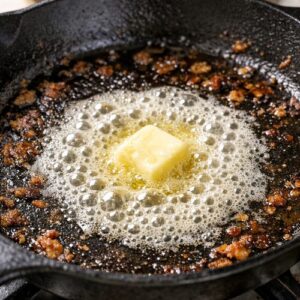
- Without washing the skillet—those browned bits are liquid gold for flavor—reduce heat to medium-low and add your butter. Once melted and foaming slightly, immediately stir in your honey, which will caramelize slightly and create a beautiful glaze base. This takes 30 seconds. Add your prepped celery, bell peppers, and garlic directly to this mixture and sauté for exactly two minutes, stirring frequently. You're not fully cooking these vegetables; you're just waking them up and infusing them with all those brown bits stuck to your pan.
Step 4: Add Your Rice and Liquid in Proper Ratio
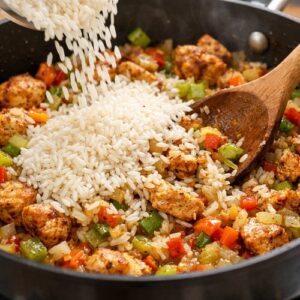
- Pour your uncooked rice directly into the pan with your vegetables and butter mixture. Stir constantly for one minute—this toasts the rice slightly and prevents clumping during cooking. Add your 5 cups of low-sodium chicken broth and remaining two teaspoons of Cajun seasoning. Stir everything together until the liquid is evenly distributed. Bring everything to a rolling boil, which takes about three minutes. You'll see the liquid reduce slightly and the rice begin to absorb it.
Step 5: Return Your Chicken and Cook Covered Until Complete
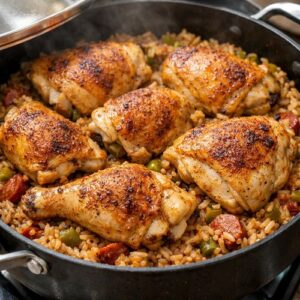
- Reduce your heat to the lowest setting (medium-low on most stoves) and carefully place your six chicken pieces directly on top of the rice. Don't submerge them—let them nestle into the rice with some exposed. Cover your skillet tightly with a lid or even heavy-duty aluminum foil. Set a timer for 18 minutes if using chicken breasts or 20 minutes if using thighs. Do not lift the lid during this time. While this is cooking, I prepare my storage containers and chop my cilantro and mango. Multitasking without actually multitasking—that's the meal prep mentality.
Step 6: The Critical Check and Final Fluff
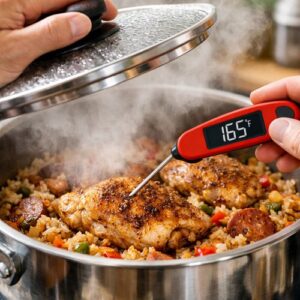
- After your timer sounds, remove the lid carefully—steam rises quickly and can burn you. Check that your chicken reaches an internal temperature of 165°F using an instant-read thermometer. The rice should be tender and have absorbed most of the liquid, with maybe a thin layer of liquid still visible at the bottom of the pan (this is normal and adds moisture for storage). Using a fork, gently fluff your rice, being careful not to break up your chicken. Let everything rest uncovered for two minutes. This resting period prevents condensation in your storage containers.