This post contains affiliate links. As an Amazon Associate I earn from qualifying purchases.
There’s something magical about bringing restaurant-quality flavors to your own kitchen without spending a fortune. This smoky tropical BBQ chicken paired with caramelized pineapple delivers those cravings beautifully—and at a fraction of what you’d pay eating out. I love serving this with a simple affordable salad recipe on the side to keep meals balanced and nutritious, especially when we’re looking for ways to stretch our food budget without sacrificing taste.
How a Small-Town Kitchen Taught Me to Love Budget-Friendly Fusion Flavors
Growing up in Massachusetts, my family didn’t have much money, but my mom was a wizard at transforming pantry staples into meals that felt special. I remember one summer evening—I must have been about twelve—when she experimented with BBQ sauce and canned pineapple because we had both on hand. Nothing fancy. Just what was affordable and available.
That meal changed how I thought about food forever. It taught me that you don’t need expensive ingredients or complicated techniques to create something memorable. You need resourcefulness, a little creativity, and the willingness to try something new. Now, as a registered dietitian, I’ve learned the why behind making those flavor combinations work nutritionally—but that core lesson remains: wholesome meals don’t require a luxury budget.
This smoky tropical BBQ chicken recipe is my love letter to that philosophy. It’s approachable, costs under $12 total, and delivers restaurant-quality results that will make your family ask for seconds.
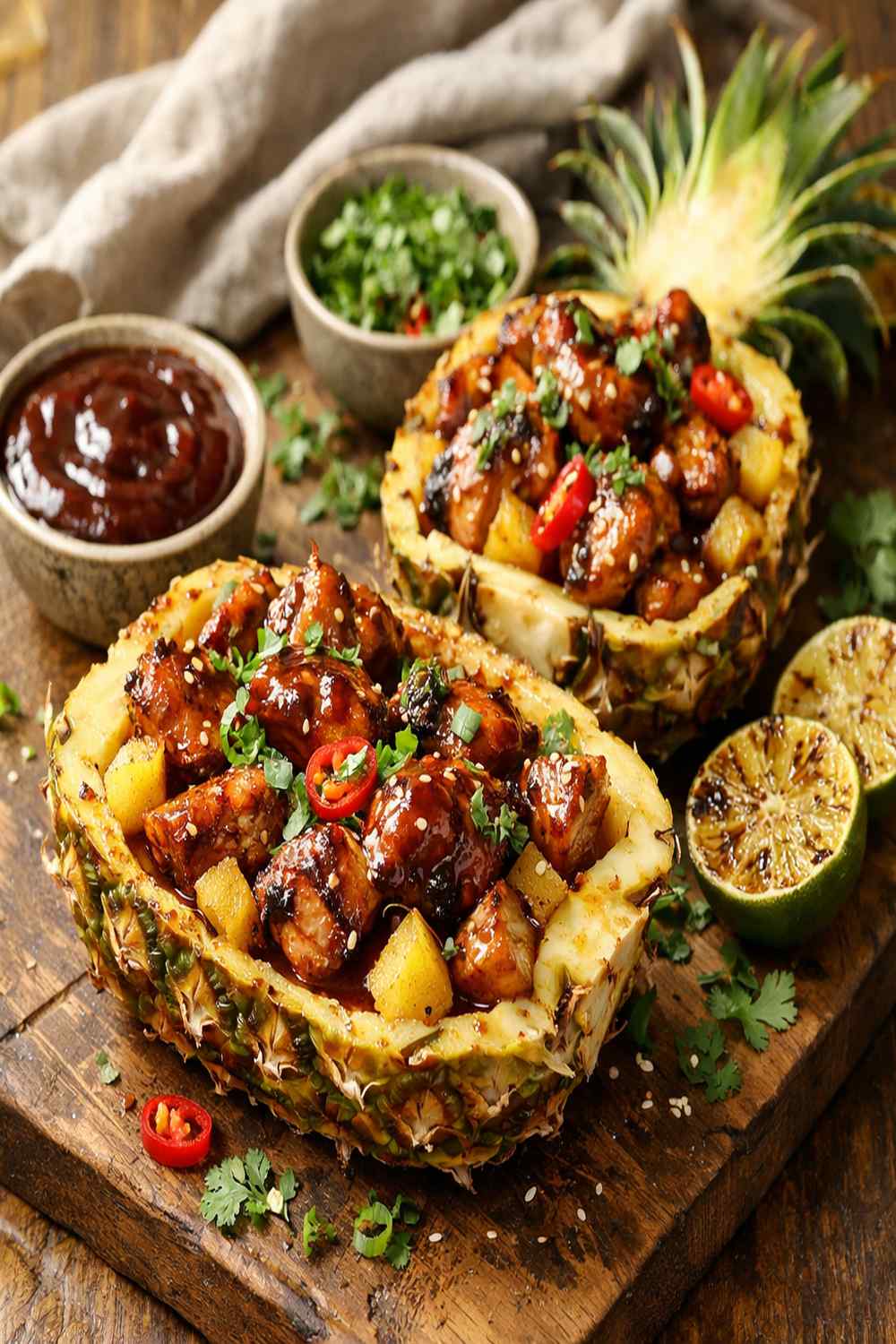
What Is Smoky Tropical BBQ Chicken with Caramelized Pineapple?
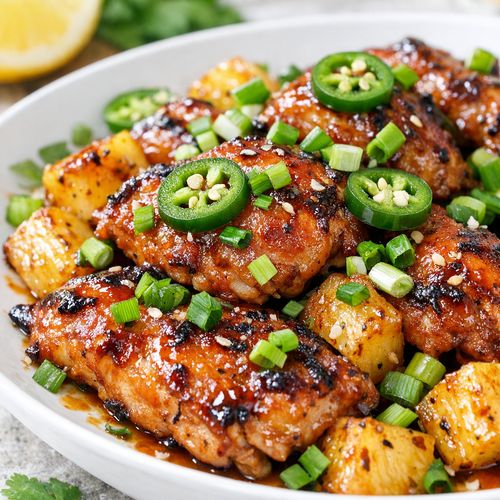
This dish is a modern American twist on classic BBQ traditions, enhanced with tropical sweetness from fresh pineapple. The magic happens when you combine tender chicken thighs with a housemade pineapple-BBQ glaze, then finish everything under the broiler to create a caramelized, slightly charred exterior that’s absolutely irresistible.
The origin story is delightfully simple: it emerged from the crossroads of Hawaiian and Southern barbecue traditions. While pineapple on BBQ isn’t entirely new, the technique of using canned pineapple juice to thin and enhance store-bought BBQ sauce creates a complex glaze that tastes like you spent hours in the kitchen.
What makes this special is the textural contrast—the juicy chicken, the soft-yet-slightly-caramelized pineapple, and the concentrated sauce that clings to everything. It’s elegant enough for guests, simple enough for Tuesday night, and affordable enough that you won’t feel guilty making it twice in the same month.
Why You’ll Love This Smoky Tropical BBQ Chicken Recipe
- Budget-friendly protein choice – Chicken thighs cost significantly less than breasts while delivering more flavor and staying moist during cooking. I typically find them for $3-4 per pound versus $5-7 for breasts.
- One-skillet convenience – Everything cooks in a single pan, which means minimal cleanup and maximum flavor development from the browned chicken bits (what we call fond in the kitchen).
- Broiler caramelization magic – The final broiler step takes this from “good” to “wow” by creating a slightly charred, deeply flavorful exterior in just five minutes.
- Naturally balanced nutrition – You’re getting lean protein, fruit for fiber and vitamins, and enough sauce for satisfaction without excess calories.
- Flexible for dietary needs – Easily works for paleo, whole30, dairy-free, and gluten-free diets (just choose GF BBQ sauce).
- Forgiving cooking method – Chicken thighs are harder to dry out than breasts, making this beginner-friendly even if timing isn’t perfect.
The Ingredients
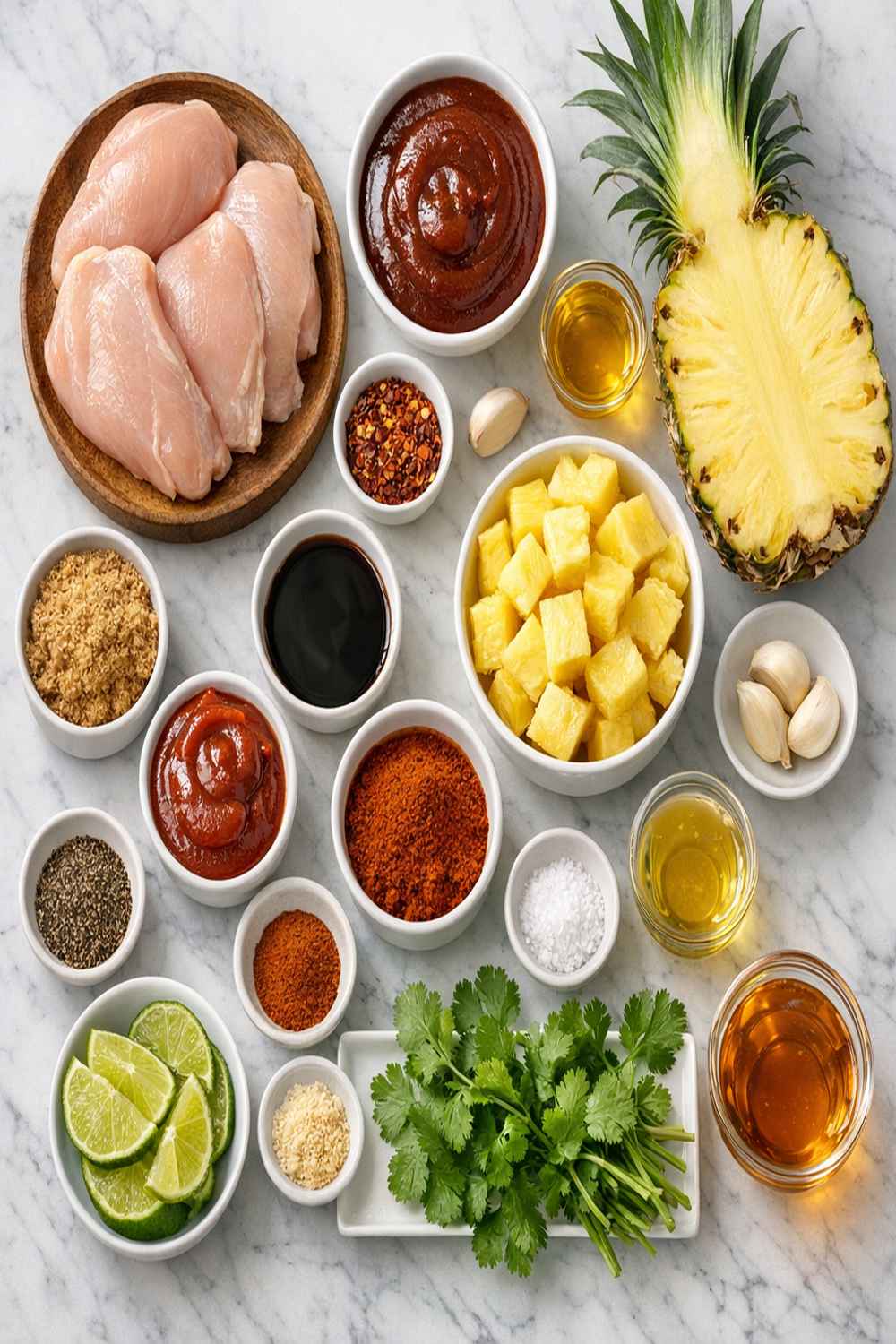
I’ve selected ingredients that are staples in my kitchen and typically on sale at any grocery store. The beauty here is that nothing is fancy or hard to find. You probably have half of these items already, and the budget for the remaining ingredients is genuinely minimal.
- ½ cup BBQ sauce (use your favorite brand or homemade version)
- 20-ounce can pineapple slices in juice (drain and reserve the juice for sauce-building)
- 2.3 pounds boneless, skinless chicken thighs (about 6 thighs, the most economical and flavorful poultry option)
- 2 green onions, sliced thin (for brightness and color contrast)
- 1 tablespoon neutral cooking oil (vegetable, canola, or light olive oil)
- ½ teaspoon kosher salt (plus more to taste)
- ¼ cup reserved pineapple juice (for sauce adjustment if needed)
- ¼ teaspoon freshly cracked black pepper (freshly ground tastes noticeably better)
- 1 jalapeño pepper, thinly sliced (optional, adds gentle heat and fresh flavor)
Total recipe cost: approximately $11.98 | Serves: 4 people | Cost per serving: roughly $3
Budget-Saving Ingredient Swaps I Recommend
- Fresh jalapeño to red pepper flakes: Can’t find jalapeños? A ¼ teaspoon of red pepper flakes at the end delivers similar heat for a few cents.
- Name-brand BBQ sauce to store brand: The store brand performs identically in this recipe. I’ve tested this extensively.
- Canned pineapple to fresh: If fresh pineapple is on sale, use it—just reserve some juice by mixing ¼ cup pineapple juice with water if needed for your sauce.
- Green onions to white onion: Not essential, but if you’re watching pennies, skip them entirely or use a small amount of diced regular onion added during the sauce-building phase.
- Chicken thighs to chicken breasts: If you only find breasts on sale, they’ll work—just reduce cooking time by 2-3 minutes and watch carefully to avoid drying them out.
How to Make Smoky Tropical BBQ Chicken with Caramelized Pineapple
This recipe takes about 30-35 minutes from start to table. The actual hands-on time is maybe 10 minutes—the rest is unattended cooking and broiling. I’ve written these steps to include sensory cues because cooking is about observation, not just following rules.
Step 1: Prepare Your Workspace and Season the Chicken
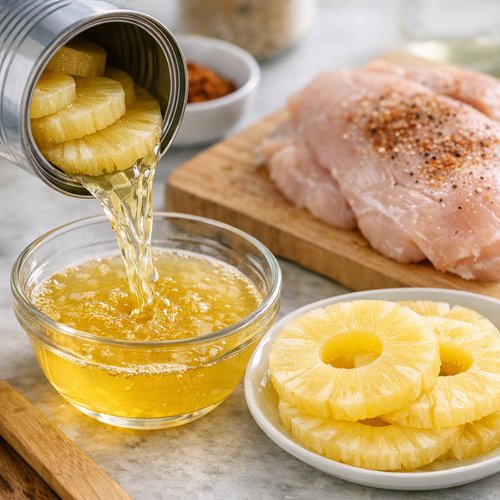
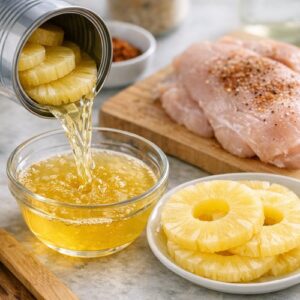
Before any heat gets involved, I open the pineapple can and drain it into a small bowl, reserving every drop of that juice. Set the pineapple slices on a paper towel to drain further. Pat your chicken thighs completely dry with paper towels—this is non-negotiable for golden-brown skin. Moisture prevents browning.
Season both sides of each thigh generously with salt and pepper. I use the back of my hand to rub the seasonings in, making sure they stick to the meat rather than just sitting on the surface. This takes about 90 seconds and makes a real difference in the final flavor.
Step 2: Heat Your Skillet and Build Golden Color
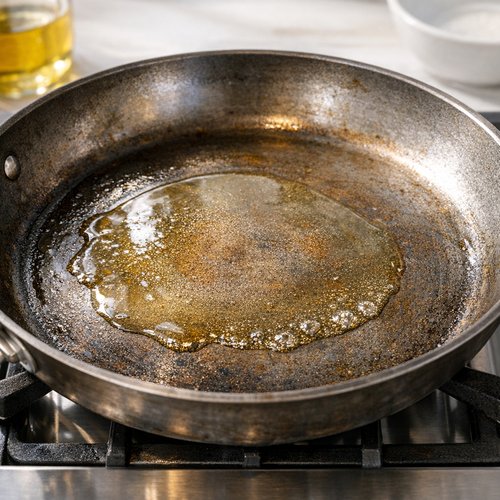
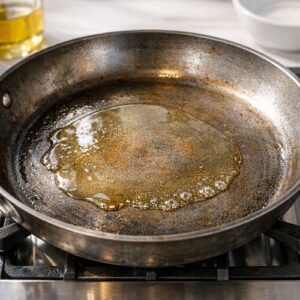
Place a large oven-safe skillet (10 to 12 inches) over medium heat. Add your cooking oil and let it heat for about 60-90 seconds. You’ll know it’s ready when the oil shimmers across the surface and moves easily when you tilt the pan. If you see wisps of smoke, your heat is too high—back it down slightly to medium.
Carefully place each seasoned chicken thigh skin-side down into the hot oil. You should hear an immediate sizzle—that’s the sound of the Maillard reaction, which creates those deeply flavorful, golden-brown layers. Don’t move the chicken. Let it sit undisturbed for 5-6 minutes until the skin releases naturally from the pan and turns a rich golden color.
Flip each thigh and cook the other side for another 4-5 minutes until golden brown. The internal temperature should reach 165°F when measured with a meat thermometer in the thickest part (not touching bone). Remove all chicken to a clean plate and set aside.
Step 3: Build Your Pineapple-BBQ Glaze
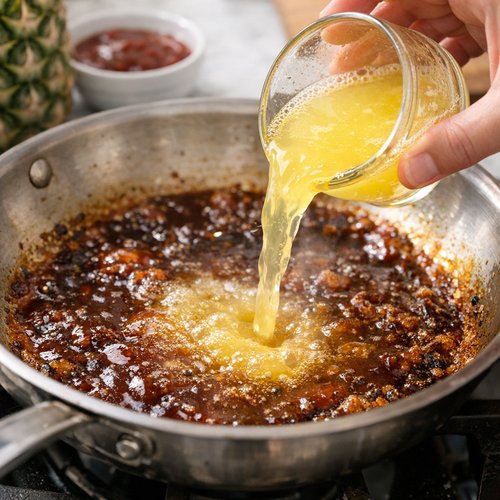
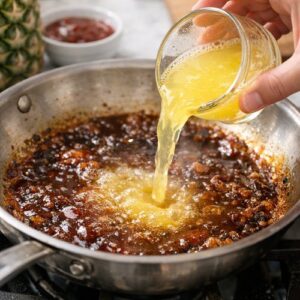
Reduce your stovetop heat to low. The pan is still hot and will retain plenty of heat—this is where the magic happens. Pour about ½ cup of your reserved pineapple juice directly into the hot skillet. You’ll hear a gentle sizzle and see steam rise. Use a wooden spoon to scrape the bottom of the pan, working at those browned, caramelized bits. These are pure flavor, and the juice helps dissolve and incorporate them into your sauce.
After scraping for about 30-45 seconds, add your ½ cup BBQ sauce and stir constantly until everything combines into a thick, glossy mixture. The consistency should coat the back of a spoon but still flow slightly. If it becomes too thick, add another splash of reserved pineapple juice (about 2 tablespoons). Taste it and add a pinch more salt if needed—remember that the pineapple juice adds natural sweetness and slight acidity.
Step 4: Combine Chicken and Pineapple in the Glaze
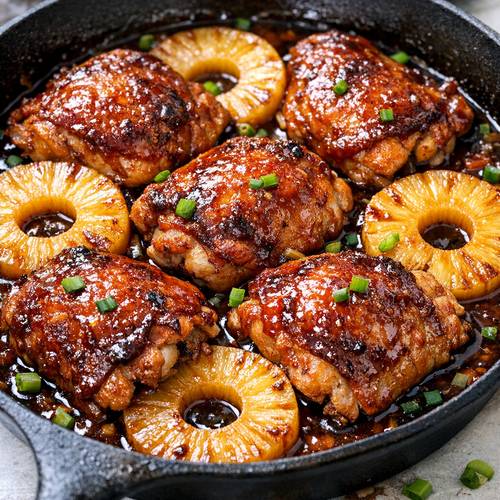
Return your cooked chicken thighs to the skillet, nestling them skin-side up into the sauce. Arrange the drained pineapple slices around and between the chicken pieces. Using your wooden spoon, gently coat every surface—both the chicken and pineapple—with the glaze, spooning extra sauce over the top. This is purely for appearance and flavor distribution, so take your time here. The goal is for everything to be evenly glossed with that beautiful reddish-brown sauce.
Step 5: Broil Until Caramelized and Charred
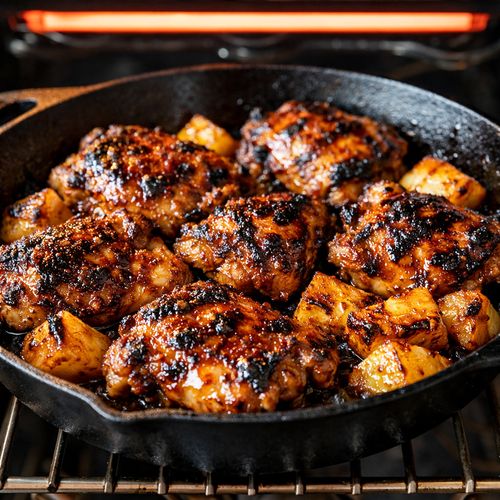
Position your oven rack so your skillet will sit approximately 6 inches below the broiler element. Turn your broiler to high. Transfer your skillet carefully to the oven (use an oven mitt—the handle is hot).
Broil for 4-5 minutes, watching through the oven window. You’re looking for the edges of the sauce to darken and slightly char, and the pineapple to develop caramelized spots. The whole thing happens quickly—don’t walk away. If your skillet isn’t oven-safe (some nonstick skillets aren’t), simply transfer the chicken, pineapple, and all the sauce to a baking dish and broil in the same manner.
Remove from the oven carefully. The skillet handle will be extremely hot. Let it rest for 30 seconds before handling.
Step 6: Finish With Fresh Brightness and Serve
Sprinkle the sliced jalapeño pepper (if using) and green onions over the top of the chicken and pineapple. The fresh, bright flavors of these garnishes cut through the richness of the sauce beautifully. Serve immediately while everything is still hot and the sauce is glossy.
Expert’s Nutritional Tip: Why Chicken Thighs Are More Than Budget-Friendly
As a dietitian, I need to be honest about nutritional value, not just cost. Yes, chicken thighs are cheaper than breasts, but they’re also superior nutritionally in ways that matter. Thighs contain significantly more iron, zinc, and B vitamins (particularly B6 and niacin) than white meat breast.
The higher fat content in thighs—often demonized in diet culture—actually helps your body absorb these fat-soluble nutrients more efficiently. Those fat molecules also carry flavor compounds, which is why thighs taste more interesting. From a satiety perspective (how full you feel), the slightly higher fat content means you’ll be satisfied with smaller portions, which further stretches your food budget.
Additionally, the pineapple in this recipe contributes bromelain, an enzyme with mild anti-inflammatory properties, plus vitamin C and manganese. The BBQ sauce, while sweet, contains tomatoes, which provide lycopene—an antioxidant that becomes more bioavailable when heated.
Tips and Tricks from My Kitchen to Yours
- Don’t skip the browning step – This is where 80% of your flavor develops. Those golden-brown bits are literally caramelized proteins and sugars. Rushing this step will noticeably change your results.
- Use parchment paper under your broiler – If any sauce drips, it won’t splatter across your oven. This saves cleanup time, which means you’re more likely to cook again soon.
- Keep your pineapple juice reserved from step one – Don’t dump it down the sink. That juice is your secret weapon for adjusting sauce consistency and adding subtle sweetness and acidity.
- Pat chicken completely dry – I mention this in the instructions, but it’s worth repeating because it’s the single most important step for browning. Wet chicken steams instead of sears.
- Taste your sauce before serving – Every BBQ sauce brand tastes slightly different. A pinch more salt, a splash more pineapple juice—these micro-adjustments take your recipe from good to exceptional.
- Serve immediately after broiling – The caramelization loses appeal as it sits. This recipe doesn’t hold temperature well, so time your cooking so everything is ready to eat at the same moment.
Make-Ahead Guide: Meal Prep Without Sacrificing Quality
This recipe can be prepared in stages, which is perfect for busy schedules. Here’s my professional approach:
Up to 3 days ahead: Season your chicken thighs, cover with plastic wrap, and refrigerate. When you’re ready to cook, just remove from the fridge 15 minutes before cooking to bring closer to room temperature, which helps even browning.
Up to 1 day ahead: Complete steps 1-4 (browning the chicken and building the glaze in the skillet). Cool slightly, cover tightly with foil, and refrigerate. The next evening, remove from the fridge 20 minutes before broiling, then proceed with step 5. You may need an extra 1-2 minutes of broiling time since everything won’t be quite as warm.
Do not freeze after broiling: The texture of the pineapple deteriorates significantly after freezing and thawing. You can freeze the cooked chicken and sauce before broiling, however.
Day-of quick assembly: If you’re cooking fresh that day, prep your pineapple juice and seasonings while the skillet heats. This shaves 5 minutes off your active cooking time.
Common Mistakes to Avoid
- Using wet chicken: This is the #1 mistake I see. Moisture creates steam, which prevents browning. Pat your chicken completely dry with paper towels, and you’ll immediately see better results.
- Turning the chicken too early: If you flip at 3 minutes instead of 5-6 minutes, the skin tears and you lose that golden-brown exterior. Trust the timing—when it releases naturally, it’s ready.
- Adding the glaze before removing chicken: People often try to build the sauce with chicken in the pan. This prevents the sauce from properly incorporating the browned bits. Always remove chicken first, build your sauce, then return the chicken.
- Not watching during broiling: Broilers vary wildly in intensity. Five minutes in one oven might be perfect; in another, it could burn. Stay nearby and adjust timing based on what you see.
Seasonal Variations You Can Try Year-Round
Spring: Add fresh asparagus spears to the skillet during broiling. They’ll caramelize beautifully and add elegant color.
Summer: Incorporate fresh strawberries or peaches alongside the pineapple for seasonal sweetness. Their flavors complement BBQ sauce beautifully.
Fall: Add a splash of apple cider vinegar to your glaze and include thin apple slices. This bridges the gap between BBQ tradition and autumn flavors.
Winter: The basic recipe works year-round, but if you want a variation, add a pinch of smoked paprika to enhance the BBQ character when fresh grilling isn’t an option.
Can I Store Smoky Tropical BBQ Chicken with Caramelized Pineapple?
Absolutely. This recipe stores well if you follow these guidelines. Let the cooked chicken and pineapple cool to room temperature (about 30 minutes), then transfer to an airtight container. Stored in the refrigerator, it keeps for 3-4 days safely. The sauce congeals slightly as it cools, which actually makes reheating easier—just pop it in a 350°F oven for 8-10 minutes until warmed through.
For freezing, I recommend removing the chicken and pineapple from the sauce first. Freeze them separately in freezer bags for up to 2 months. The sauce can be frozen separately as well. When thawing, do so in the refrigerator overnight, then reheat gently on the stovetop to preserve texture.
This recipe doesn’t reheat well in the microwave—the sauce can become rubbery. The oven or stovetop are your best bets for maintaining the quality you worked to create.
Nutrition Information
Per serving (based on 4 servings, including 1.5 chicken thighs, pineapple slices, and sauce): Calories: 385 | Protein: 38g | Fat: 16g | Carbohydrates: 22g | Fiber: 1g | Sugar: 18g | Sodium: 620mg
This data is calculated from USDA nutritional databases and varies slightly based on specific brand choices for BBQ sauce. The protein content makes this an excellent muscle-building meal, while the carbohydrates from pineapple provide quick energy and fiber for digestion.
The sodium content reflects the BBQ sauce primarily. If you’re watching sodium intake, look for reduced-sodium BBQ sauce options, which can cut this number by one-third or more. The calcium content is modest (about 40mg per serving), so pairing this with a leafy green salad as a side boosts nutritional density significantly.
What Can I Serve With Smoky Tropical BBQ Chicken with Caramelized Pineapple?
The beauty of this recipe is how versatile it is as a main protein. Since the sauce is rich and slightly sweet, I look for sides that either complement that sweetness or provide textural contrast.
A crisp affordable salad recipe with a sharp vinaigrette cuts beautifully through the BBQ richness. Think arugula with a simple lemon dressing, or romaine with a tangy ranch. On the warm-side spectrum, baked beans recipe on the stovetop is the classic companion—the earthiness of beans balances the tropical notes perfectly.
- Steamed jasmine rice or coconut rice – Absorbs the sauce and complements the tropical pineapple flavor. Budget option: plain white rice works beautifully too.
- Roasted sweet potato wedges or fries – The natural sweetness plays with the BBQ sauce, and the crispy exterior provides textural contrast.
- Buttered corn on the cob – Summer classic that’s affordable and pairs perfectly with BBQ flavors.
- Simple coleslaw with creamy dressing – Adds fresh crunch and creaminess that offsets the sauce richness.
- Grilled or steamed broccoli with garlic – The slight bitterness of broccoli provides flavor balance.
- Dinner rolls or cornbread – For soaking up every drop of that precious sauce.
Substitutes and Ingredient Variations
- Chicken breasts instead of thighs: Reduce cooking time by 2-3 minutes per side. Check internal temperature at 165°F. Breasts will be drier, so don’t skip the sauce.
- Turkey thighs: A leaner option that cooks similarly. Cost is comparable to chicken thighs.
- Pork chops or pork tenderloin: BBQ and pork are classic partners. Adjust cooking time based on thickness.
- Fresh pineapple instead of canned: Chop or slice fresh pineapple and reserve juice from the core by blending it. The texture will be firmer and less likely to break apart during broiling.
- Homemade BBQ sauce: If you prefer to skip store-bought, combine ketchup (½ cup), brown sugar (2 tablespoons), apple cider vinegar (1 tablespoon), Worcestershire sauce (1 teaspoon), and mustard (1 teaspoon). This costs about $0.40 and tastes remarkable.
- Papaya or mango instead of pineapple: These fruits are less acidic and more delicate, so they’ll require slightly less broiling time to prevent overcooking.
- Hot sauce instead of jalapeño garnish: If you prefer heat built into the dish rather than a garnish, add a teaspoon of your favorite hot sauce to the glaze.

Bbq Chicken Pineapple Recipe
Ingredients
Method
- Before any heat gets involved, I open the pineapple can and drain it into a small bowl, reserving every drop of that juice. Set the pineapple slices on a paper towel to drain further. Pat your chicken thighs completely dry with paper towels—this is non-negotiable for golden-brown skin. Moisture prevents browning. Season both sides of each thigh generously with salt and pepper. I use the back of my hand to rub the seasonings in, making sure they stick to the meat rather than just sitting on the surface. This takes about 90 seconds and makes a real difference in the final flavor.
- Place a large oven-safe skillet (10 to 12 inches) over medium heat. Add your cooking oil and let it heat for about 60-90 seconds. You'll know it's ready when the oil shimmers across the surface and moves easily when you tilt the pan. If you see wisps of smoke, your heat is too high—back it down slightly to medium. Carefully place each seasoned chicken thigh skin-side down into the hot oil. You should hear an immediate sizzle—that's the sound of the Maillard reaction, which creates those deeply flavorful, golden-brown layers. Don't move the chicken. Let it sit undisturbed for 5-6 minutes until the skin releases naturally from the pan and turns a rich golden color. Flip each thigh and cook the other side for another 4-5 minutes until golden brown. The internal temperature should reach 165°F when measured with a meat thermometer in the thickest part (not touching bone). Remove all chicken to a clean plate and set aside.
- Reduce your stovetop heat to low. The pan is still hot and will retain plenty of heat—this is where the magic happens. Pour about ½ cup of your reserved pineapple juice directly into the hot skillet. You'll hear a gentle sizzle and see steam rise. Use a wooden spoon to scrape the bottom of the pan, working at those browned, caramelized bits. These are pure flavor, and the juice helps dissolve and incorporate them into your sauce. After scraping for about 30-45 seconds, add your ½ cup BBQ sauce and stir constantly until everything combines into a thick, glossy mixture. The consistency should coat the back of a spoon but still flow slightly. If it becomes too thick, add another splash of reserved pineapple juice (about 2 tablespoons). Taste it and add a pinch more salt if needed—remember that the pineapple juice adds natural sweetness and slight acidity.
- Return your cooked chicken thighs to the skillet, nestling them skin-side up into the sauce. Arrange the drained pineapple slices around and between the chicken pieces. Using your wooden spoon, gently coat every surface—both the chicken and pineapple—with the glaze, spooning extra sauce over the top. This is purely for appearance and flavor distribution, so take your time here. The goal is for everything to be evenly glossed with that beautiful reddish-brown sauce.

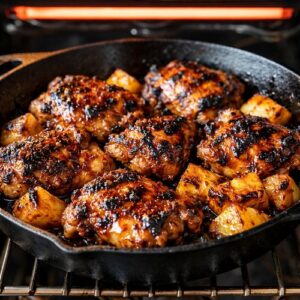
- Position your oven rack so your skillet will sit approximately 6 inches below the broiler element. Turn your broiler to high. Transfer your skillet carefully to the oven (use an oven mitt—the handle is hot). Broil for 4-5 minutes, watching through the oven window. You're looking for the edges of the sauce to darken and slightly char, and the pineapple to develop caramelized spots. The whole thing happens quickly—don't walk away. If your skillet isn't oven-safe (some nonstick skillets aren't), simply transfer the chicken, pineapple, and all the sauce to a baking dish and broil in the same manner. Remove from the oven carefully. The skillet handle will be extremely hot. Let it rest for 30 seconds before handling.
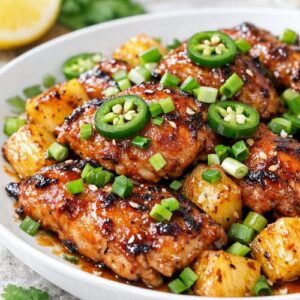
- Sprinkle the sliced jalapeño pepper (if using) and green onions over the top of the chicken and pineapple. The fresh, bright flavors of these garnishes cut through the richness of the sauce beautifully. Serve immediately while everything is still hot and the sauce is glossy.
Notes
FAQs
Can I make this recipe on the grill instead of using the broiler?
Yes, absolutely. This is actually how I make it in summer. After browning and building your glaze on the stovetop (steps 1-4), transfer everything to a grill-safe baking dish and place on a preheated medium-hot grill for 3-4 minutes. The direct heat creates similar caramelization. Alternatively, brush the sauce onto the chicken and pineapple, and grill directly for 2-3 minutes per side, being careful not to scorch.
What if my skillet isn’t oven-safe?
Transfer the cooked chicken, pineapple, and all sauce to a baking dish after step 4, then proceed with broiling in step 5. The results are identical. Alternatively, skip the broiling entirely and serve as-is—it’s still delicious, just without the caramelized edges.
Can I double this recipe?
Yes, but use two skillets or a large roasting pan rather than crowding one skillet. Crowding reduces browning and creates steam instead of that beautiful golden color. The sauce-building and broiling steps remain the same, though you may need an extra 1-2 minutes of broiling time for everything to caramelize evenly.
How do I prevent the pineapple from falling apart during cooking?
Canned pineapple is already soft, so it doesn’t require much cooking. Make sure your broiler isn’t directly touching the pineapple—position them next to the chicken rather than directly under the heating element. If using fresh pineapple, it holds together much better.
Is there a way to make this recipe less sweet?
Certainly. Use a sugar-free or reduced-sugar BBQ sauce (which costs about the same as regular), and reduce the amount of pineapple juice you add to the glaze. You can also add a splash of apple cider vinegar or lime juice to the sauce to increase acidity and balance sweetness. The jalapeño garnish also helps cut through sweetness.
Can I make this recipe dairy-free or paleo?
This recipe is naturally dairy-free as written. For paleo compliance, verify your BBQ sauce contains no added sugars (many brands do have added sugar). Some paleo enthusiasts use coconut aminos or tamari-based sauces. The rest of the ingredients are completely paleo-compliant.
What temperature should my broiler be?
Most home broilers run at a fixed high setting, typically around 500-550°F. Some newer ovens offer adjustable broiler settings. If yours is adjustable, use the high setting for this recipe. Watch carefully since broiler intensity varies significantly between appliances.
More Recipes You’ll Love
- Baked Creamy Chicken Recipe – A comforting one-pan option for cooler months
- my favorite salad – Perfect cool-weather side that keeps for days
- Baked Chimichangas Recipe – Another budget-friendly crowd-pleaser using affordable proteins
- 4 Deviled Eggs Recipe – Great for appetizers or meal prep
- This Easy Chicken Dinner – Worth adding to your recipe collection.
- This Homemade Beef Recipe – Worth adding to your recipe collection.
- This Flavorful Chicken Dish – Worth adding to your recipe collection.
This smoky tropical BBQ chicken recipe is proof that restaurant-quality meals don’t require restaurant-level budgets. It’s about understanding flavor development, choosing ingredients strategically, and taking time with the browning step. That’s the real secret.
I hope you’ll make this soon, and I’d absolutely love to hear how it turns out for your family. Does it become a regular rotation? Did you try any of the substitutions? Did it inspire other BBQ experiments in your kitchen? Please don’t forget to mention @affordablefoodideas if you try this recipe—I follow along and genuinely celebrate every meal my readers create. Thank you for being part of this affordable food journey with me.