
Ingredients
Method
Step 1: Build Your Flavor Base With Aromatics
- Set a large Dutch oven or heavy-bottomed saucepan over medium-high heat. Add your 1.5 tablespoons of coconut oil (or neutral oil—vegetable or canola work fine). Refined coconut oil costs less than unrefined and tastes just as good when you're cooking with spices. Wait 30-45 seconds until the oil shimmers—that's your signal it's hot enough. Add your diced onion and carrots along with a small pinch of kosher salt. This salt helps release the vegetables' natural moisture, which actually cooks them faster and more evenly. Stir occasionally for 7-8 minutes until the vegetables soften and develop light brown spots. You're not trying to caramelize heavily—just get them tender and slightly golden. Money-saving tip: If you've got a yellow onion sitting in your pantry, use it. If you've got carrots from last week's grocery trip, use those. Perfect vegetables are expensive; good vegetables in your kitchen are free.
Step 2: Wake Up the Curry Paste and Spices
- Reduce the heat to medium. Add your minced garlic, grated ginger, and 5 tablespoons of red curry paste to the softened vegetables. Stir constantly for 2 full minutes. This step is crucial and costs you nothing except attention. You're cooking the raw spices and the paste until they become fragrant and stop looking so raw. If the mixture looks like it's sticking or drying out (which happens if your pan isn't heavy or if the heat is too high), add a tablespoon or two of water. This prevents the spices from burning and sticking to the bottom. I learned this from my mom, who never let good food burn on the bottom of a pot. If you're using the optional lemongrass and bird's eye chilies, add them now. If you're not using them, that's absolutely fine—this curry tastes incredible either way. Fresh lemongrass and Thai chili peppers add complexity, but they're not essential for the cost-conscious version.
Step 3: Bloom the Curry in Coconut Milk
- Pour just 2 tablespoons of your coconut milk into the curry paste mixture. Let it bubble for about 1 minute, stirring constantly and scraping the bottom of the pot. This blooming step helps the paste distribute evenly throughout the final curry and prevents clumps. Now pour in your 1 cup of vegetable broth, again using a wooden spoon or spatula to scrape up all the brown, flavorful bits stuck to the bottom of the pan. This is called deglazing, and it's where a ton of flavor comes from. Those browned bits cost nothing to capture but add restaurant-level depth. Add the remaining coconut milk, stirring to combine. The curry should look creamy and golden now.
Step 4: Add the Butternut Squash and Bring to a Simmer
- Add your cubed butternut squash (5 cups), along with 2.5 tablespoons soy sauce and 1.5 tablespoons coconut sugar. Use reduced-sodium soy sauce to keep sodium in check—your body gets enough salt from other places. If you don't have coconut sugar, pure maple syrup works identically and costs about the same. Regular granulated sugar works too, though it dissolves less smoothly. Stir everything to combine, then increase the heat to high and bring the mixture to a rolling boil. Once boiling, immediately reduce the heat to low or medium-low, where it maintains a rapid simmer. You want gentle bubbles breaking the surface, not an aggressive rolling boil that evaporates your liquid too quickly. Simmer for 20 minutes, stirring occasionally, until the butternut squash is completely tender. You should be able to easily pierce a cube with a fork. Don't skip this—undercooked squash tastes starchy and won't blend properly.
Step 5: Blend for Creamy Texture
- Turn off the heat. Here's where texture becomes important: I blend roughly half of the curry to create a thick, creamy sauce while leaving some squash chunks intact. This gives you both smoothness and texture, which is more interesting to eat than a completely puréed soup. If you have an immersion blender, use it directly in the pot. Submerge it in the liquid, then blend for 30-45 seconds until roughly half the mixture looks puréed and creamy. You'll see chunks of squash still floating—that's exactly right. If you don't have an immersion blender, carefully ladle half the curry into a regular blender, blend until smooth (work in batches if needed—hot liquid can splash), then pour it back into the pot and stir. Budget note: If you own neither blender, you can mash some of the squash with the back of a spoon against the side of the pot. It creates texture and thickness, though it won't be quite as smooth.
Step 6: Add Protein and Greens
- Stir in your drained chickpeas (2 cans) and bring the curry back to a gentle simmer over medium heat. Let it bubble softly for 2-3 minutes so the chickpeas warm through and absorb some of the curry flavor. Turn the heat off again, then stir in your 4 cups of fresh baby spinach or kale. Stir constantly for about 1 minute until the greens completely wilt. You don't need to cook them—residual heat does the work. This keeps them bright green and nutritious instead of dull and overcooked.
Step 7: Finish With Brightness and Herbs
- Taste the curry. Add 1 tablespoon of lime juice or rice vinegar—this brightens everything and adds complexity that tastes expensive but costs $0.30. Taste again and add salt if needed. Most people find it's perfectly seasoned already. If you have fresh Thai basil or cilantro, tear the basil leaves to release their essential oils and add them along with roughly chopped cilantro. These herbs are optional—if you skip them, you still have a five-star curry. They add freshness, but fresh herbs aren't essential to the budget.
Step 8: Serve
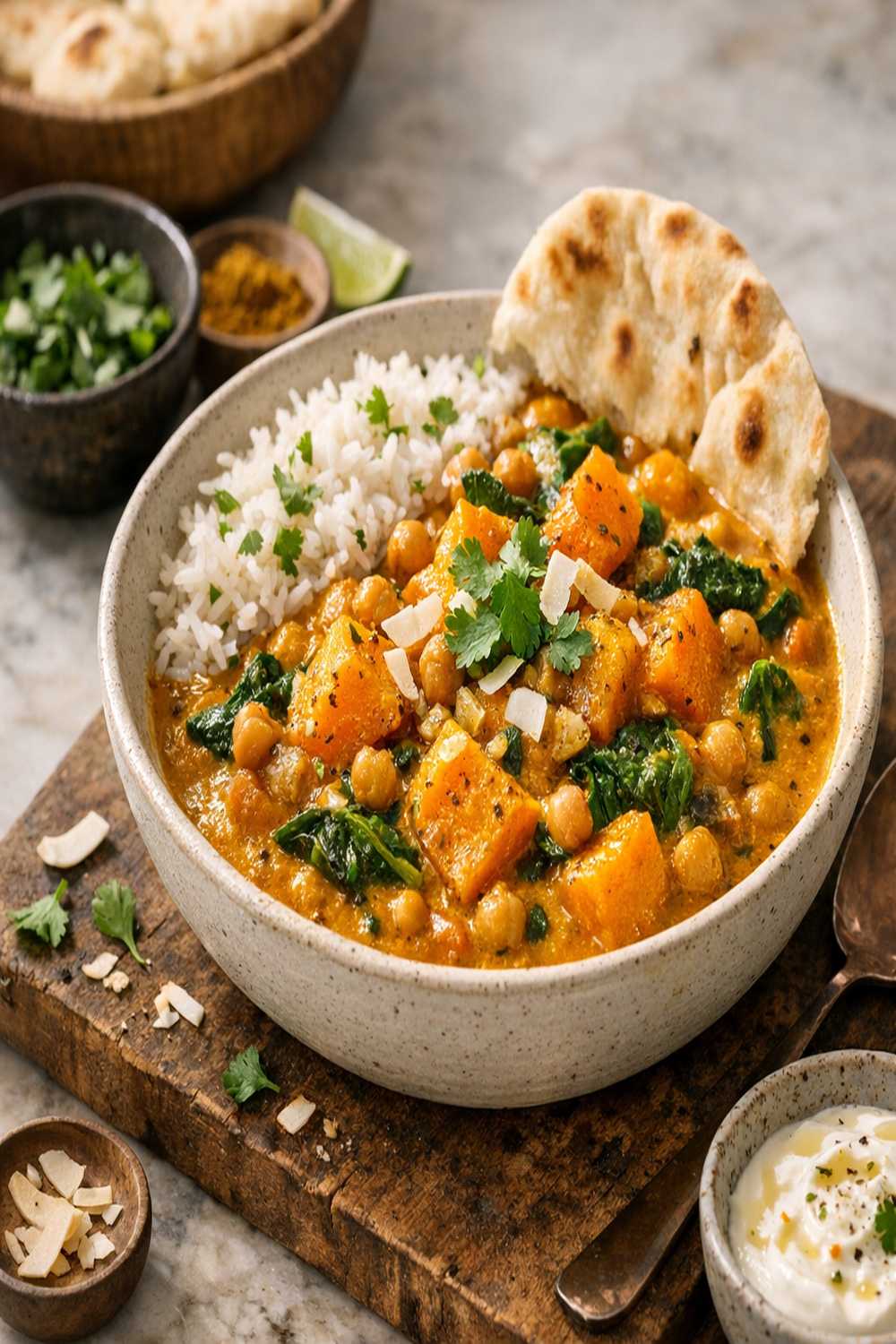
- Serve immediately over white or brown rice. If you don't have rice, this curry is thick enough to eat with bread or even on its own. The recipe makes enough for 4 generous main-course servings with about 1.5 cups curry per person.
Notes
- Buy butternut squash seasonally (September through December) - Prices drop 40-60% during fall harvest. I buy 3-4 at once, cube them, and freeze in gallon bags for $0.80 each instead of $2.50. Even better: many stores mark down imperfect squashes by 50%—they taste identical.
- Shop the international aisle for curry paste instead of specialty stores - One $4 jar of red curry paste makes 6+ pots of curry (you only use 5 tablespoons). Store brands at mainstream groceries are $2-3 cheaper than specialty shops and taste the same.
- Buy canned chickpeas in bulk when on sale, not individually - Watch for "stock up" sales at big-box stores where 4 cans sell for $1.60 instead of $0.75 each. I buy 12 cans when on sale and use them throughout the month for curries, salads, and Buddha bowls.
- Choose full-fat canned coconut milk from the regular grocery aisle, not specialty - The $1.50-2.00 store brand works beautifully. Avoid "lite" versions—you lose the creaminess that makes this special, and the savings aren't worth it.
- Fresh ginger from the bulk produce bin beats pre-packaged - You pay $0.50/pound instead of $3.99 for a small package, and you only buy what you need.