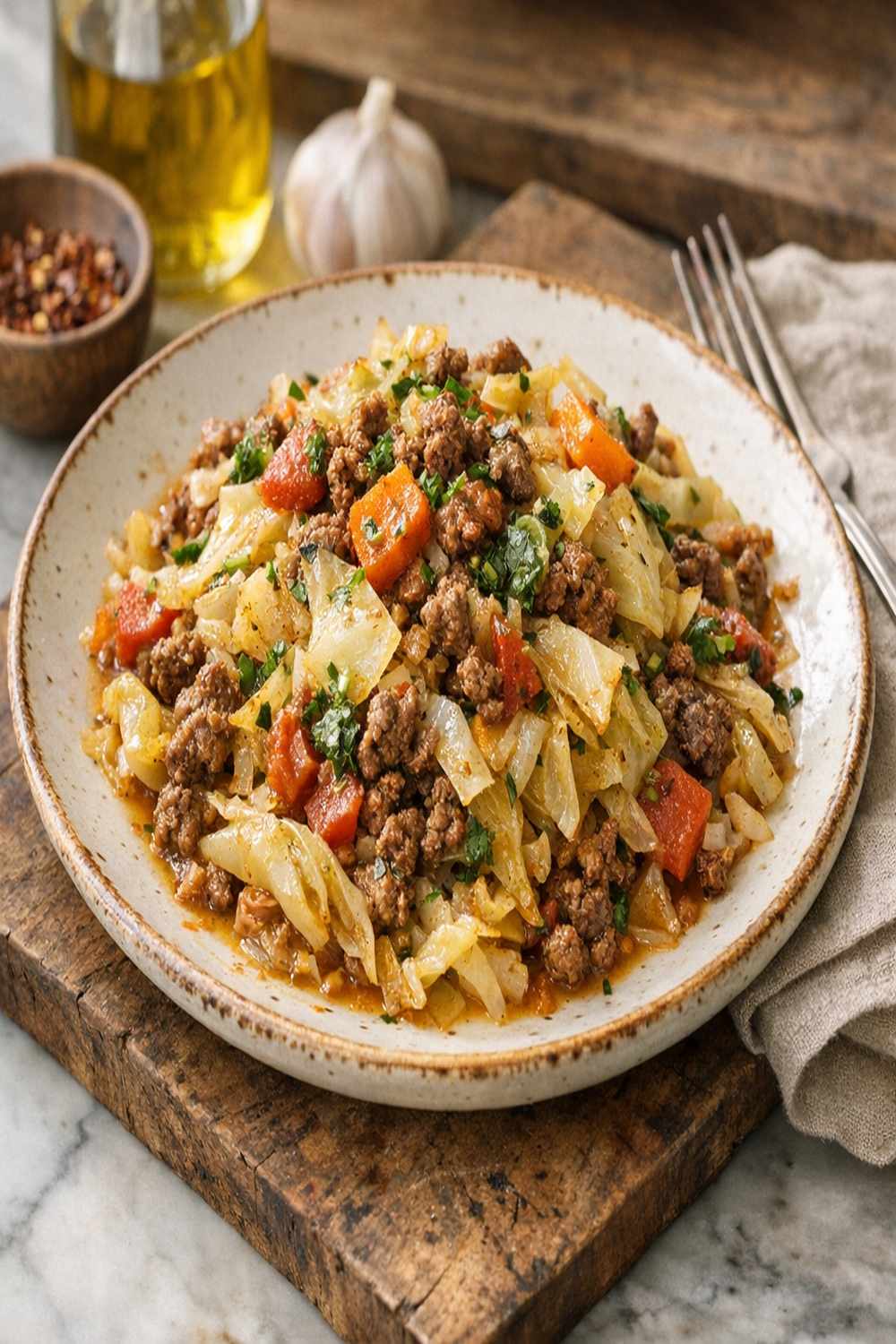

Ingredients
Method
Step 1: Prepare Your Onion and Build the Base
- Start by peeling your yellow onion and cutting it in half. Take one half and finely chop it—these pieces should be ¼ inch or smaller so they soften into the beef and disappear, building flavor rather than adding texture. Set this aside on your cutting board. Take the remaining half and thinly slice it into half-moons. These slices will caramelize later and add visible texture to the finished dish. Keeping them separate gives you two different textural outcomes from one onion, which is smart cooking.
Step 2: Heat Your Pan and Sauté the Chopped Onion
- Place a large, heavy skillet with a lid over medium-high heat. Add 2 tablespoons of extra virgin olive oil—you want it to shimmer (look like water with a sheen of oil on top) but not smoke. This takes about 60 seconds. Once it's ready, add your chopped onion and stir occasionally for about 3 to 5 minutes. You're looking for softness and a light golden color, but not browning. If it's browning, your heat is too high; turn it down. You'll know it's ready when the onion smells intensely sweet and fragrant—that's the natural sugars beginning to caramelize. At the 4-minute mark, add your 2 minced garlic cloves and stir constantly for exactly 30 seconds. This prevents garlic from scorching, which creates bitterness. You want just enough heat to release garlic's beneficial compounds without destroying its delicate flavor.
Step 3: Brown Your Ground Beef and Build Flavor
- Increase heat to medium-high and add your pound of lean ground beef directly to the pan with the onion and garlic. Using a wooden spoon, break the beef into small, uniform pieces as it cooks. This matters—smaller pieces brown faster and more evenly, developing the flavorful browned exterior that makes this dish taste intentional. Stir occasionally (every minute or so) and let it cook undisturbed between stirs. This gives the beef contact with the hot pan. Cook for 7 to 10 minutes until no pink remains and the beef has developed a rich brown color. Here's the professional tip I share with clients: don't drain your beef immediately. Let it rest in the pan for 1 minute so the juices redistribute. This keeps the meat tender rather than dried out. Then, tilt the pan and spoon away excess fat into a small bowl (save it for cooking tomorrow—it's flavor gold). Now season everything in the pan with ½ teaspoon of cumin, the baharat, coriander, paprika, and a generous pinch each of kosher salt and black pepper. Stir well to coat all the meat. Transfer everything to a clean plate and set aside.
Step 4: Sauté the Vegetables and Build Sweetness
- Return your skillet to the stove and add the remaining 2 tablespoons of olive oil over medium-high heat. Once it shimmers, add your sliced onion, shredded cabbage, shredded carrots, and the remaining ½ teaspoon of cumin. Toss everything to coat thoroughly with oil. This prevents sticking and ensures even cooking. Season generously with kosher salt and black pepper. This step is crucial: cover the pan immediately and let it sit undisturbed for 3 to 5 minutes. The heat and steam trapped inside will cause the cabbage to release its natural moisture, which becomes a light braise. The vegetables soften dramatically in this time, and the carryover heat begins caramelization. You'll smell sweet, sulfurous aromas—that's exactly right.
Step 5: Finish Cooking and Develop the Final Flavor
- Uncover the pan carefully (watch for steam). Now continue cooking without the lid, stirring occasionally, for about 15 minutes. You're looking for the vegetables to become tender and for the cabbage to develop brown, caramelized spots—this is called the Maillard reaction, and it's what makes simple food taste delicious. The cabbage should be soft enough to break apart with your spoon but still maintain its shape. The vegetables will initially release liquid (which cooks off), then begin to concentrate and brown. When you see golden spots on the cabbage and the volume has reduced by about 40%, you're there. This happens gradually, so check every 3 to 4 minutes by lifting the lid and looking at the pan's color.
Step 6: Reunite and Finish
- Return your cooked beef mixture to the pan with the vegetables and toss everything together thoroughly. Cook for 1 to 2 minutes, just until the beef is warmed through and everything is combined. Remove from heat and stir in your 1 teaspoon of white wine vinegar, chopped scallions, and fresh parsley. Taste the dish and season with a bit more salt or pepper if needed. If you love olive oil, add a final small drizzle here—it brings a bright, fresh finish that elevates everything. Serve warm, and watch how people respond. This isn't fancy food, but it's the kind of food that makes people happy because it tastes honest and nourishing.