

Ingredients
Method
Step 1: Drain and Inspect Your Canned Salmon
- Open all your cans and drain the liquid into a separate container (you can save it for broth if you're extremely budget-conscious, though most people discard it). Here's the critical part: if you've selected salmon with skin and bones, you have two options. You can remove them—which takes about three minutes but increases your yield and texture slightly—or you can crush them directly into the mixture. As a registered dietitian, I always leave the bones in because they're packed with bioavailable calcium. Most people can't taste them, and nutritionally, you're significantly upgrading your meal. If you're removing them, do this step first and set the cleaned salmon aside. If you're keeping them, simply flake the salmon into your mixing bowl.

Step 2: Combine All Ingredients in One Large Mixing Bowl
- This is where the system gets efficient. Add your drained salmon to a large bowl—I use a stainless steel mixing bowl because it's durable and easy to clean. Crack both eggs directly into the bowl. Mince your green onions while your eggs are right there—the motion is repetitive and you're already focused. Add your panko bread crumbs, grated parmesan, lime juice, salt, and pepper. Using your hands (clean hands are essential here) combine everything with a squeezing motion for about one minute. The mixture should hold together when you squeeze it; if it seems too loose, add one additional egg yolk or a tablespoon of mayonnaise. This is not a delicate process—don't overmix, but do mix thoroughly so the binder is evenly distributed.
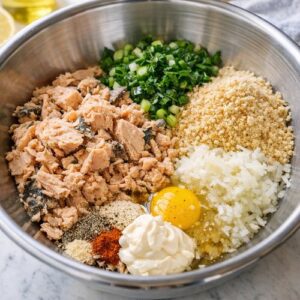
Step 3: Form Eight Equal Patties at Room Temperature
- Divide your mixture into eight portions. The fastest way to do this is to eye-divide your bowl into quarters, then divide each quarter in half. Wet your hands slightly with water—this prevents sticking. Form each portion into a patty that's no more than one inch thick. This thickness is intentional: too thin and they'll dry out during cooking; too thick and they won't cook through properly. If you want salmon burgers instead, make four larger patties to fit your buns. Place formed patties on a cutting board or large plate. At this point, you can refrigerate for up to two hours before cooking, which actually improves their texture slightly.

Step 4: Heat Your Oil and Cook in Batches
- Place a large skillet (preferably cast iron or stainless steel) over medium-high heat. Add your four tablespoons of oil. Wait until the oil shimmers and a small piece of bread crumb sizzles immediately when dropped in—this indicates your temperature is correct. Working carefully, add four patties to the pan, leaving space between each one. They should sizzle on contact. Cook for 5-7 minutes without moving them. This is the golden rule of patty cooking: resist the urge to flip too early. You're building a golden crust. After 5-7 minutes, flip gently using a thin spatula. Cook the second side for another 5-7 minutes until golden brown. Transfer to a cooling rack or clean plate. Repeat with your remaining four patties, adding a bit more oil if the pan looks dry.
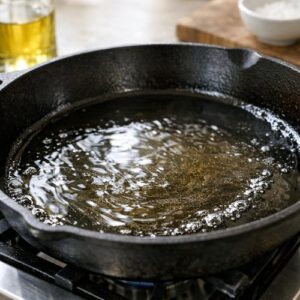
Step 5: Cool Completely Before Storage
- This step is crucial for successful meal prep. Allow your patties to cool to room temperature—about 20-30 minutes—before transferring to storage containers. Warm food releases steam, which creates condensation in your containers and leads to soggy patties by Wednesday. Patience here saves your entire week of meals. While they're cooling, prep your storage containers and wash your dishes.