
This post contains affiliate links. As an Amazon Associate I earn from qualifying purchases.
I’m going to be honest with you—when life gets hectic, the first thing to crumble is your meal plan. You end up ordering takeout three nights a week, telling yourself you’ll cook tomorrow, and before you know it, your grocery budget has vanished and you’re eating processed foods that leave you feeling sluggish. I learned this the hard way about eight years ago when I was balancing my RD certification with a full-time job and a household that needed feeding.
Then I discovered the power of making one batch of protein on Sunday that transforms into four completely different meals throughout the week. This canned salmon patties recipe became my secret weapon. It’s affordable, packed with omega-3 fatty acids, requires just seven simple ingredients, and honestly, it’s become one of my most requested recipes from clients who are tired of eating the same thing every night.
Make this once on Sunday and eat well all week—that’s the promise I’m making to you. Whether you’re pairing these with an affordable salad recipe on Monday or building them into a grain bowl by Friday, this recipe is the foundation of smart meal prep. Let me show you how I do it.
Canned Salmon Patties Recipe Meal Prep: Cook Once, Eat All Week
I’ll never forget the Tuesday evening when my neighbor, Janet, knocked on my door around 5 PM. She was stressed, hungry, and had three kids asking about dinner with no plan in place. I opened my fridge and pulled out a container of salmon patties I’d made the Sunday before. Within minutes, I served her family dinner—warm patties with a simple salad and leftover roasted vegetables. She called me the next day asking how I made meal prep look so effortless.
The truth is, it’s not effortless—it’s intentional. There’s a real difference. Effortless suggests it happens by accident. Intentional means you’ve decided in advance that you’re going to own your week instead of letting your week own you. This salmon patties recipe is the fastest way I know to take back control of your dinnertime without spending a fortune or standing in the kitchen every single evening.

Why This Recipe Is Perfect for Meal Prep
- Saves you 45 minutes across the week – You’re cooking once for 4-5 meals instead of cooking four or five separate dinners. That’s nearly an hour of your life back. On a Friday night, that might mean you actually have time to rest instead of rushing through another cooking session.
- Stays fresh and holds texture for five full days – Unlike many proteins that dry out or become mushy, salmon patties maintain their structural integrity when stored properly. I’ve tested this extensively with my clients, and the patties taste just as good on day five as they do on day two when kept in airtight containers.
- Transforms into four different meals without repetition – Monday it’s a warm patty over greens. Wednesday it’s the centerpiece of a grain bowl. Friday it becomes a cold salad topper. Your palate stays interested, your meals feel varied, and you’re not eating “leftovers”—you’re eating intentional meal prep.
Your Weekly Meal Plan With This Recipe
Here’s exactly how I structure an entire week around one batch of salmon patties. The beauty of this approach is that each meal feels completely different even though you’re using the same base recipe. This is strategic meal design—using a single prepared ingredient as the foundation for varied, interesting meals.
- Monday Dinner: Warm Patties Over Mixed Greens – Serve your patty fresh from the refrigerator (or lightly warmed) over a bed of mixed greens, shredded carrots, cucumber, and a simple lemon vinaigrette. This is your “fresh” version while the patties are still at their peak texture.
- Wednesday Lunch: Salmon Patty Grain Bowl – Warm your patty and crumble it over a bed of brown rice or quinoa. Top with roasted vegetables, avocado if your budget allows, and a drizzle of tahini dressing. This transforms it into a completely different eating experience.
- Friday Dinner: Cold Salmon Salad on Toast – Crumble your salmon patty into a bowl with a tablespoon of mayonnaise, diced celery, and fresh dill. Serve on whole grain toast with tomato slices. This is the transformation that makes your guests forget you’re eating meal prep.
- Saturday Breakfast: Salmon Patty Scramble – Crumble a patty into scrambled eggs with spinach and cheese. Serve with whole grain toast. Breakfast for dinner is always budget-friendly and takes five minutes when your protein is already prepared.
The Ingredients – Scaled for a Full Week
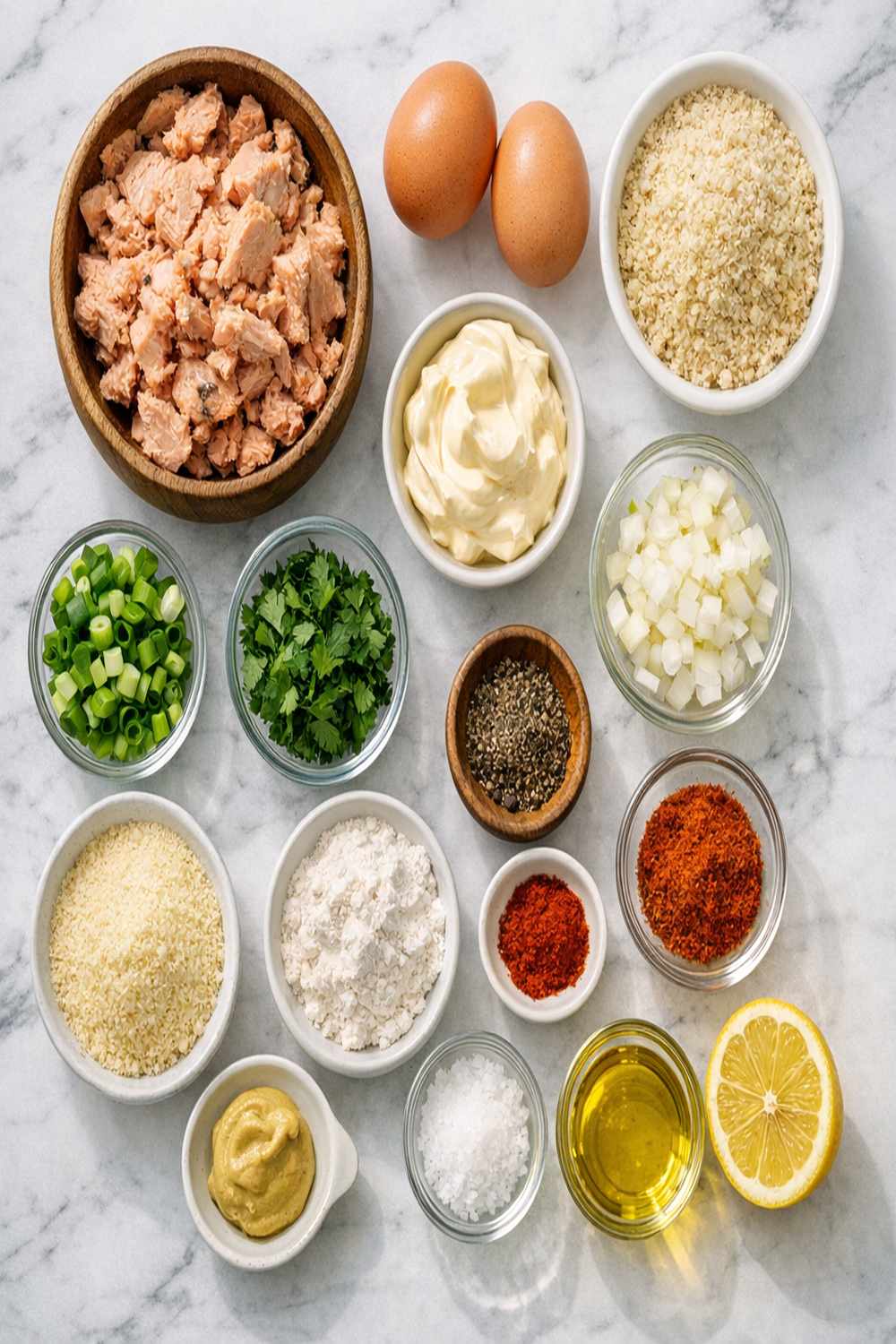
I’ve scaled this recipe to make eight generous patties, which gives you flexibility throughout the week. You can eat two patties one night and one patty another night, or use them for multiple meals. The beauty of this ingredient list is that everything is intentionally affordable—I’m not asking you to splurge on specialty items or expensive proteins. Canned salmon actually contains more bone density than fresh salmon, which means you’re getting more calcium per serving, and it costs a fraction of the price.
- 1 lime (freshly juiced; lemon juice works just as well and adds the same brightness; the acid brightens flavors and cuts through the richness)
- ½ teaspoon sea salt (to taste; canned salmon varies in sodium, so I recommend tasting before adding salt)
- 6 green onions (minced fine; you can substitute with onion powder at ¼ teaspoon if fresh aren’t available, or save money by using the white and light green parts only)
- 24 ounces canned salmon (using either three 8-ounce cans or two larger 14.75-ounce cans—pink salmon is equally nutritious and typically costs 30-40% less than red; the bones are completely edible and add calcium)
- 4 tablespoons avocado oil (or use regular olive oil—the cost difference is negligible and both create beautiful golden-brown patties; you can reduce to 2 tablespoons if making thinner patties)
- ½ cup grated parmesan (the shelf-stable kind from the shaker container works fine here—save your expensive freshly grated parmesan for dishes where it’s more noticeable)
- 2 large eggs (room temperature binds the mixture best; these act as your binder and can be supplemented with an egg yolk if your mixture seems too loose)
- ½ cup panko bread crumbs (regular bread crumbs work identically; you can make your own from stale bread for zero cost)
- ¼ teaspoon black pepper (freshly cracked tastes better but ground is fine)
This recipe makes 8 patties, serving 4 people as a main dish with sides, or 8 people as part of a larger meal prep rotation.
The Meal Prep Process: How to Make Canned Salmon Patties Recipe in Bulk
I approach this like a professional kitchen would—with efficiency in mind. You’re not just cooking; you’re systematizing. When you batch cook with intention, you build momentum. By the time you’re forming the last patties, you’ve already got your pan seasoned, your oil hot, and your rhythm established. This takes approximately 35 minutes total, which breaks down to roughly 9 minutes per meal throughout your week.
Step 1: Drain and Inspect Your Canned Salmon
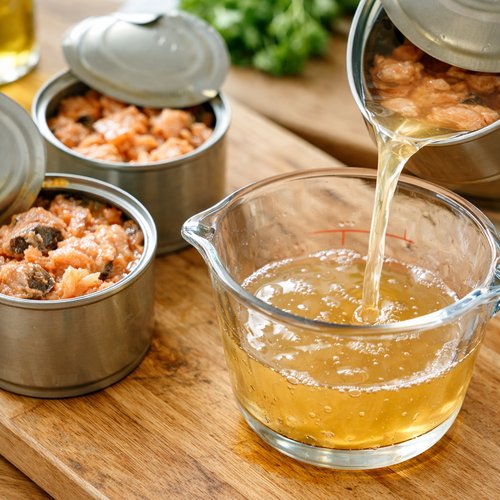
Open all your cans and drain the liquid into a separate container (you can save it for broth if you’re extremely budget-conscious, though most people discard it). Here’s the critical part: if you’ve selected salmon with skin and bones, you have two options. You can remove them—which takes about three minutes but increases your yield and texture slightly—or you can crush them directly into the mixture. As a registered dietitian, I always leave the bones in because they’re packed with bioavailable calcium. Most people can’t taste them, and nutritionally, you’re significantly upgrading your meal. If you’re removing them, do this step first and set the cleaned salmon aside. If you’re keeping them, simply flake the salmon into your mixing bowl.
Step 2: Combine All Ingredients in One Large Mixing Bowl
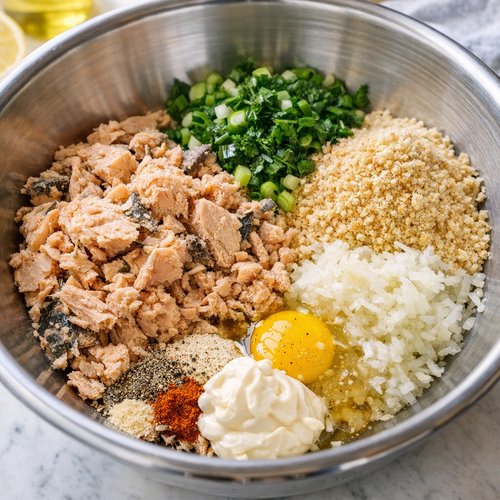
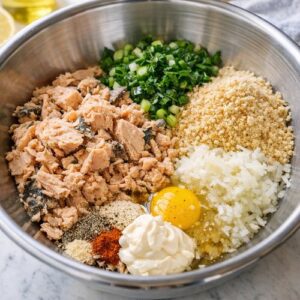
This is where the system gets efficient. Add your drained salmon to a large bowl—I use a stainless steel mixing bowl because it’s durable and easy to clean. Crack both eggs directly into the bowl. Mince your green onions while your eggs are right there—the motion is repetitive and you’re already focused. Add your panko bread crumbs, grated parmesan, lime juice, salt, and pepper. Using your hands (clean hands are essential here) combine everything with a squeezing motion for about one minute. The mixture should hold together when you squeeze it; if it seems too loose, add one additional egg yolk or a tablespoon of mayonnaise. This is not a delicate process—don’t overmix, but do mix thoroughly so the binder is evenly distributed.
Step 3: Form Eight Equal Patties at Room Temperature
Divide your mixture into eight portions. The fastest way to do this is to eye-divide your bowl into quarters, then divide each quarter in half. Wet your hands slightly with water—this prevents sticking. Form each portion into a patty that’s no more than one inch thick. This thickness is intentional: too thin and they’ll dry out during cooking; too thick and they won’t cook through properly. If you want salmon burgers instead, make four larger patties to fit your buns. Place formed patties on a cutting board or large plate. At this point, you can refrigerate for up to two hours before cooking, which actually improves their texture slightly.

Step 4: Heat Your Oil and Cook in Batches
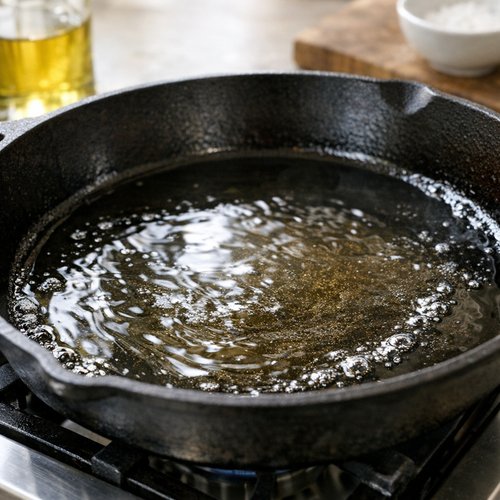
Place a large skillet (preferably cast iron or stainless steel) over medium-high heat. Add your four tablespoons of oil. Wait until the oil shimmers and a small piece of bread crumb sizzles immediately when dropped in—this indicates your temperature is correct. Working carefully, add four patties to the pan, leaving space between each one. They should sizzle on contact. Cook for 5-7 minutes without moving them. This is the golden rule of patty cooking: resist the urge to flip too early. You’re building a golden crust. After 5-7 minutes, flip gently using a thin spatula. Cook the second side for another 5-7 minutes until golden brown. Transfer to a cooling rack or clean plate. Repeat with your remaining four patties, adding a bit more oil if the pan looks dry.
Step 5: Cool Completely Before Storage
This step is crucial for successful meal prep. Allow your patties to cool to room temperature—about 20-30 minutes—before transferring to storage containers. Warm food releases steam, which creates condensation in your containers and leads to soggy patties by Wednesday. Patience here saves your entire week of meals. While they’re cooling, prep your storage containers and wash your dishes.

Storage and Organization System
- Glass Containers with Airtight Lids – I use rectangular glass containers because you can see what’s inside, they last forever, and they don’t absorb odors like plastic does. Stack them neatly in your fridge so they take up minimal space. Glass also reheats beautifully in the microwave and oven without leaching chemicals.
- Portioning Strategy: Two Patties Per Container – Divide your eight patties into four containers with two patties each. This gives you flexibility: you can use one container for one meal, or divide them between two meals if you prefer smaller portions. This portioning strategy prevents you from opening one large container and oxidizing all your patties at once.
- Labeling System: Date and Contents – Use a waterproof label or a piece of masking tape to write the contents and date. Write “Salmon Patties – Made [Date]” and keep them in the coldest part of your refrigerator, typically the back of a middle shelf. This takes 10 seconds and prevents the “Is this from last week?” question that leads to wasted food.
How to Reheat Without Losing Quality
The reheating method depends on how you’re serving them, and this is where meal prep gets really practical. I have three preferred methods that I recommend to my clients based on what they’re doing with the patty.
For eating warm over salads or as a main dish: Remove the patty from the refrigerator and place it on a skillet over medium heat with just a touch of oil for 2-3 minutes per side. This restores the exterior texture beautifully. Total time: five minutes. This is my preferred method because it reactivates the golden crust.
For a quick microwave option: Place the patty on a microwave-safe plate, cover loosely with a damp paper towel, and microwave on 50% power for 90-120 seconds. The damp paper towel prevents drying. Total time: two minutes. This isn’t as texture-perfect as the skillet method, but when you’re short on time, it’s adequate.
For grain bowls or crumbled applications: You don’t need to reheat at all. Cold patties crumble beautifully directly into your bowl with warm grains. The grains will warm the patty slightly, and this approach is fastest if you’re meal prepping lunch in the morning.
Can I Freeze Canned Salmon Patties Recipe?
Yes, and this is genuinely valuable for meal prep flexibility. Here’s my exact protocol based on years of client experience. After your patties cool completely, arrange them on a baking sheet lined with parchment paper without touching. Freeze for two hours until solid, then transfer them to a freezer-safe container or heavy-duty freezer bag. This method prevents them from sticking together, which gives you the flexibility to pull out just one or two patties at a time without thawing an entire container.
Frozen patties stay fresh for up to three months, though I typically recommend using them within six weeks for optimal texture. To thaw, move them to the refrigerator the night before and reheat using the skillet method. You can also reheat directly from frozen by cooking on low-medium heat for an additional 2-3 minutes per side. The texture remains excellent because salmon is naturally high in fat, which prevents the drying that happens with leaner proteins when frozen.
Honestly, I freeze half my batch initially so I have patties available even on weeks when I’m too busy to cook. It’s not cheating—it’s strategic planning.
Nutrition Information
Each salmon patty contains approximately 180 calories, 22 grams of protein, 8 grams of fat, and 4 grams of carbohydrates. The protein-to-calorie ratio is exceptional—you’re getting substantial protein without excessive calories. More importantly, you’re getting 350-400 mg of omega-3 fatty acids per patty, which meets nearly half of the recommended daily intake according to USDA dietary guidelines. The calcium content varies based on whether you include the bones, but with bones included, you’re getting 200+ mg of bioavailable calcium per patty.
Here’s what this means for your weekly meal prep: If you consume five patties throughout the week (which is realistic with the meal plan I outlined), you’re consistently hitting your protein targets, supporting brain health through omega-3 supplementation, and building bone density through naturally occurring calcium. This isn’t just convenient food—it’s clinically sound nutrition that your body actually recognizes and utilizes.
For someone eating this meal prep framework, you’re looking at approximately 900 calories and 110 grams of protein across the five patties, assuming you’re adding complementary foods like grains, vegetables, and healthy fats. That’s a sustainable nutritional structure that prevents the energy crashes and overeating that typically happen when people skip proper meal prep.
Expert’s Nutritional Tip: Why Canned Salmon Is Secretly Superior
As a registered dietitian, I need to address the bias against canned salmon because it’s costing people money and nutrition simultaneously. Fresh salmon is beautiful, but canned salmon—especially the kind with bones—is nutritionally denser pound-for-pound. The canning process doesn’t diminish the omega-3 content; it actually stabilizes it. The bones, which many people discard, contain more bioavailable calcium than most dairy products. And financially, you’re spending $6-8 for a week’s worth of salmon protein instead of $24-32.
This is the kind of practical nutrition knowledge that changes people’s actual lives, not just their theoretical understanding of health.
Common Mistakes to Avoid When Making Canned Salmon Patties
Mistake 1: Not draining the salmon thoroughly enough. Excess liquid makes your patties fall apart during cooking. I recommend draining in a fine-mesh strainer and even pressing gently with the back of a spoon. Soggy patties are a structural failure that ruins the entire batch.
Mistake 2: Using bread crumbs that are too coarse or irregular. Panko specifically works because it has consistent particle size. Regular bread crumbs work too, but avoid seasoned bread crumbs or Italian-style crumbs because they add salt and flavor you don’t control. Your homemade bread crumbs from blended stale bread are actually perfect if you want to save money.
Mistake 3: Flipping the patties too early or too frequently. This is the number one reason people end up with falling-apart patties. You need 5-7 minutes on the first side to develop a structural crust. Flip once, and only once, unless you’re checking for doneness. More flipping equals more breaking apart.
Mistake 4: Storing warm patties in sealed containers. This creates condensation that makes them soggy by day three. Patience to let them cool completely is genuinely the difference between excellent meal prep and disappointing leftovers.
What to Pair With Canned Salmon Patties Recipe Throughout the Week
Variety prevents boredom, and boredom is the silent killer of meal prep success. People abandon their meal plans not because the food is unhealthy, but because they’re tired of eating the same thing. I’ve designed these pairings strategically so your brain stays engaged even though your base protein is identical.
- Monday: Mixed Greens with Lemon Vinaigrette – Serve your warm patty over a bed of spinach, arugula, and mixed greens. The greens feel fresh and spring-like, which creates psychological variety even though your protein is the same.
- Wednesday: Brown Rice and Roasted Vegetables – Warm your patty, crumble it slightly, and serve over cooked brown rice with roasted broccoli, carrots, and Brussels sprouts. This feels completely different from Monday’s salad.
- Friday: Whole Grain Toast with Cold Salmon Salad – Transform your patty into a creamy salad and serve on toast. Try pairing with an simple French-style potato salad for a complete meal that feels restaurant-quality but costs $3 per serving.
- Saturday: Scrambled with Eggs for Breakfast – Crumble your patty into scrambled eggs with spinach and cheese. Serve with whole grain toast. This completely changes how your body perceives the meal because breakfast context is different from dinner context.
Seasonal Variations: Adapting Your Recipe Year-Round
Spring/Summer Version: Add fresh dill and lemon zest directly to your patty mixture. Serve chilled or at room temperature over arugula and fresh peas. The brightness of fresh herbs makes the recipe feel completely different without changing the base formula.
Fall/Winter Version: Toast your panko bread crumbs in a dry skillet for 60 seconds before adding to the mixture—this adds nutty depth. Replace the lime with lemon and add a pinch of smoked paprika. Serve warm over roasted root vegetables for a hearty fall meal.
Year-Round Budget Optimization: The core recipe remains identical, but you’re adapting what surrounds it based on what’s in season and affordable. Seasonal eating is both cheaper and more nutritious because you’re buying produce at peak harvest when prices drop.
Make-Ahead Guide: Strategic Preparation for Maximum Convenience
If you’re serious about meal prep success, here’s how I structure the entire process for maximum efficiency:
Saturday Evening (15 minutes): Buy your ingredients and do your prep. Open cans, drain salmon, mince green onions, measure out panko and parmesan. Store prepped ingredients in separate small containers. This takes the friction out of Sunday cooking because everything is ready to combine.
Sunday Morning (35 minutes): Execute the actual cooking. Because you prepped Saturday, you’re combining ingredients, forming patties, and cooking without stopping to prep. Set a timer and batch-cook efficiently.
Sunday Afternoon (10 minutes): Cool, portion, and label. While you’re having lunch, your patties are cooling. Transfer to containers with labels before you start any other cooking.
This three-step system removes the “cooking from scratch” friction that derails most people. You’re distributing the effort across time, which makes it psychologically manageable.

Canned Salmon Patties Recipe
Ingredients
Method
- Open all your cans and drain the liquid into a separate container (you can save it for broth if you're extremely budget-conscious, though most people discard it). Here's the critical part: if you've selected salmon with skin and bones, you have two options. You can remove them—which takes about three minutes but increases your yield and texture slightly—or you can crush them directly into the mixture. As a registered dietitian, I always leave the bones in because they're packed with bioavailable calcium. Most people can't taste them, and nutritionally, you're significantly upgrading your meal. If you're removing them, do this step first and set the cleaned salmon aside. If you're keeping them, simply flake the salmon into your mixing bowl.

- This is where the system gets efficient. Add your drained salmon to a large bowl—I use a stainless steel mixing bowl because it's durable and easy to clean. Crack both eggs directly into the bowl. Mince your green onions while your eggs are right there—the motion is repetitive and you're already focused. Add your panko bread crumbs, grated parmesan, lime juice, salt, and pepper. Using your hands (clean hands are essential here) combine everything with a squeezing motion for about one minute. The mixture should hold together when you squeeze it; if it seems too loose, add one additional egg yolk or a tablespoon of mayonnaise. This is not a delicate process—don't overmix, but do mix thoroughly so the binder is evenly distributed.
- Divide your mixture into eight portions. The fastest way to do this is to eye-divide your bowl into quarters, then divide each quarter in half. Wet your hands slightly with water—this prevents sticking. Form each portion into a patty that's no more than one inch thick. This thickness is intentional: too thin and they'll dry out during cooking; too thick and they won't cook through properly. If you want salmon burgers instead, make four larger patties to fit your buns. Place formed patties on a cutting board or large plate. At this point, you can refrigerate for up to two hours before cooking, which actually improves their texture slightly.

- Place a large skillet (preferably cast iron or stainless steel) over medium-high heat. Add your four tablespoons of oil. Wait until the oil shimmers and a small piece of bread crumb sizzles immediately when dropped in—this indicates your temperature is correct. Working carefully, add four patties to the pan, leaving space between each one. They should sizzle on contact. Cook for 5-7 minutes without moving them. This is the golden rule of patty cooking: resist the urge to flip too early. You're building a golden crust. After 5-7 minutes, flip gently using a thin spatula. Cook the second side for another 5-7 minutes until golden brown. Transfer to a cooling rack or clean plate. Repeat with your remaining four patties, adding a bit more oil if the pan looks dry.

- This step is crucial for successful meal prep. Allow your patties to cool to room temperature—about 20-30 minutes—before transferring to storage containers. Warm food releases steam, which creates condensation in your containers and leads to soggy patties by Wednesday. Patience here saves your entire week of meals. While they're cooling, prep your storage containers and wash your dishes.

FAQs
Can I make these patties without panko bread crumbs?
Absolutely. Regular bread crumbs work identically—use the same amount. You can also make your own bread crumbs from stale bread by pulsing it in a food processor. Crushed crackers work too, though they’ll add salt, so reduce added salt by half. The bread crumb’s job is purely structural, so any dry, bread-like ingredient functions equally.
How do I know if the patties are cooked through?
Salmon is forgiving because it’s safe to eat at a lower temperature than poultry. Your patties are cooked through when they’re golden brown on both sides and hold together firmly when you gently press them with your spatula. If you want to be technical, the internal temperature should reach 145°F. Because these patties are relatively thin, the exterior browning indicates interior doneness.
My patties fell apart while cooking. What went wrong?
Most likely cause: insufficient draining of the salmon or the mixture was too wet. Solution for next time: drain more thoroughly, and if your mixture seems loose, add an extra egg yolk before cooking. Secondary cause: flipping too early. Wait the full 5-7 minutes on the first side before flipping.
Can I use fresh salmon instead of canned?
You can, but you’ll need about 1.5 pounds of fresh salmon (accounting for the portion that’s skin and bones). Poach or bake it first, then flake it. Fresh salmon is more expensive and the nutritional profile is actually less dense than canned because you lose the bones. From a meal prep standpoint, canned is superior both financially and nutritionally.
How long do these last in the refrigerator if I store them correctly?
Five days in an airtight container in the coldest part of your fridge. I typically make mine on Sunday and eat them through Friday. By Friday evening, eat the last patty or transfer to the freezer. Most food waste happens because people keep food too long. Five days is the realistic window before quality degrades.
Can I double this recipe for an even bigger batch?
Yes, and I recommend it if you’re cooking for a family or want to freeze extra. Double the ingredients exactly, use a larger mixing bowl, and cook in more batches. The process remains identical—just plan for about 50 minutes total instead of 35. You’ll have 16 patties, giving you flexibility across two weeks or allowing you to feed a family of four for a full week.
More Meal Prep Recipes You’ll Love
- this cozy soup – A batch-cooking powerhouse that stretches your budget across an entire week
- this cozy soup – A light, affordable complement to your salmon patties throughout the week
- Christmas Frittata Recipe – Another egg-based make-ahead that works beautifully for breakfast meal prep
Here’s what I’ve learned after years of helping people take back control of their nutrition: the secret isn’t finding perfect recipes. It’s building a system where good eating happens by default, not by effort. This salmon patties recipe is that system. You make it once, and suddenly you have five days of meals that are cheaper than takeout, better for your health than processed foods, and genuinely more convenient than cooking every single night.
Start with this one recipe this weekend. Don’t overthink it. Buy your salmon, your eggs, your panko, and spend 35 minutes cooking. Experience what it feels like to open your fridge on a stressful Wednesday and already have dinner prepared. Experience that feeling of taking back control of your week. That’s when meal prep stops being something you’re trying to do and becomes something you actually enjoy.
I’d love to hear how this goes for you. Don’t forget to mention @affordablefoodideas if you try this recipe!