
This post contains affiliate links. As an Amazon Associate I earn from qualifying purchases.

This chai tea with turmeric recipe brings together the ancient Ayurvedic healing traditions of India with modern nutritional science in a way that honors both practices while creating something entirely accessible for your everyday kitchen. I’ve spent years helping families in the Boston area understand that you don’t need expensive supplements or complicated protocols to support your health—sometimes the answer is as simple as a steaming cup of spiced tea made from ingredients you likely already have at home.
Growing up in a small New England town, my family wasn’t exploring global cuisines the way I do now as a registered dietitian. But when I first experienced a proper chai at a local café near Waltham, something clicked for me. Here was a beverage that combined warming spices, real milk, and natural sweetness into something that felt both indulgent and genuinely nourishing. Since then, I’ve learned that chai represents thousands of years of traditional Indian wellness practices—and those practices have real merit that modern nutrition science is only beginning to catch up with.
I’m sharing my version today because I want you to understand that wellness doesn’t require a trip to a specialty store or a premium price tag. Like those family meals from my childhood, this chai proves that wholesome, healing food can be made affordably without sacrificing quality or tradition.
Where Ancient Wellness Meets Modern Nutrition
When I first started researching traditional chai preparation methods, I was struck by how intentional every single ingredient choice is. In Ayurveda—the traditional medicine system of India that dates back over 5,000 years—chai isn’t just a beverage. It’s considered a tridoshic drink, meaning it balances all three constitutional types (doshas) in the body. Each spice is chosen not just for flavor, but for its specific therapeutic properties.
Meanwhile, modern nutritional science is now validating what Indian practitioners have known for millennia: turmeric contains curcumin, a compound with documented anti-inflammatory properties. Ginger supports digestion and circulation. Cinnamon helps regulate blood sugar. Black tea provides antioxidants called polyphenols. When you combine these ingredients deliberately, you’re not just making a beverage—you’re creating a functional drink grounded in both ancient wisdom and contemporary research.
This is why I love this recipe so much. It doesn’t ask you to choose between tradition and science, between indulgence and nutrition, or between health and affordability. You get all of it.
The Cultural Wisdom Behind Every Spice
Let me break down what makes this chai so special from both a nutritional and cultural perspective:
- Black tea and turmeric from Indian tradition – These are the foundational elements of traditional chai, bringing warmth, color, and documented health benefits that Ayurvedic practitioners have relied on for centuries
- Ginger, cardamom, cinnamon, cloves, and peppercorns – The classic spice blend known as “chai masala” in Indian cooking, each selected for both flavor and digestive support
- Milk from multiple traditions – Whether it’s the dairy milk used in Indian chai or plant-based alternatives, the practice of adding a fat source helps your body absorb fat-soluble vitamins from the spices
- Fennel seeds – A less-talked-about component of chai that aids digestion and adds a subtle anise note that rounds out the other spices beautifully
Why This Formula Works
The science behind why these ingredients work together is genuinely fascinating. The black tea provides caffeine and polyphenol antioxidants, while the milk and healthy fats slow the absorption of that caffeine, creating a sustained, smooth energy boost rather than a jittery spike. The warming spices—cinnamon, ginger, and cardamom—activate thermogenesis, which is your body’s ability to generate heat and slightly increase metabolism.
Turmeric deserves special mention here. As a registered dietitian, I’m careful about supplement claims, but turmeric’s active compound curcumin has genuine research behind its anti-inflammatory benefits. However—and this is important—curcumin is poorly absorbed on its own. The black pepper in this recipe contains piperine, which increases curcumin absorption by up to 2000%. This isn’t accidental; traditional chai makers understood this principle intuitively long before we had biochemistry to explain it.
The milk addition isn’t just for flavor either. Since curcumin is fat-soluble, the fat in milk (whether dairy or a plant-based alternative with added fat) helps your body actually utilize the turmeric you’re drinking. This is why chai is traditionally made with milk, and why water-based turmeric drinks are less effective.
The Ingredients – A Perfect Balance
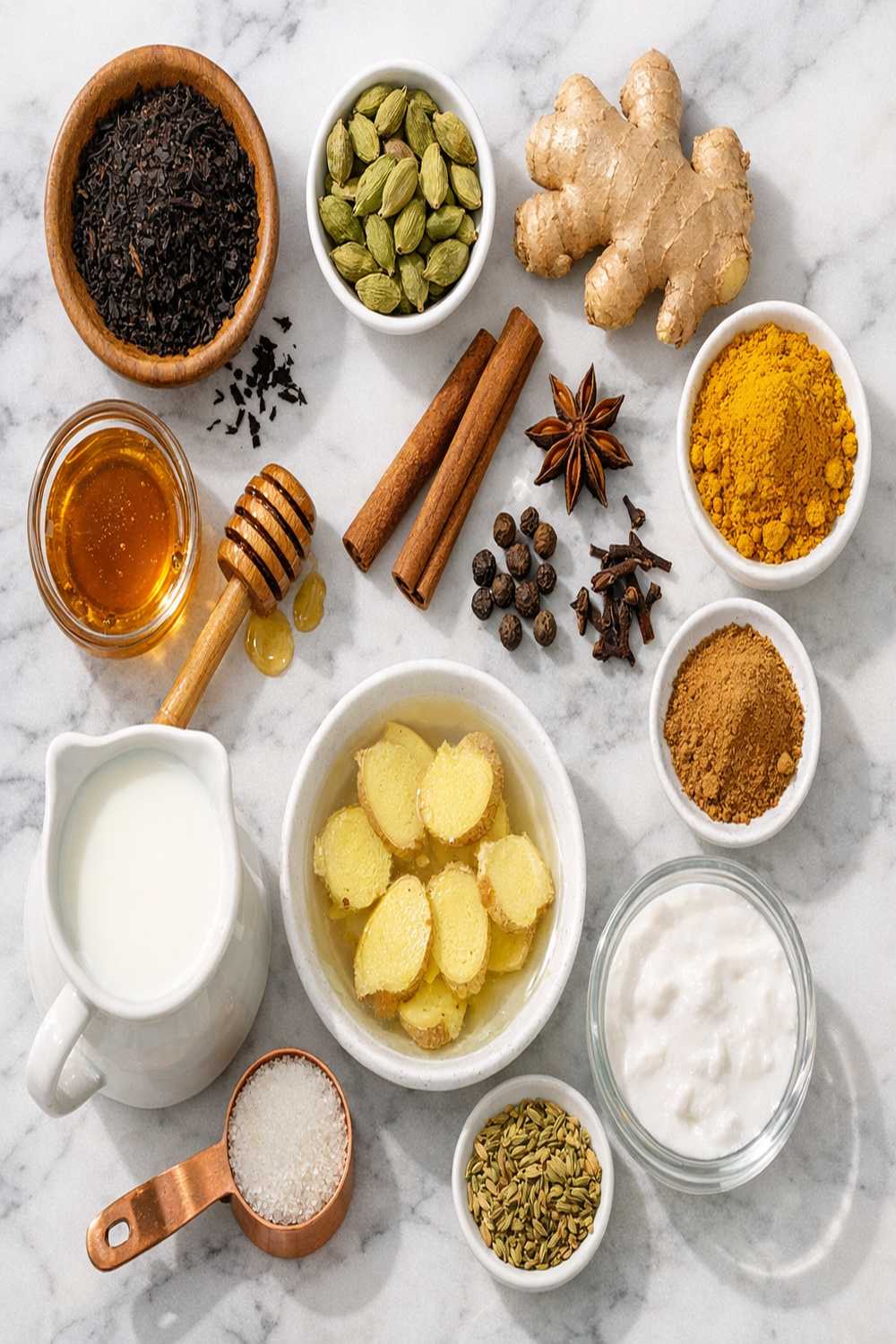
Before we dive into the recipe, let me walk you through each ingredient and how to find budget-friendly versions. I’ve included my go-to swaps at the bottom of each ingredient, because I’ve built my career on the principle that health shouldn’t be a luxury.
- 1 pinch of sea salt (enhances all the spice flavors without adding cost)
- 4 green cardamom pods, cracked open to release the seeds (buy whole pods in bulk—they’re more affordable than pre-ground cardamom)
- 2¼ cups filtered water (tap water is fine if filtering isn’t available—the main goal is boiling it with spices)
- ½ teaspoon ground turmeric (this is the star ingredient—buy it from bulk bins for maximum savings)
- 3 black peppercorns, crushed slightly (whole peppercorns are always cheaper than pre-ground pepper)
- 3 whole cloves (these are inexpensive in bulk bins at most grocery stores; buy from bulk sections to save 60-70% versus pre-packaged)
- ½ teaspoon fennel seeds, optional but recommended (this ingredient costs pennies from bulk bins)
- 4 teaspoons turbinado cane sugar or raw cane sugar (or substitute with regular granulated sugar, which costs even less; honey or maple syrup work too)
- ½-inch fresh ginger, peeled and thinly sliced (one knob of fresh ginger costs $0.50-$1.00 and makes multiple cups of chai)
- 1 cup whole milk, or 2% reduced-fat milk (dairy milk is typically more affordable than plant-based; if using alternatives, unsweetened versions work best here)
- 3 black tea bags or 3 teaspoons loose-leaf black tea (budget tip: loose-leaf tea from bulk sections costs 40-50% less than premium tea bags—store brands like Celestial Seasonings work beautifully)
- 1 3-inch cinnamon stick, preferably Ceylon variety (cassia cinnamon works equally well and costs less; you can also use ½ teaspoon ground cinnamon if sticks aren’t available)
Total cost per serving: approximately $0.75-$1.00 when you source ingredients strategically from bulk bins and store brands. This is genuinely affordable wellness.
How to Make This Nourishing Chai Tea
I want you to approach making this chai as a small ritual rather than just another task. There’s something about the process itself—the aroma that fills your kitchen, the intentional pausing to tend to a warming beverage—that contributes to the benefits. Take your time with these steps.
Step 1: Gather Your Spices (The Foundation)
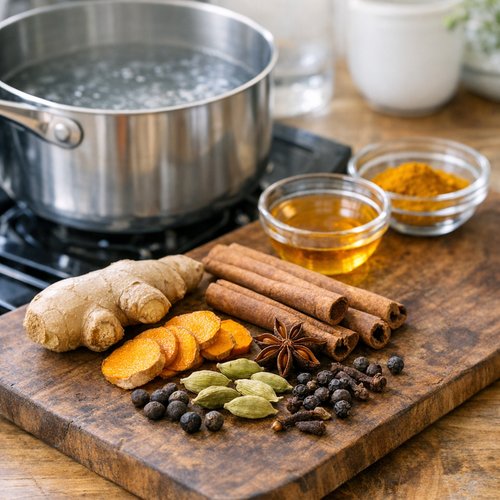
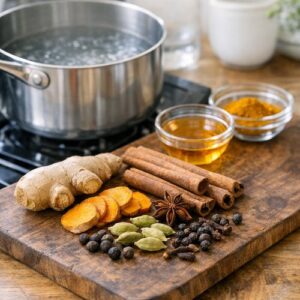
Pour your filtered water into a medium saucepan and set it over high heat. While the water is coming to temperature, gather all your whole spices in one spot. This is the moment where you honor the tradition of chai—these spices have been selected and combined the same way for thousands of years.
If you’re using whole cardamom pods, crack them open gently with the side of a knife or your hands to release the seeds inside. Some people remove the papery pod entirely; I throw both the seeds and the pod into the chai—the pod still carries flavor, and it’s wasteful not to use it.
Step 2: Create the Spice Infusion (The Flavor Base)
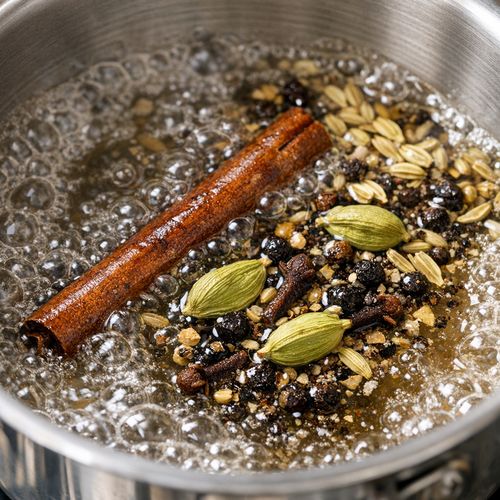
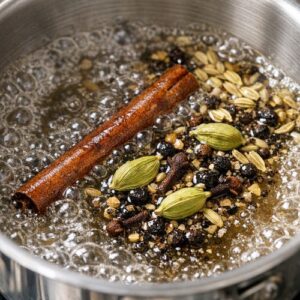
Once your water reaches a rolling boil, add your cinnamon stick, whole cloves, cardamom pods with seeds, crushed black peppercorns, and fennel seeds if you’re using them. The water will immediately transform—the spices will begin releasing their essential oils and the kitchen will smell absolutely incredible. This is where the magic of chai infusion begins.
Let the spices boil vigorously for 1-2 minutes. This aggressive heat helps extract the aromatic compounds that make chai so distinctive. You’ll notice the water starting to change color slightly and the aroma becoming more pronounced.
Step 3: Add the Ginger and Tea (Building Depth)
After that initial boil, reduce your heat to medium-low. Add your fresh ginger slices—which provide that warming, slightly peppery note that’s essential to proper chai. The ginger slices should nestle into the hot water and begin releasing their compounds immediately.
Now add your black tea bags or loose-leaf tea directly to the spice-infused water. This is where the traditional chai base truly forms. The combination of spices and black tea is the non-negotiable heart of chai. Stir gently and let everything simmer together for 7-10 minutes.
How long you simmer depends on how strong you like your chai. At 7 minutes, you’ll have a delicate, balanced cup. At 10 minutes, the spices and tea will be more assertive, creating a bolder flavor profile. The water will deepen to a rich burgundy-brown color as the tea steeps.
Step 4: Incorporate the Golden Turmeric (The Wellness Boost)
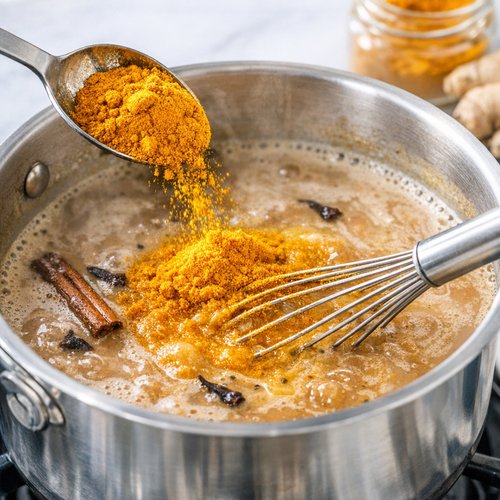
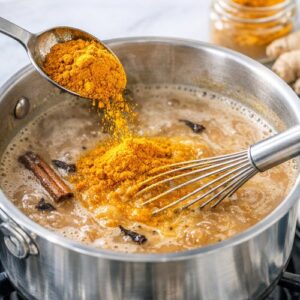
At around the 8-minute mark of simmering, whisk in your ground turmeric. This is your moment to intentionally add the anti-inflammatory powerhouse that makes this chai particularly nourishing. Whisk it thoroughly so it incorporates evenly rather than settling to the bottom.
The turmeric will give your chai an even deeper, earthier tone. The spices will have extracted fully, and the aroma will shift from purely spiced tea to something more complex and warming.
Step 5: Add Milk and Sugar (Creating Creaminess)
Pour in your milk of choice—whether whole dairy milk, 2% milk, or a plant-based alternative—and add your sugar. Stir everything together gently. The milk will cool the mixture slightly, so now bring the heat back up to medium or medium-high.
This is a critical moment in chai preparation. You want the milk to come up to a gentle simmer or even approach a boil. This isn’t because the milk needs cooking—it’s because the heat helps the fat in the milk fully incorporate with all those spice compounds, creating a unified, creamy beverage rather than something that feels like tea with milk added to it.
Simmer for another 5 minutes on medium heat, stirring occasionally. Watch for small bubbles forming around the edges of the pan.
Step 6: The Final Boil and Aeration (Professional Touch)
Here’s where I learned something beautiful from traditional chai makers: those final moments matter. Raise your heat to high and let the chai come to a rolling boil for 1-2 minutes. This isn’t overcooking—it’s the final step that creates the characteristic texture and helps all the flavors marry together.
If you want to take this step further (and I recommend it), use a ladle or spoon to carefully lift the hot chai and pour it back into the pan from a slight height, creating aeration. Do this 2-3 times. This step, called “pulling,” creates a creamier, more luxurious texture and deepens all the flavors. It’s the professional touch that transforms good chai into genuinely special chai.
Step 7: Strain and Serve (The Final Moment)
Pour your chai through a fine-mesh strainer into your favorite mug. This catches the whole spices, ginger slices, and any tea leaf debris, leaving you with a smooth, beautiful beverage ready to drink.
Taste it. Add a touch more sugar if you prefer, but I think you’ll find the subtle sweetness already present is perfect. The flavor should be warming, spiced but not overwhelming, slightly sweet, and creamy. This is chai as it’s meant to be.

Expert’s Nutritional Tip: Understanding Turmeric Absorption
As a registered dietitian, I need to be honest about supplement trends, and here’s something important: you cannot drink turmeric water and expect the same benefits as this chai. The combination of black pepper (which provides piperine), fat from the milk, and the warmth of the beverage creates an environment where your body can actually absorb and utilize the turmeric’s active compound, curcumin.
This is why traditional recipes evolved the way they did. People didn’t have biochemistry textbooks, but they understood intuitively that these combinations worked better together. That’s the kind of wisdom I trust in my nutrition practice.
How to Customize Your Chai Experience
One of the beautiful things about chai is its flexibility. Depending on your preferences and what’s available to you, you can adjust the ratios:
- If you prefer bolder spices: Add an extra cardamom pod, use a full tablespoon of fresh ginger instead of ½ inch, or add 2-3 additional cloves. Simmer the spices for the full 10 minutes before adding tea.
- If you prefer more subtle, delicate chai: Use only 2 cardamom pods, reduce ginger to ¼ inch, and cut the cloves back to 2. Simmer for 7 minutes instead of 10. Add an extra ½ cup of milk to dilute and soften the spice profile.
- If you want to emphasize the anti-inflammatory benefits: Use ¾ teaspoon turmeric instead of ½, and add a pinch of black pepper on top of the recipe as written. This ensures maximum curcumin absorption.
- If you want to reduce sugar: Use honey or maple syrup instead of cane sugar (which dissolves differently), or use just 2 teaspoons sugar and let the natural sweetness of the milk and spices be more prominent.
- For a dairy-free version: Use full-fat coconut milk instead of dairy milk—the fat content is important for absorption and creaminess. Oat milk is also good, though slightly less rich.
Make-Ahead Guide: Batch Prep Your Chai
One of my favorite time-saving strategies is preparing a “chai concentrate” that you can quickly transform into individual cups throughout the week. Here’s how:
For the Spice Concentrate (makes 4-5 cups of chai): Combine 2 cinnamon sticks, 12 whole cloves, 16 green cardamom pods, 12 black peppercorns, 2 teaspoons fennel seeds, a 2-inch piece of fresh ginger (sliced), and 9 teaspoons loose-leaf black tea in a glass jar or container. Store this dry mixture at room temperature for up to 2 weeks—the spices stay vibrant and fresh.
When you want chai: Boil 2¼ cups water, add ¼ cup of the spice mixture (don’t strain—just scoop), simmer for 8 minutes, add ¼ teaspoon turmeric, then add milk and sugar as in the recipe. You’ll have fresh chai in 10 minutes without gathering individual spices each time.
For liquid concentrate (makes 3-4 cups of finished chai): Make the full recipe but don’t add the milk and sugar. Strain it immediately and pour into a glass container. Store in the refrigerator for up to 5 days. When you want a cup: Reheat ½ cup concentrate, add ½ cup milk (hot or cold, depending on preference), add 1 teaspoon sugar, and serve immediately.
I often make this concentrate on Sunday and enjoy chai throughout the week. It’s genuinely satisfying, keeps my grocery budget tight because I’m using whole ingredients, and means I’m choosing this nourishing drink over more expensive coffee shop options.
Common Mistakes to Avoid
After making chai hundreds of times, I’ve learned what works and what doesn’t. Let me share the mistakes I see most often:
- Using pre-ground spices instead of whole: Ground spices lose their essential oils quickly once exposed to air. Whole spices stay potent for months. Yes, cracking whole cardamom takes an extra 30 seconds, but the flavor difference is significant and the cost is lower. This is worth your time.
- Skipping the turmeric or using too much: Some people add a full teaspoon of turmeric, which creates a bitter, overpowering flavor. Start with ½ teaspoon and adjust upward if you prefer. Also, turmeric needs fat and pepper to be useful—don’t add it to water-based drinks and expect the same benefit.
- Using boiling water that’s too hot when adding milk: If your spiced tea is at a rolling boil when you pour in cold milk, you’ll get separation and a less unified texture. Reduce to medium heat just before adding milk. The heat should be warm enough to heat the milk thoroughly, but not violently boiling.
- Not straining properly: Use a fine-mesh strainer, not a regular colander. You want smooth chai, not one with tiny tea particles floating around. If you don’t have a fine-mesh strainer, line a regular strainer with a coffee filter and pour through that.
Seasonal Variations: Adapting Chai Throughout the Year
One of my favorite things about this recipe is how it adapts to seasons:
Spring/Early Summer (lighter, more refreshing): Use only 2 cardamom pods and 2 cloves, reduce ginger to ¼ inch, and simmer for 7 minutes instead of 10. Serve with a touch more milk and less sugar. You can even serve it at room temperature over ice—it’s still warming in its spice profile but more appropriate for warm weather.
Fall/Early Winter (deeper, warming): Add an extra cardamom pod, use a full ½-inch ginger slice, add ⅛ teaspoon nutmeg, and simmer for the full 10 minutes. Use whole milk and a bit more sugar. This is maximum comfort and warmth.
Deep Winter (grounding and nourishing): Use the recipe as written but add 1-2 tablespoons of coconut oil to the milk portion for additional richness and fat-soluble vitamin absorption. Add an extra teaspoon of turmeric if you’re using chai as part of your seasonal wellness routine. Serve hot in your biggest mug.
Year-round adaptation: In months when fresh ginger feels expensive or low-quality, substitute with ⅓ teaspoon dry ground ginger. It’s less fresh-tasting but still effective, and costs significantly less.
Can I Store Chai Tea?
Yes, with proper technique. Here’s what I recommend based on my experience:
Finished chai (made with milk): Store in a glass container in the refrigerator for up to 2 days. After that, the milk can separate and flavors begin degrading. Reheat gently in a saucepan over medium heat, stirring frequently. Never microwave—it creates uneven heating and texture changes.
Chai concentrate (before milk is added): Store in a glass jar in the refrigerator for up to 5 days. This is my preferred method because it keeps better and you can add fresh milk each time, ensuring optimal creaminess and taste.
Dry spice blend: Store in an airtight container in a cool, dark cupboard for up to 2 months. Keep away from heat and direct sunlight, which degrade the spices’ essential oils.
Important note: Never store chai with milk at room temperature. The milk creates food safety risks after a couple of hours. When in doubt, throw it out and make a fresh cup—the ingredient cost is less than $1.00.
Nutrition Information
Based on USDA food composition data, one serving of this chai tea (8 ounces, made with whole milk and one recipe serving divided into two cups) contains approximately:
- Calories: 95-110
- Total Fat: 4-5g (primarily from milk)
- Saturated Fat: 2.5-3g
- Protein: 4g (from milk)
- Carbohydrates: 11-13g (mostly from natural sugars)
- Fiber: 0-1g
- Sodium: 55-75mg (minimal)
- Caffeine: 25-50mg (depending on tea strength)
If made with 2% milk instead of whole milk, calories drop to 85-100 and total fat decreases to 3-3.5g.
The real nutritional value comes from the spices: Turmeric provides curcumin (a studied anti-inflammatory compound), ginger supports digestion and circulation, cinnamon may help with blood sugar regulation, and black tea provides polyphenol antioxidants. These aren’t present in amounts that trigger major nutrition label changes, but they’re present in meaningful, bioavailable amounts because you’re consuming the whole food, not an extract.
As a registered dietitian, I’m cautious about overstating health claims, but I can tell you that traditional populations have used these exact ingredients together for wellness support for thousands of years, and modern research increasingly supports those traditional uses.
What to Serve With Your Chai Tea
One of my favorite things about chai is that it’s versatile enough to pair with both breakfast and afternoon snacks. Here are my favorite companions:
- Biscuits or shortbread cookies – The buttery richness complements spiced chai beautifully. Our these homemade cookies work surprisingly well, especially during winter months.
- Warm fruit crisps – Try our Vegan Apple Crisp alongside chai for a comforting afternoon treat. The spices in both recipes echo each other beautifully.
- Simple toast with almond butter and honey – The creamy nut flavor grounds the spiced tea perfectly without overwhelming it.
- Scones or quick breads – Traditional pairing in British tea culture, and chai works equally well. The tea cuts through richness while the warmth of the chai enhances any vanilla or spice flavors in the bread.
- Just by itself as a meditation moment – Sometimes the best accompaniment to chai is quiet. Hold the warm mug, breathe in the steam, and let the spices do their work. This is wellness in its simplest form.

Chai Tea With Turmeric Recipe
Ingredients
Method
- Pour your filtered water into a medium saucepan and set it over high heat. While the water is coming to temperature, gather all your whole spices in one spot. This is the moment where you honor the tradition of chai—these spices have been selected and combined the same way for thousands of years. If you're using whole cardamom pods, crack them open gently with the side of a knife or your hands to release the seeds inside. Some people remove the papery pod entirely; I throw both the seeds and the pod into the chai—the pod still carries flavor, and it's wasteful not to use it.
- Once your water reaches a rolling boil, add your cinnamon stick, whole cloves, cardamom pods with seeds, crushed black peppercorns, and fennel seeds if you're using them. The water will immediately transform—the spices will begin releasing their essential oils and the kitchen will smell absolutely incredible. This is where the magic of chai infusion begins. Let the spices boil vigorously for 1-2 minutes. This aggressive heat helps extract the aromatic compounds that make chai so distinctive. You'll notice the water starting to change color slightly and the aroma becoming more pronounced.
- After that initial boil, reduce your heat to medium-low. Add your fresh ginger slices—which provide that warming, slightly peppery note that's essential to proper chai. The ginger slices should nestle into the hot water and begin releasing their compounds immediately. Now add your black tea bags or loose-leaf tea directly to the spice-infused water. This is where the traditional chai base truly forms. The combination of spices and black tea is the non-negotiable heart of chai. Stir gently and let everything simmer together for 7-10 minutes. How long you simmer depends on how strong you like your chai. At 7 minutes, you'll have a delicate, balanced cup. At 10 minutes, the spices and tea will be more assertive, creating a bolder flavor profile. The water will deepen to a rich burgundy-brown color as the tea steeps.
- At around the 8-minute mark of simmering, whisk in your ground turmeric. This is your moment to intentionally add the anti-inflammatory powerhouse that makes this chai particularly nourishing. Whisk it thoroughly so it incorporates evenly rather than settling to the bottom. The turmeric will give your chai an even deeper, earthier tone. The spices will have extracted fully, and the aroma will shift from purely spiced tea to something more complex and warming.
- Pour in your milk of choice—whether whole dairy milk, 2% milk, or a plant-based alternative—and add your sugar. Stir everything together gently. The milk will cool the mixture slightly, so now bring the heat back up to medium or medium-high. This is a critical moment in chai preparation. You want the milk to come up to a gentle simmer or even approach a boil. This isn't because the milk needs cooking—it's because the heat helps the fat in the milk fully incorporate with all those spice compounds, creating a unified, creamy beverage rather than something that feels like tea with milk added to it. Simmer for another 5 minutes on medium heat, stirring occasionally. Watch for small bubbles forming around the edges of the pan.
- Here's where I learned something beautiful from traditional chai makers: those final moments matter. Raise your heat to high and let the chai come to a rolling boil for 1-2 minutes. This isn't overcooking—it's the final step that creates the characteristic texture and helps all the flavors marry together. If you want to take this step further (and I recommend it), use a ladle or spoon to carefully lift the hot chai and pour it back into the pan from a slight height, creating aeration. Do this 2-3 times. This step, called "pulling," creates a creamier, more luxurious texture and deepens all the flavors. It's the professional touch that transforms good chai into genuinely special chai.
- Pour your chai through a fine-mesh strainer into your favorite mug. This catches the whole spices, ginger slices, and any tea leaf debris, leaving you with a smooth, beautiful beverage ready to drink. Taste it. Add a touch more sugar if you prefer, but I think you'll find the subtle sweetness already present is perfect. The flavor should be warming, spiced but not overwhelming, slightly sweet, and creamy. This is chai as it's meant to be.

Notes
FAQs About Chai Tea With Turmeric
Can I use turmeric tea bags instead of fresh turmeric powder?
You can, but I don’t recommend it as your primary method. Pre-made turmeric tea bags often use processed turmeric that’s lost some potency, and you lose control over the amount. Fresh ground turmeric from bulk bins is cheaper, more potent, and gives you flexibility in adjusting the ratio. That said, if you only have tea bags available, use 1-2 bags in addition to the black tea—just understand you’re getting about 60% of the potential benefit of fresh powder.
Is this chai caffeine-free, and can I make it that way?
No, this is not caffeine-free because of the black tea. One cup contains approximately 25-50mg of caffeine, depending on how long you steep. If you want a caffeine-free version, substitute the black tea with herbal tea—rooibos is particularly good with these spices. You’ll lose some of the traditional chai flavor, but the spices and turmeric provide plenty of warmth and flavor on their own. Steep the herbal tea for 8-10 minutes alongside the spices as written.
Why does my chai separate or look “broken” after I add the milk?
This usually means either your base tea was too hot when the milk was added (causing shock separation) or the spice extraction wasn’t complete. Here’s how to fix it: Cool your spiced tea to medium temperature (still hot to touch, but not boiling) before adding milk. Also, make sure you’re simmering the spices long enough—at least 7-8 minutes. If separation still happens, pour the chai into a blender and blend for 30 seconds on low speed—this emulsifies everything back together.
Can I make this in a French press or other brewing vessel?
Absolutely. French press works beautifully: add all the spices (whole), ginger, and tea to the press, pour boiling water over everything, let it steep for 8-10 minutes, then add turmeric, milk, and sugar. Press down and serve. The advantage is less cleanup, but you lose the ability to “pull” (aerate) the chai for that luxurious texture. It’s a reasonable trade-off for convenience.
What if I’m pregnant or breastfeeding—is turmeric in chai safe?
This is an important question that deserves a nuanced answer. The amount of turmeric in a single cup of chai (½ teaspoon) is a culinary dose, not a medicinal dose, and is considered safe during pregnancy and breastfeeding. However, if you’re consuming multiple cups daily or have specific health concerns, check with your healthcare provider. Ginger is also generally safe in culinary amounts during pregnancy, but again, context matters. When in doubt, use less turmeric or skip it entirely during pregnancy and stick with the classic chai spices.
Other Great Spiced Beverage Recipes You’ll Love
If you’re enjoying this chai, you might also like exploring other warming, spiced drinks that honor similar traditions:
- Easy Masala Chai Recipe – Our simplified version if you want to make chai even more quickly without losing the essential warmth and comfort
- this cozy soup – This might seem unrelated, but slow-cooked spiced soups share chai’s warming philosophy and use overlapping spices for similar nourishing effects
A Final Word on Wellness and Tradition
I want to circle back to where we started. My job as a registered dietitian is to help real people—people in real budgets, with real kitchens, real schedules—actually achieve health. Not perfectly, not expensively, but consistently and affordably.
This chai teaches you something important: the most nourishing things often cost the least. A few dollars’ worth of spices, black tea, and milk become a beverage that supports your health, honors thousands of years of tradition, and creates a small ritual of care for yourself. That’s accessible wellness.
That’s the entire philosophy behind what I do.
Make this chai. Taste how the spices come alive together. Notice how you feel drinking something made from whole ingredients with intention. And then, come back and tell us about it. Don’t forget to mention @affordablefoodideas if you try this recipe! I love seeing how you adapt it, what spices you emphasize, what time of day becomes your chai time.
Because the most important recipe is the one that actually makes it into your kitchen and becomes part of your life.