

Ingredients
Method
Step 1: Gather Your Spices (The Foundation)
- Pour your filtered water into a medium saucepan and set it over high heat. While the water is coming to temperature, gather all your whole spices in one spot. This is the moment where you honor the tradition of chai—these spices have been selected and combined the same way for thousands of years. If you're using whole cardamom pods, crack them open gently with the side of a knife or your hands to release the seeds inside. Some people remove the papery pod entirely; I throw both the seeds and the pod into the chai—the pod still carries flavor, and it's wasteful not to use it.
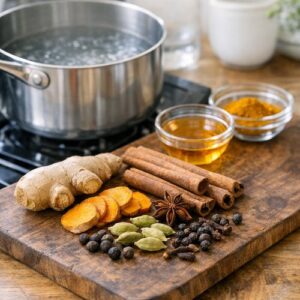
Step 2: Create the Spice Infusion (The Flavor Base)
- Once your water reaches a rolling boil, add your cinnamon stick, whole cloves, cardamom pods with seeds, crushed black peppercorns, and fennel seeds if you're using them. The water will immediately transform—the spices will begin releasing their essential oils and the kitchen will smell absolutely incredible. This is where the magic of chai infusion begins. Let the spices boil vigorously for 1-2 minutes. This aggressive heat helps extract the aromatic compounds that make chai so distinctive. You'll notice the water starting to change color slightly and the aroma becoming more pronounced.
Step 3: Add the Ginger and Tea (Building Depth)
- After that initial boil, reduce your heat to medium-low. Add your fresh ginger slices—which provide that warming, slightly peppery note that's essential to proper chai. The ginger slices should nestle into the hot water and begin releasing their compounds immediately. Now add your black tea bags or loose-leaf tea directly to the spice-infused water. This is where the traditional chai base truly forms. The combination of spices and black tea is the non-negotiable heart of chai. Stir gently and let everything simmer together for 7-10 minutes. How long you simmer depends on how strong you like your chai. At 7 minutes, you'll have a delicate, balanced cup. At 10 minutes, the spices and tea will be more assertive, creating a bolder flavor profile. The water will deepen to a rich burgundy-brown color as the tea steeps.
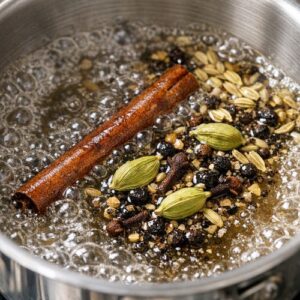
Step 4: Incorporate the Golden Turmeric (The Wellness Boost)
- At around the 8-minute mark of simmering, whisk in your ground turmeric. This is your moment to intentionally add the anti-inflammatory powerhouse that makes this chai particularly nourishing. Whisk it thoroughly so it incorporates evenly rather than settling to the bottom. The turmeric will give your chai an even deeper, earthier tone. The spices will have extracted fully, and the aroma will shift from purely spiced tea to something more complex and warming.
Step 5: Add Milk and Sugar (Creating Creaminess)
- Pour in your milk of choice—whether whole dairy milk, 2% milk, or a plant-based alternative—and add your sugar. Stir everything together gently. The milk will cool the mixture slightly, so now bring the heat back up to medium or medium-high. This is a critical moment in chai preparation. You want the milk to come up to a gentle simmer or even approach a boil. This isn't because the milk needs cooking—it's because the heat helps the fat in the milk fully incorporate with all those spice compounds, creating a unified, creamy beverage rather than something that feels like tea with milk added to it. Simmer for another 5 minutes on medium heat, stirring occasionally. Watch for small bubbles forming around the edges of the pan.
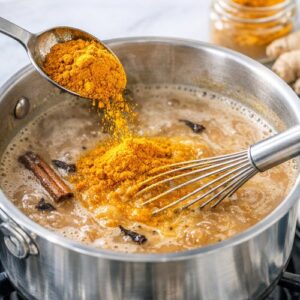
Step 6: The Final Boil and Aeration (Professional Touch)
- Here's where I learned something beautiful from traditional chai makers: those final moments matter. Raise your heat to high and let the chai come to a rolling boil for 1-2 minutes. This isn't overcooking—it's the final step that creates the characteristic texture and helps all the flavors marry together. If you want to take this step further (and I recommend it), use a ladle or spoon to carefully lift the hot chai and pour it back into the pan from a slight height, creating aeration. Do this 2-3 times. This step, called "pulling," creates a creamier, more luxurious texture and deepens all the flavors. It's the professional touch that transforms good chai into genuinely special chai.
Step 7: Strain and Serve (The Final Moment)
- Pour your chai through a fine-mesh strainer into your favorite mug. This catches the whole spices, ginger slices, and any tea leaf debris, leaving you with a smooth, beautiful beverage ready to drink. Taste it. Add a touch more sugar if you prefer, but I think you'll find the subtle sweetness already present is perfect. The flavor should be warming, spiced but not overwhelming, slightly sweet, and creamy. This is chai as it's meant to be.

Notes
- Using pre-ground spices instead of whole: Ground spices lose their essential oils quickly once exposed to air. Whole spices stay potent for months. Yes, cracking whole cardamom takes an extra 30 seconds, but the flavor difference is significant and the cost is lower. This is worth your time.
- Skipping the turmeric or using too much: Some people add a full teaspoon of turmeric, which creates a bitter, overpowering flavor. Start with ½ teaspoon and adjust upward if you prefer. Also, turmeric needs fat and pepper to be useful—don't add it to water-based drinks and expect the same benefit.
- Using boiling water that's too hot when adding milk: If your spiced tea is at a rolling boil when you pour in cold milk, you'll get separation and a less unified texture. Reduce to medium heat just before adding milk. The heat should be warm enough to heat the milk thoroughly, but not violently boiling.
- Not straining properly: Use a fine-mesh strainer, not a regular colander. You want smooth chai, not one with tiny tea particles floating around. If you don't have a fine-mesh strainer, line a regular strainer with a coffee filter and pour through that.