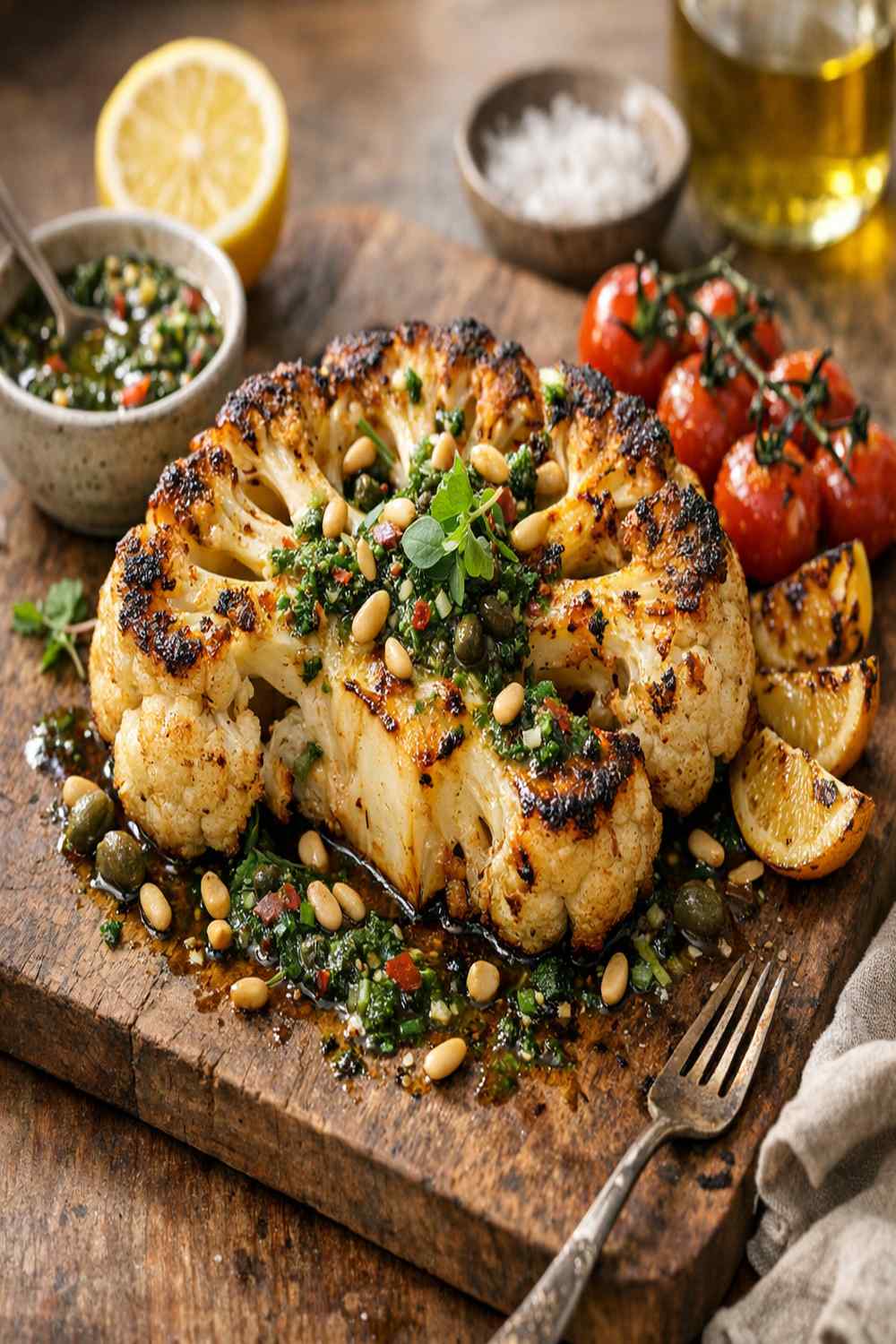

Ingredients
Equipment
Method
Step 1: Preheat Your Oven and Prepare Your Sheet
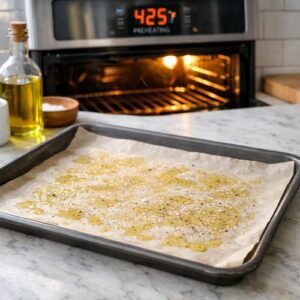
- Set your oven to 425 degrees Fahrenheit and allow it 10 minutes to fully preheat. This high temperature is crucial—it's what creates that golden, caramelized exterior while keeping the interior tender. While your oven heats, line a large rimmed baking sheet with parchment paper or nonstick foil. Spray it lightly with olive oil. Keto note: Don't skip the oil here; it contributes to satiety and helps prevent sticking. All other versions: This step is identical across the board.
Step 2: Clean and Prepare Your Cauliflower
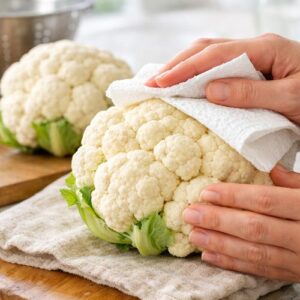
- Rinse both cauliflower heads under cool running water and pat them completely dry with paper towels or a clean kitchen towel. Moisture is the enemy of crispy roasted vegetables—any water clinging to the surface creates steam, which prevents browning. Remove the large outer leaves and trim the very bottom of the core with a sharp knife, but keep the core intact (that's what holds everything together). Stand each head upright on your cutting board.
Step 3: Slice Into Steaks and Florets
- Using a sharp chef's knife, carefully slice each cauliflower head into ¾-inch-thick steaks. You should get approximately three solid steaks from each head, plus some irregular pieces. Don't throw those irregular pieces away—they become beautiful roasted florets. The outer edge slices will naturally break apart during handling; this is completely normal and expected. Arrange all steaks and loose florets in a single layer on your prepared baking sheet. Pro tip from my nutrition practice: Those broken florets actually have more surface area, which means more caramelized edges and more concentrated flavor. Nothing is wasted here.
Step 4: Oil and Season the First Side
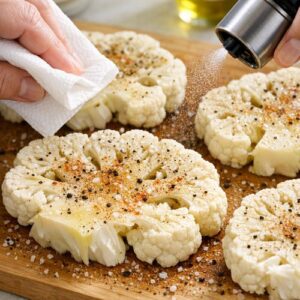
- Pat the cauliflower pieces dry one more time with a fresh paper towel—this matters more than you'd think. Lightly spray or brush the tops of all pieces with olive oil. Sprinkle half of your salt, half of your black pepper, half of your garlic powder, half of your paprika, and half of your coriander evenly across all pieces. I like to use my fingers to gently rub the seasonings into the oil so they stick rather than simply sitting on top. Keto eaters: Don't be shy with the oil; it enhances flavor and increases satisfaction. All versions: Even seasoning distribution is what separates restaurant-quality from home cooking.
Step 5: First Roast (15 Minutes)
- Place your baking sheet in the preheated oven on the middle rack. Set a timer for exactly 15 minutes. Resist the urge to check on it—opening the oven door releases heat and disrupts the cooking process. During these 15 minutes, the cauliflower is developing a golden crust on the bottom surface while the interior begins to soften. Nutrition insight: This moderate roasting time preserves most of the cauliflower's water-soluble B vitamins and vitamin C, which can degrade with overcooking.
Step 6: Flip and Season the Second Side
- Remove the baking sheet carefully from the oven. Using two wide, sturdy spatulas (this is genuinely important for keeping steaks intact), carefully flip each piece. I recommend working methodically, one piece at a time, rather than rushing. The steaks will be hot and slightly fragile at this point. Once everything is flipped, spray the now-exposed tops lightly with olive oil and sprinkle with the remaining seasonings—the other half of your salt, pepper, garlic powder, paprika, and coriander. Again, gently rub them in with your fingers.
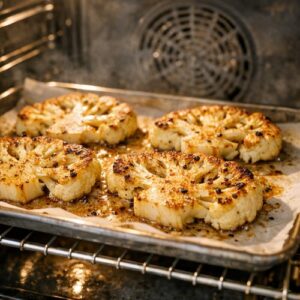
Step 7: Final Roast (10 to 15 Minutes)
- Return the baking sheet to the oven for 10 to 15 additional minutes. The exact timing depends on your oven's personality and the thickness of your steaks, but you're looking for deep golden-brown color and fork-tender texture. A fork should pierce the center with gentle pressure. The edges should be noticeably darker than the centers—that's caramelization, and that's where the flavor lives.
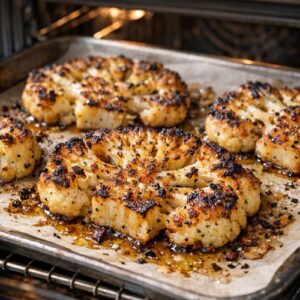
Step 8: Finish and Serve Immediately
- Remove from the oven and immediately drizzle with fresh lemon juice if desired. This brightness is optional but makes a genuine difference. Serve immediately while the steaks are warm and the exterior is still crispy. Transfer to a serving plate rather than leaving them on the hot baking sheet, which continues cooking them. Dietary note for all versions: This recipe is best enjoyed right away, but I'll address storage options in the section below.

Notes
- Mistake 1: Skipping the drying step. If your cauliflower isn't completely dry before seasoning, moisture creates steam during roasting, which prevents the crispy exterior you're after. I cannot stress this enough—pat them dry multiple times if needed. This single step makes the difference between steamed and roasted.
- Mistake 2: Overcrowding the pan. If pieces are touching or stacked, they'll steam instead of roast. Use a large baking sheet and give each steak space to breathe. If your cauliflower is very large, use two baking sheets rather than squishing everything into one.
- Mistake 3: Not flipping halfway through. I know the instructions say to flip after 15 minutes, but some people skip this because they're hesitant about handling the hot vegetables. Don't skip it. Flipping ensures even browning on both sides. Use two wide spatulas and work carefully—it takes less than two minutes.
- Mistake 4: Underseasoning or forgetting to season the second side. Many people salt the first side and then forget about the second side. Remember: you have two portions of seasoning for a reason. Using them separately (first side, then second side) ensures every bite tastes intentional rather than some pieces being bland and others overseasoned.