This post contains affiliate links. As an Amazon Associate I earn from qualifying purchases.
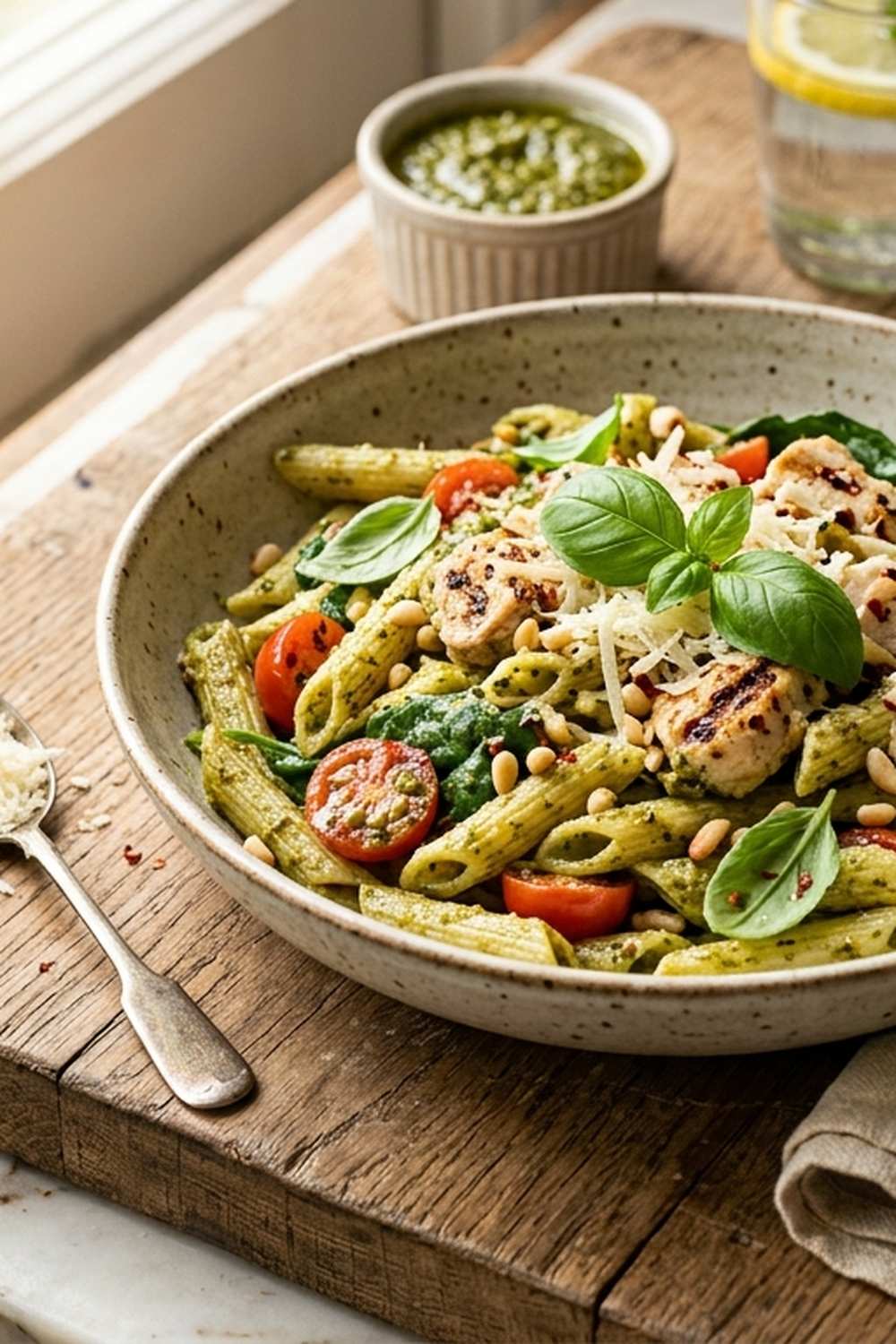
Whether you’re navigating keto, vegan, or gluten-free eating, you don’t have to miss out on creamy, satisfying pasta nights. I created this chicken pesto penne recipe specifically so that no matter what your dietary needs are, you can sit down to a bowl of something that feels indulgent without breaking your budget or your nutrition goals. I’ve spent years helping clients in the Waltham area discover that healthy eating isn’t about restriction—it’s about knowing the right swaps. This recipe proves it.
Which Version Is Right for You?
Before we dive into the kitchen, let’s figure out which version of this recipe will work best for your lifestyle. Each variation keeps the soul of the dish intact while honoring your dietary priorities. The beautiful part? They all cost roughly the same.
- Keto version – Swap pasta for zucchini noodles or cauliflower rice, keep all proteins and fats intact. Expect a lighter texture with serious staying power. Perfect if you’re tracking macros and want to stay under 10g net carbs per serving.
- Vegan version – Replace chicken with crispy chickpeas or extra-firm tofu, use nutritional yeast instead of Parmesan, swap dairy milk for unsweetened plant-based milk, and use vegan cream cheese. The result tastes just as rich and satisfying.
- Gluten-free version – Use rice pasta, chickpea pasta, or lentil pasta instead of wheat penne. The sauce and technique stay identical, and honestly, many gluten-free pastas have more protein anyway.
- Dairy-free version – Replace butter with olive oil, use coconut milk or cashew cream instead of dairy milk, skip the Parmesan or use nutritional yeast. The pesto and sauce work beautifully without a single drop of dairy.
The Base Ingredients (Works for All Versions)
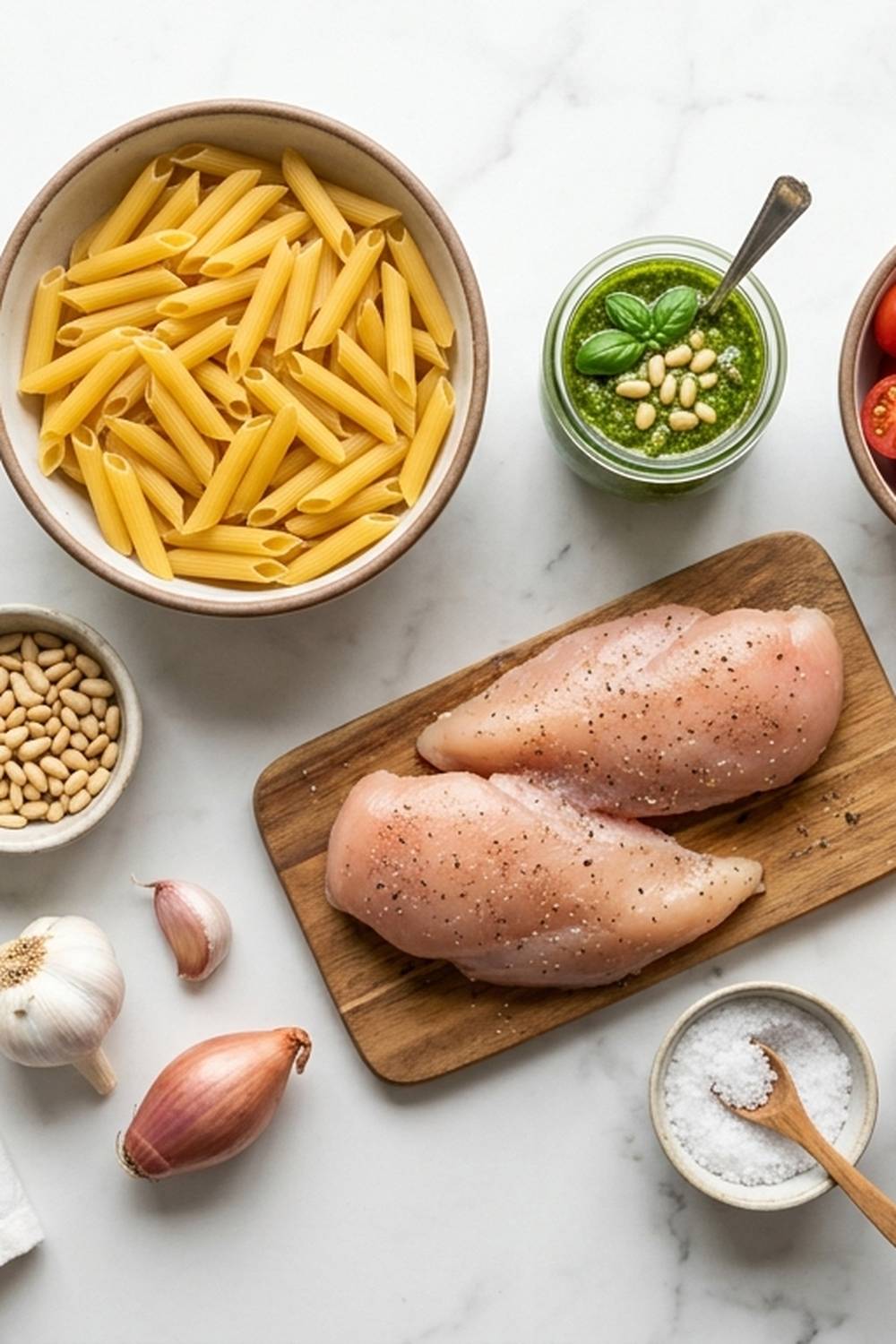
These are the core components that remain consistent across every dietary variation. I’ve listed each with notes about which versions use them and how to swap them out if needed. This recipe serves 4 people with generous portions, and costs about $12.77 total—that’s just $3.19 per serving for a restaurant-quality meal.
- ¼ cup grated Parmesan cheese (use nutritional yeast for vegan, or skip entirely for dairy-free)
- ¼ cup sun-dried tomatoes, sliced thin (adds brightness to every version)
- 1 teaspoon Italian seasoning (adds depth without extra cost)
- ½ pound penne pasta (swap for gluten-free pasta blend or zucchini noodles as needed)
- 2 tablespoons fresh lemon juice (brightens the sauce across all versions)
- ⅓ cup fresh basil pesto (check store-bought version for vegan—many brands are plant-based already)
- 2 cloves fresh garlic (minced, works across all versions)
- 1 pound boneless, skinless chicken breast (substitute with 2 cans chickpeas or 14 ounces firm tofu for vegan versions)
- 1½ cups low-sodium chicken broth (use vegetable broth for vegan/vegetarian versions)
- 3 ounces cream cheese, softened (use vegan cream cheese or omit for dairy-free, replacing with ¼ cup tahini)
- 2 tablespoons unsalted butter (use olive oil for dairy-free)
- Pinch of crushed red pepper flakes (optional, for heat)
- Freshly cracked black pepper (to taste)
- 3 cups fresh spinach (works across all versions)
- 1 cup whole milk (use coconut milk, oat milk, or cashew cream for dairy-free)
Dietary Substitution Chart
Here’s where the magic happens. I’ve laid out every swap side-by-side so you can quickly see what to change based on your dietary needs. Keep this handy when you’re shopping or prepping—it takes the guesswork out of adaptation.
- Milk -> Keto: use heavy cream (½ cup) for lower carbs | Vegan: use unsweetened oat or almond milk | Gluten-free: keep as-is | Dairy-free: use coconut or oat milk
- Cream cheese -> Keto: keep as-is | Vegan: use vegan cream cheese or ¼ cup tahini | Gluten-free: keep as-is | Dairy-free: use vegan cream cheese or tahini
- Parmesan cheese -> Keto: keep as-is | Vegan: use ¼ cup nutritional yeast | Gluten-free: keep as-is | Dairy-free: use nutritional yeast
- Butter -> Keto: keep as-is | Vegan: use olive oil | Gluten-free: keep as-is | Dairy-free: use olive oil
- Chicken breast -> Keto: keep as-is | Vegan: use 2 cans chickpeas (drained, rinsed, pan-fried until crispy) | Gluten-free: keep as-is | Dairy-free: keep as-is
- Penne pasta -> Keto: use zucchini noodles or cauliflower rice | Vegan: use lentil or chickpea pasta | Gluten-free: use rice or chickpea pasta | Dairy-free: use regular or specialty pasta
- Chicken broth -> Keto: keep as-is | Vegan: use vegetable broth | Gluten-free: verify label says gluten-free (most do) | Dairy-free: keep as-is
How to Make Chicken Pesto Penne Recipe Your Way
These instructions work as the foundation for every version of this recipe. I’ve noted where you’ll make dietary swaps at each step. The technique remains the same whether you’re making traditional or adapted versions, which means you’ll get consistent, beautiful results every single time you cook it.
Step 1: Prep Your Chicken (or Plant-Based Protein)
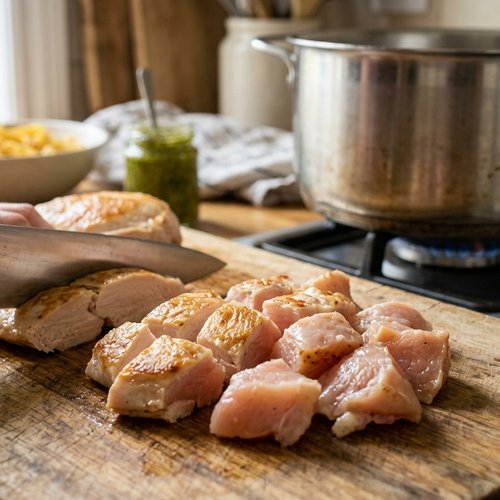
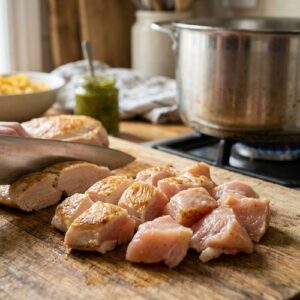
Start by cutting your chicken breast into rough 1-inch pieces. For vegan versions, drain and rinse 2 cans of chickpeas, pat them dry with paper towels, and set aside. For tofu versions, press your firm tofu block between paper towels for 10 minutes to remove excess moisture, then cut into ¾-inch cubes. The size matters here—smaller pieces cook faster and absorb the sauce better. I always cut my chicken slightly smaller than I think I need because it shrinks as it cooks.
Step 2: Brown Your Protein
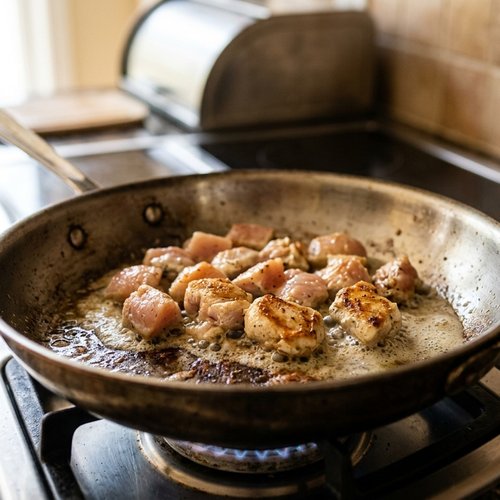
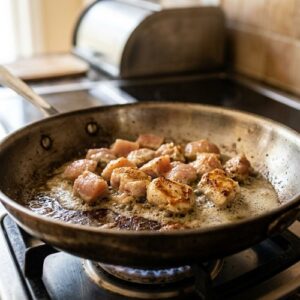
Heat 2 tablespoons of butter (or olive oil for dairy-free) in a deep, 12-inch skillet over medium heat. Once the butter is melted and foaming, add your chicken pieces and let them sit undisturbed for 2–3 minutes. This creates a golden-brown crust that adds serious flavor. Stir occasionally and cook until the chicken is lightly browned on most sides, about 6–8 minutes total. For vegan chickpea versions, cook the chickpeas for about 5 minutes until they start to crisp and brown. For tofu, pan-fry until golden on all sides, about 8–10 minutes.
Step 3: Build Flavor With Garlic
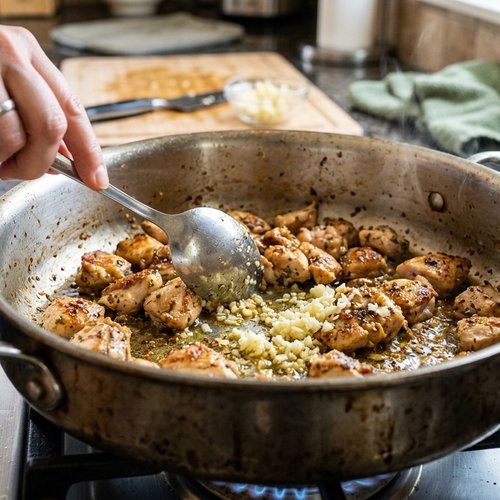
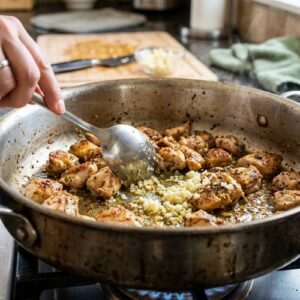
While your protein is cooking, mince your 2 cloves of garlic very finely—almost to a paste. Once your chicken (or alternative) is nicely browned, add the minced garlic directly to the skillet and stir constantly for exactly 1 minute. This is crucial: garlic burns quickly, and burned garlic tastes bitter. You want it fragrant and golden, not charred. At 60 seconds, your kitchen should smell absolutely incredible.
Step 4: Add Pasta and Broth (The Magic Happens Here)
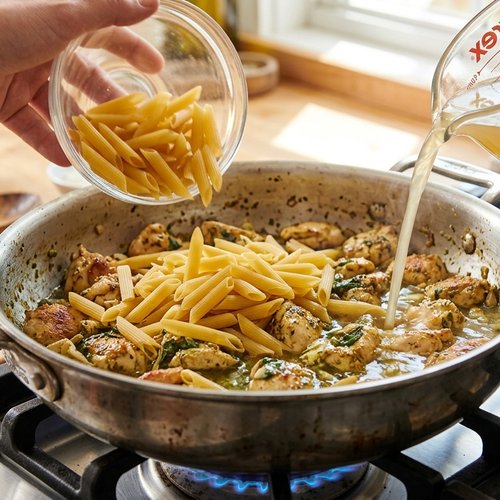
Add your uncooked penne directly to the skillet. For gluten-free versions, use your gluten-free pasta at this same ratio. For keto, skip traditional pasta entirely and proceed to Step 5, adding zucchini noodles after the sauce is made. Pour in 1½ cups of chicken broth (or vegetable broth for vegan versions). Use a wooden spoon to stir and scrape up any brown bits stuck to the bottom of the pan—that’s pure flavor, and you don’t want to leave it behind.
Cover the skillet with a lid, increase heat to medium-high, and bring the broth to a rolling boil. This usually takes 4–5 minutes. Once you see bubbles breaking the surface, give the pasta one quick stir, replace the lid immediately, and turn the heat down to medium-low.
Step 5: Simmer Until Pasta Is Tender
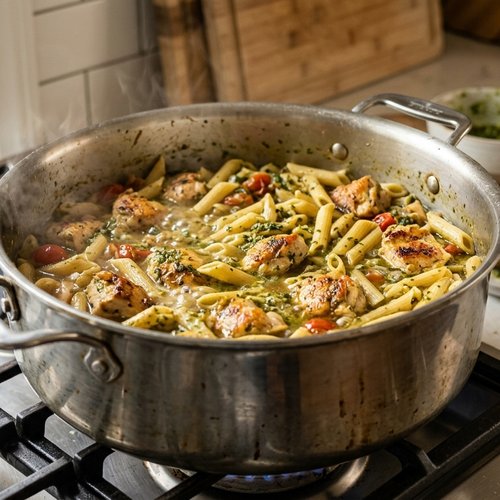
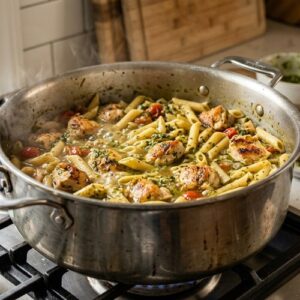
Let the pasta simmer quietly for about 8 minutes, stirring briefly every 2 minutes and replacing the lid each time. What you’re looking for is tender pasta that still has a tiny bit of bite and a skillet where most (but not all) of the broth has been absorbed. The pasta will continue to soften slightly as you add the cream sauce, so don’t overcook it here. After about 8 minutes, taste a piece of pasta—it should feel soft but still have structure.
Step 6: Make Your Creamy Sauce
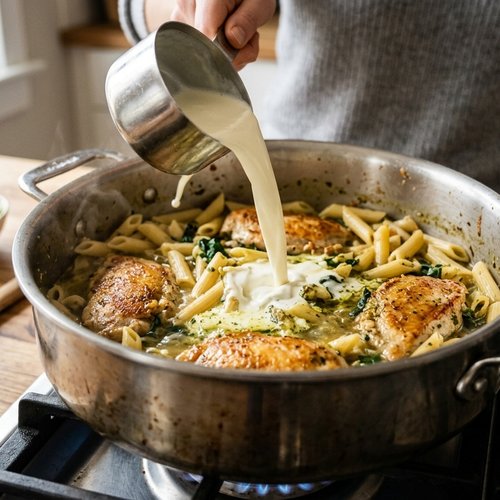
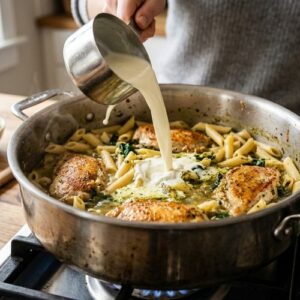
Once the pasta is tender and most of the broth has been absorbed, pour in your milk. For keto versions using heavy cream, use ½ cup cream instead for lower carbs. For dairy-free versions, use coconut milk, oat milk, or cashew cream. Cut your softened cream cheese into small chunks and add it to the skillet. For vegan versions, use vegan cream cheese or ¼ cup tahini instead. For dairy-free versions, use vegan cream cheese or tahini.
Stir constantly over medium heat for 3–4 minutes until the cream cheese has completely melted into the sauce and everything is smooth. This is when your dish transforms from simple pasta into something truly creamy and luxurious. Don’t rush this step—low heat and patience give you a silky sauce instead of a grainy one.
Step 7: Add Pesto and Final Flavors
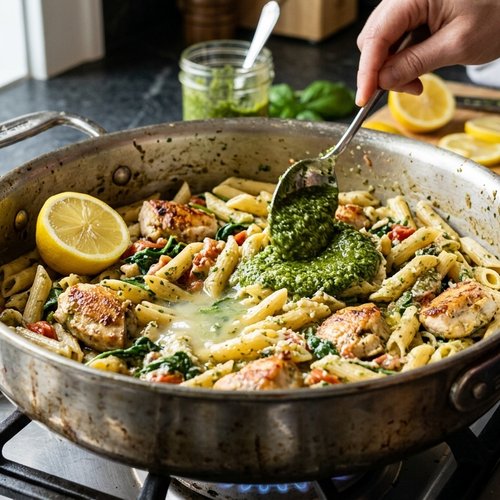
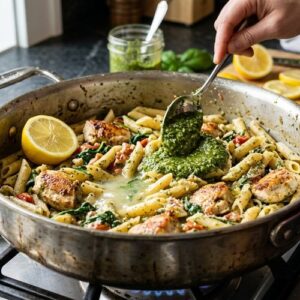
Stir in your ⅓ cup of fresh basil pesto and 2 tablespoons of fresh lemon juice. The lemon juice brightens everything and prevents the sauce from tasting too heavy. Add ¼ cup grated Parmesan cheese—for vegan versions, use ¼ cup nutritional yeast instead, which adds a savory umami note. For dairy-free versions, skip the Parmesan or use nutritional yeast. Stir until everything is fully combined and the sauce is silky and vibrant green.
Step 8: Add Your Vegetables and Final Touch
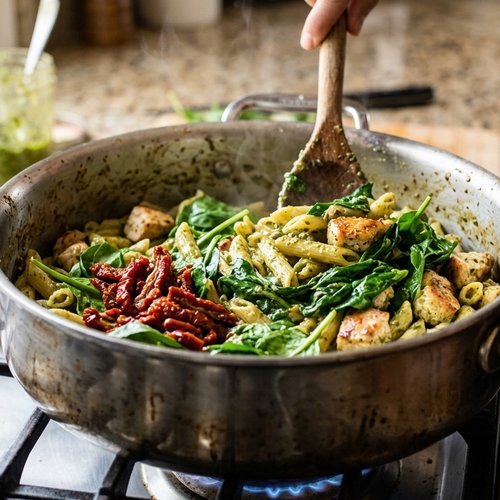
Add your 3 cups of fresh spinach and ¼ cup of sliced sun-dried tomatoes. Stir gently until the spinach is completely wilted, about 1–2 minutes. The residual heat will do the work here. Taste and adjust seasoning with salt, freshly cracked black pepper, and a pinch of crushed red pepper flakes if you like heat. Remove from heat immediately.
Divide into 4 bowls and serve hot. The pasta continues to absorb sauce as it sits, so if you prefer a saucier dish, add a splash more milk before serving.
Expert’s Nutritional Tip: Why This Recipe Works So Well
Here’s what I see as a registered dietitian: this recipe balances protein, healthy fats, and carbohydrates in a way that keeps you satisfied for hours. The protein from the chicken (or legumes in vegan versions) signals fullness to your brain. The fat from the pesto and cream cheese slows digestion and stabilizes blood sugar. And the spinach adds micronutrients—specifically iron and magnesium—that many people miss in their daily diet. If you’re tracking nutrition, one serving of the traditional version contains approximately 485 calories, 32g protein, 18g fat, and 42g carbohydrates. The vegan version runs about 420 calories with 16g plant-based protein, while the keto zucchini noodle version drops to roughly 285 calories with 28g protein and just 6g net carbs.
Nutrition Comparison Across Versions
I want to be transparent about how the nutrition shifts with each adaptation. These numbers are based on USDA data and reflect one serving (¼ of the recipe serves 4 people). Keep in mind that actual values vary slightly based on specific brands you choose—for instance, store-bought pesto can range from 70–120 calories per ⅓ cup depending on whether it’s made with pine nuts or walnuts.
- Standard (chicken, regular pasta) – 485 calories | 32g protein | 18g fat | 42g carbs | 6g fiber
- Keto (zucchini noodles, heavy cream) – 285 calories | 28g protein | 16g fat | 6g net carbs | 2g fiber
- Vegan (chickpeas, nutritional yeast) – 420 calories | 16g protein | 14g fat | 48g carbs | 9g fiber
- Gluten-free (chickpea pasta) – 510 calories | 38g protein | 18g fat | 44g carbs | 8g fiber
- Dairy-free (coconut milk, tahini) – 445 calories | 30g protein | 20g fat | 40g carbs | 6g fiber
How Each Version Tastes Different
I’m going to be honest with you about the flavor and texture experience of each version, because I know how disappointing it is when a “substitution” tastes like a disappointment instead of a choice.
The standard version is rich, creamy, and the pesto shines through clearly. You get tender pasta with that satisfying weight of chicken and cheese. This is what I make on weeknights when I want maximum comfort and minimum thinking.
The keto version with zucchini noodles feels lighter and fresher. Zucchini has a subtle sweetness that complements pesto beautifully. The sauce-to-vegetable ratio is different, so the sauce coats everything more obviously. Some people actually prefer this version because they taste the pesto more distinctly. The texture is softer and more delicate than pasta, which some love and others need time to adjust to. If you’re new to zucchini noodles, I recommend spiralizing them fresh rather than buying pre-made, which can turn mushy.
The vegan version with chickpeas has a different protein texture—chickpeas are firmer and earthier than chicken. The nutritional yeast adds a subtle cheesy, umami quality that honestly rivals Parmesan for some people. The pesto flavor is equally vibrant. Many non-vegan friends have asked me for this version specifically because they genuinely prefer it. The pasta stays exactly the same.
The gluten-free version depends entirely on which pasta you choose. Lentil and chickpea pastas have a slightly nuttier flavor and hold sauce beautifully. Rice pasta is more delicate and can get mushy if you’re not careful, so I suggest checking it a minute earlier than standard pasta. Nutritionally, you’re often getting more protein with these alternatives anyway.
The dairy-free version with coconut milk becomes slightly sweeter and more fragrant. If you use full-fat coconut milk, the richness rivals the traditional version. Tahini adds earthiness and creaminess without that coconut flavor. Some people find it’s their favorite precisely because it tastes different from typical creamy pasta.
Make-Ahead Guide: Meal Prep Like a Pro
One of my favorite things about this recipe is how beautifully it works for meal prep. As a registered dietitian, I always encourage clients to think about cooking once and eating three times—it saves money, time, and mental energy.
Option 1: Prepare Everything Raw (Best for 2–3 Days)
Cut your chicken and store it in an airtight container. Mince your garlic and store it separately (or store the cloves whole). Measure out your pasta, broth, milk, and cream cheese into separate containers. This way, on a busy Tuesday night, you can throw everything together in 20 minutes from raw ingredients. Store prepared components in the refrigerator for up to 3 days.
Option 2: Make the Full Dish, Store Portions (Best for 4–5 Days)
Prepare the entire recipe as written, but slightly undercook the pasta by 1 minute. Cool the finished dish to room temperature on the counter for 15 minutes, then portion into 4 glass containers. Refrigerate for up to 5 days. Reheat in the microwave (2–3 minutes, stirring halfway through) or on the stovetop over medium-low heat with a splash of milk to restore creaminess. The pasta will absorb more sauce as it sits, which many people prefer.
Option 3: Freeze for Later (Best up to 3 Months)
This recipe freezes beautifully in portions. Cool completely, then transfer to freezer-safe containers or bags, leaving ½ inch of headspace. Label with the date and dietary version. Thaw overnight in the refrigerator, then reheat gently with a touch of milk. I don’t recommend freezing the vegan chickpea version because chickpeas can become mushy after thawing, but the traditional, keto, and dairy-free versions freeze perfectly.
Common Mistakes to Avoid
After helping dozens of people cook this recipe, I’ve noticed patterns in what trips people up. Here’s how to avoid them:
Mistake 1: Adding the Milk Too Early – If you add milk before the pasta is tender, it gets absorbed unevenly and your pasta ends up dry in some spots and soupy in others. Wait until the pasta is actually tender before adding any liquid other than broth. Trust the process.
Mistake 2: Not Scraping Up the Brown Bits – Those fond (browned bits) on the bottom of the pan are pure flavor. When you add the broth, use your wooden spoon to scrape them up deliberately. This is called deglazing, and it’s the difference between “fine” and “restaurant-quality” flavor.
Mistake 3: Overcooking the Spinach – Add it at the very last moment and stir just until wilted. If you cook spinach too long, it becomes dark, loses nutrients, and tastes bitter. You’re looking for bright green and tender, not dark and collapsed.
Mistake 4: Using Cold Cream Cheese – This is why I emphasize softening it first. Cold cream cheese chunks don’t melt smoothly into the sauce; they stay lumpy and grainy. Take it out of the fridge 15 minutes before you start cooking, or cut it into small pieces and it will soften faster in the warm sauce.
Seasonal Variations: Adapt This Recipe Year-Round
One thing I love teaching is how to adjust recipes based on what’s in season and affordable in your area. This recipe is flexible enough to shine in every season.
Spring Version: Replace sun-dried tomatoes with fresh asparagus pieces (add in the last 2 minutes of cooking). Use fresh tarragon instead of Italian seasoning. Add fresh peas for sweetness. This version feels bright and lighter, perfect as the weather warms up.
Summer Version: Use fresh basil from a garden or farmers market to make your own pesto (store-bought works, but homemade is more vibrant and often cheaper). Swap spinach for arugula (which has a peppery bite). Add fresh cherry tomatoes halved instead of sun-dried. The fresh flavors really pop.
Fall Version: Add roasted butternut squash cubes (leftover from another meal). Use sage instead of basil in your pesto, or add a teaspoon of sage to your sauce. The earthiness of squash pairs beautifully with the richness of the cream. This feels like comfort food transitioning into colder months.
Winter Version: Stick closer to the traditional recipe, but add a handful of kale in addition to the spinach (kale is heartier and more available in winter). Add a pinch of nutmeg to the cream sauce—it’s warm and cozy. Consider roasted mushrooms for deeper, earthier notes.
Can I Store Chicken Pesto Penne Recipe?
Storage depends on your version, so here’s the breakdown:
Refrigerator Storage (All Versions) – Store in airtight glass containers for up to 5 days. The sauce will thicken as it sits because the pasta continues to absorb liquid. When reheating, add a splash of milk or broth to restore creaminess. Reheat gently over medium-low heat or in the microwave for 2–3 minutes, stirring halfway through.
Freezer Storage (Best for Traditional, Keto, and Dairy-Free Versions) – Cool to room temperature first, then portion into freezer-safe containers. Freeze for up to 3 months. Thaw overnight in the refrigerator, then reheat gently with additional milk. The vegan chickpea version can freeze, but chickpeas sometimes become mushy after thawing, so I recommend refrigerating instead.
Container Choice Matters – I always recommend glass containers over plastic. They don’t absorb stains or odors, reheat more evenly, and last longer. They also let you see what you have at a glance, which encourages you to actually eat the leftovers.
What to Serve With Chicken Pesto Penne Recipe?
This is a complete main course on its own, but I always appreciate a simple side to round out the meal. Here’s what pairs beautifully:
- Garlic Bread – Works with every version. Make it with olive oil instead of butter for dairy-free, and use gluten-free bread for that dietary version. It’s perfect for soaking up extra sauce.
- Simple Green Salad – Toss fresh greens with lemon vinaigrette (works with all versions). The acidity refreshes your palate after the rich, creamy pasta.
- Quick & Easy Mixed Berry Compote – Sounds unconventional, but a light berry compote offers brightness and pairs surprisingly well with pesto’s basil notes. It’s especially nice with the dairy-free version.
- Roasted Vegetables – Broccoli, bell peppers, or zucchini roasted with olive oil and garlic. Works with all versions and adds crunch to balance the creamy pasta.
- Crusty Bread – A simple whole grain or sourdough. For gluten-free versions, use certified gluten-free bread.

Chicken Pesto Penne Recipe
Ingredients
Method
- Start by cutting your chicken breast into rough 1-inch pieces. For vegan versions, drain and rinse 2 cans of chickpeas, pat them dry with paper towels, and set aside. For tofu versions, press your firm tofu block between paper towels for 10 minutes to remove excess moisture, then cut into ¾-inch cubes. The size matters here—smaller pieces cook faster and absorb the sauce better. I always cut my chicken slightly smaller than I think I need because it shrinks as it cooks.
- Heat 2 tablespoons of butter (or olive oil for dairy-free) in a deep, 12-inch skillet over medium heat. Once the butter is melted and foaming, add your chicken pieces and let them sit undisturbed for 2–3 minutes. This creates a golden-brown crust that adds serious flavor. Stir occasionally and cook until the chicken is lightly browned on most sides, about 6–8 minutes total. For vegan chickpea versions, cook the chickpeas for about 5 minutes until they start to crisp and brown. For tofu, pan-fry until golden on all sides, about 8–10 minutes.
- While your protein is cooking, mince your 2 cloves of garlic very finely—almost to a paste. Once your chicken (or alternative) is nicely browned, add the minced garlic directly to the skillet and stir constantly for exactly 1 minute. This is crucial: garlic burns quickly, and burned garlic tastes bitter. You want it fragrant and golden, not charred. At 60 seconds, your kitchen should smell absolutely incredible.
- Add your uncooked penne directly to the skillet. For gluten-free versions, use your gluten-free pasta at this same ratio. For keto, skip traditional pasta entirely and proceed to Step 5, adding zucchini noodles after the sauce is made. Pour in 1½ cups of chicken broth (or vegetable broth for vegan versions). Use a wooden spoon to stir and scrape up any brown bits stuck to the bottom of the pan—that's pure flavor, and you don't want to leave it behind. Cover the skillet with a lid, increase heat to medium-high, and bring the broth to a rolling boil. This usually takes 4–5 minutes. Once you see bubbles breaking the surface, give the pasta one quick stir, replace the lid immediately, and turn the heat down to medium-low.
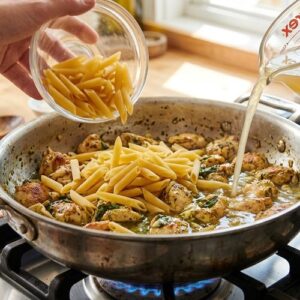
- Let the pasta simmer quietly for about 8 minutes, stirring briefly every 2 minutes and replacing the lid each time. What you're looking for is tender pasta that still has a tiny bit of bite and a skillet where most (but not all) of the broth has been absorbed. The pasta will continue to soften slightly as you add the cream sauce, so don't overcook it here. After about 8 minutes, taste a piece of pasta—it should feel soft but still have structure.
- Once the pasta is tender and most of the broth has been absorbed, pour in your milk. For keto versions using heavy cream, use ½ cup cream instead for lower carbs. For dairy-free versions, use coconut milk, oat milk, or cashew cream. Cut your softened cream cheese into small chunks and add it to the skillet. For vegan versions, use vegan cream cheese or ¼ cup tahini instead. For dairy-free versions, use vegan cream cheese or tahini. Stir constantly over medium heat for 3–4 minutes until the cream cheese has completely melted into the sauce and everything is smooth. This is when your dish transforms from simple pasta into something truly creamy and luxurious. Don't rush this step—low heat and patience give you a silky sauce instead of a grainy one.
- Stir in your ⅓ cup of fresh basil pesto and 2 tablespoons of fresh lemon juice. The lemon juice brightens everything and prevents the sauce from tasting too heavy. Add ¼ cup grated Parmesan cheese—for vegan versions, use ¼ cup nutritional yeast instead, which adds a savory umami note. For dairy-free versions, skip the Parmesan or use nutritional yeast. Stir until everything is fully combined and the sauce is silky and vibrant green.
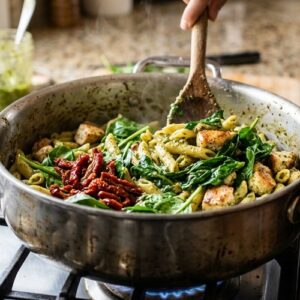
- Add your 3 cups of fresh spinach and ¼ cup of sliced sun-dried tomatoes. Stir gently until the spinach is completely wilted, about 1–2 minutes. The residual heat will do the work here. Taste and adjust seasoning with salt, freshly cracked black pepper, and a pinch of crushed red pepper flakes if you like heat. Remove from heat immediately. Divide into 4 bowls and serve hot. The pasta continues to absorb sauce as it sits, so if you prefer a saucier dish, add a splash more milk before serving.
FAQs
Can I Make This Recipe Without Cream Cheese?
Absolutely. Cream cheese is optional for creaminess, not flavor. If you don’t have it, increase your milk to 1½ cups and add 2 tablespoons of butter to compensate for richness. Or use ¼ cup of tahini (works great for dairy-free too), which creates an equally creamy sauce with a different flavor profile. You can also use Greek yogurt (¼ cup), though add it after you remove the pan from heat to prevent it from curdling. Each substitution changes the flavor slightly, but all work.
What Type of Pesto Should I Use?
Store-bought pesto is perfectly fine and keeps this recipe budget-friendly. Look for brands that list basil, garlic, pine nuts or walnuts, Parmesan, and olive oil. If you’re vegan, many store-bought pestos are already plant-based—check the label. If you have a food processor and fresh basil available, homemade pesto costs even less and tastes brighter. Combine 2 cups fresh basil, ¼ cup olive oil, 2 cloves garlic, ¼ cup nuts, 2 tablespoons nutritional yeast (for vegan) or Parmesan, and salt/pepper. Pulse until chunky.
Can I Use Frozen Spinach Instead of Fresh?
Yes, but drain it very well. Frozen spinach releases a lot of water, which dilutes your sauce. Thaw it first, then press it in a clean kitchen towel to remove excess moisture before adding to the pan. You’ll need less frozen spinach because it’s more concentrated—use about 1½ cups frozen (thawed and drained) instead of 3 cups fresh. Add it the same way, stirring until heated through.
How Do I Know When the Pasta Is Done?
Taste a piece around the 8-minute mark. You’re looking for “al dente,” which means tender but with a slight firmness when you bite it. Some people prefer softer pasta, which is fine—cook it 1–2 minutes longer. The pasta continues to absorb liquid as it sits, so slightly undercooking is better than overcooking. If you’re not sure, err on the side of slightly less cooked.
What Do I Do If My Sauce Is Too Thick or Too Thin?
Too thick? Add milk 1 tablespoon at a time and stir until it reaches your preferred consistency. Too thin? This is rarer, but if it happens, add a cornstarch slurry (1 tablespoon cornstarch mixed with 2 tablespoons cold water), stir in, and simmer for 1 minute. The sauce will thicken as the pasta sits, so if you make it ahead, expect it to be thicker when you reheat.
More Diet-Friendly Recipes
- my oven-baked chicken – Another versatile chicken recipe that adapts to any diet with simple swaps
- Black Chili Recipe – Hearty, naturally vegan, and makes amazing leftovers
- Vegan Eggplant Parmesan – Creamy and satisfying, works for multiple dietary needs
Final Thoughts: Food Should Never Be Restrictive
Years of working with clients in my community has taught me one thing: dietary restrictions don’t have to mean food restrictions. You don’t have to sacrifice flavor, satisfaction, or your budget to honor your health needs. This chicken pesto penne recipe proves that you can walk into your kitchen with whatever dietary need you’re navigating—keto, vegan, gluten-free, dairy-free—and walk out with something that tastes like celebration, not compromise.
I created this recipe because I believe wholesome meals don’t require expensive ingredients or complicated techniques. What they require is a little knowledge about smart swaps and the confidence to adapt. You have both now.
Don’t forget to mention @affordablefoodideas if you try this recipe! I love seeing what you create in your kitchens.