
This post contains affiliate links. As an Amazon Associate I earn from qualifying purchases.
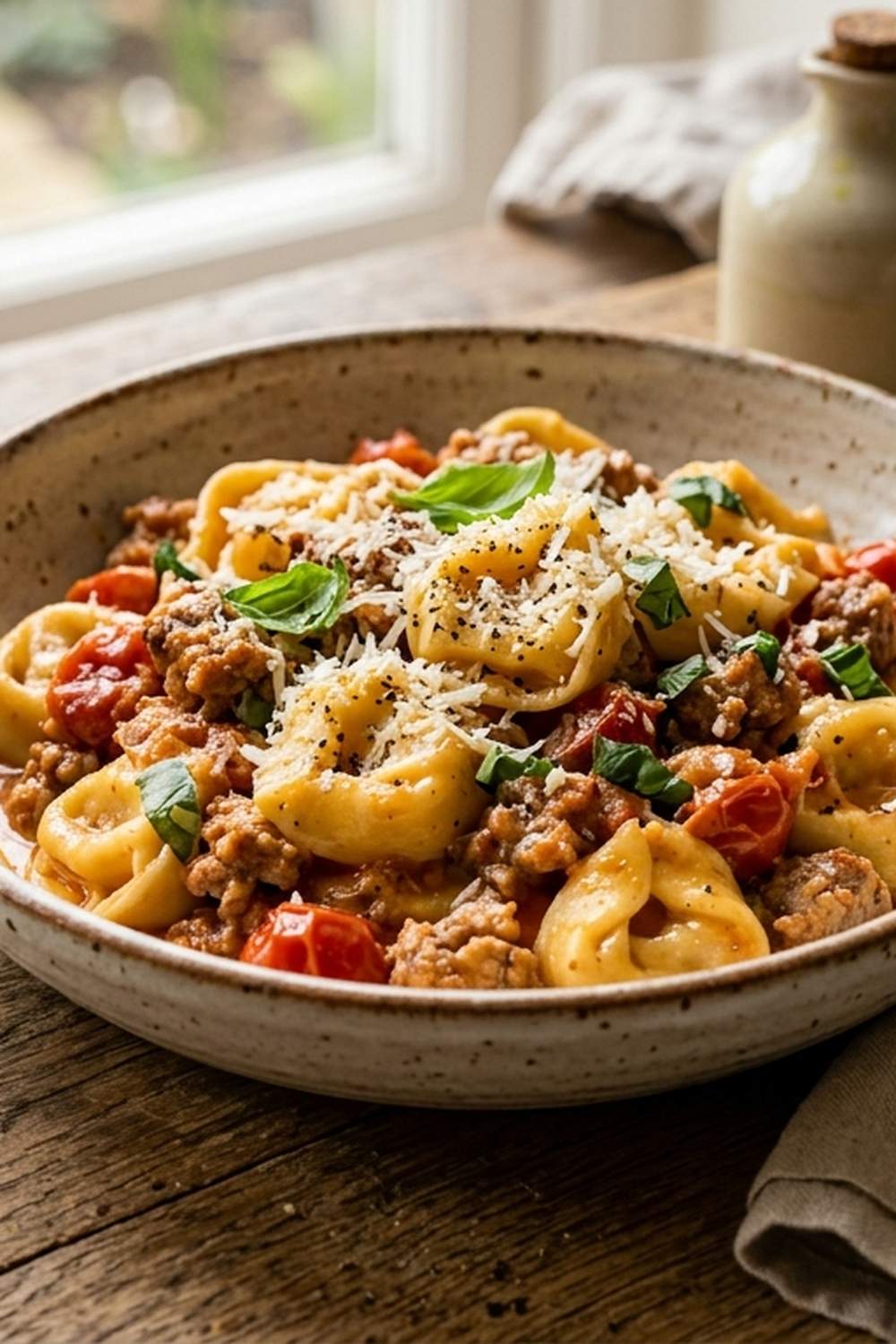
I still remember the Tuesday evening when my mom threw together whatever was in our pantry—some Italian sausage, cream, canned tomatoes—and created magic in one skillet. My siblings and I devoured it like we hadn’t eaten in weeks. Years later, as a registered dietitian, I realized what made that meal so special: it was simple, affordable, and genuinely nourishing. Today, I’m sharing that same one-pan approach, because I know weeknight dinners feel overwhelming when you’re juggling work, family, and a budget that won’t stretch any further.
If you’ve ever struggled with sausage-based pasta sauces that turn out greasy, watery, or bland—or with tortellini that doesn’t cook evenly—you’re not alone. Like the time I served an underseasoned version to my book club and had to laugh it off, most home cooks miss one or two critical steps that make the difference between a forgettable dinner and something your family actually requests. That’s exactly what we’re fixing today.
Why Your Sausage Pasta Dishes Never Turn Out Right (And How to Fix It)
Here’s what I see happen most often: someone browns sausage, adds sauce ingredients, throws in the pasta, and hopes for the best. The result? Either the tortellini is mushy while the sauce is thin and separated, or the opposite—the pasta is still firm but the sauce has cooked down until it’s too concentrated. Sometimes both happen simultaneously, which is honestly impressive in its wrongness.
The real issue isn’t the ingredients. It’s understanding that tortellini releases starch as it cooks directly in the sauce, which naturally thickens everything around it. Most recipes treat the sauce like a finished liquid, when actually it’s meant to evolve during cooking. Once I started cooking the pasta right in the pan with the sauce—instead of separately—my results transformed completely. The timing works out perfectly, the flavors meld, and cleanup is literally half the work.
What Makes This Cheese Tortellini With Sausage Recipe Different?
The secret isn’t complicated, but it’s precise: we’re cooking the tortellini directly in the sauce for 5-7 minutes, which lets the starch from the pasta thicken everything while the flavors actually integrate. This isn’t a shortcut—it’s the right method. The sauce goes in slightly thinner than you’d think it should be, because you know it’s going to transform as the pasta releases its natural starches. You’re not fighting physics; you’re working with it.
I also build flavor by browning the sausage meat completely and letting it develop a slight crust before adding anything else. This takes just a few extra minutes but creates a depth that seasoning alone can’t achieve. Combined with fresh spinach that wilts at the last second, this dish tastes like you spent hours on it—but you really spent maybe 25 minutes total.
Before You Start: What You Need to Know
Two things will change how this recipe turns out, and both are worth understanding before you begin cooking.
- The sausage-to-liquid ratio matters tremendously – Too much sausage and the sauce becomes greasy; too little and the sauce tastes thin. I recommend 11 ounces of sausage with ¼ cup broth and a 14-ounce can of tomatoes, which creates balance. If your sausage releases excess fat during browning, drain it out—this isn’t about removing all fat, just the greasy surplus that would make the finished dish feel heavy.
- The cream goes in before the tortellini, never after – Adding cream to a very hot sauce at the end can cause it to separate or curdle. By incorporating it into the warm sauce before the pasta goes in, the heat is gentler and everything stays silky and integrated.
The Ingredients
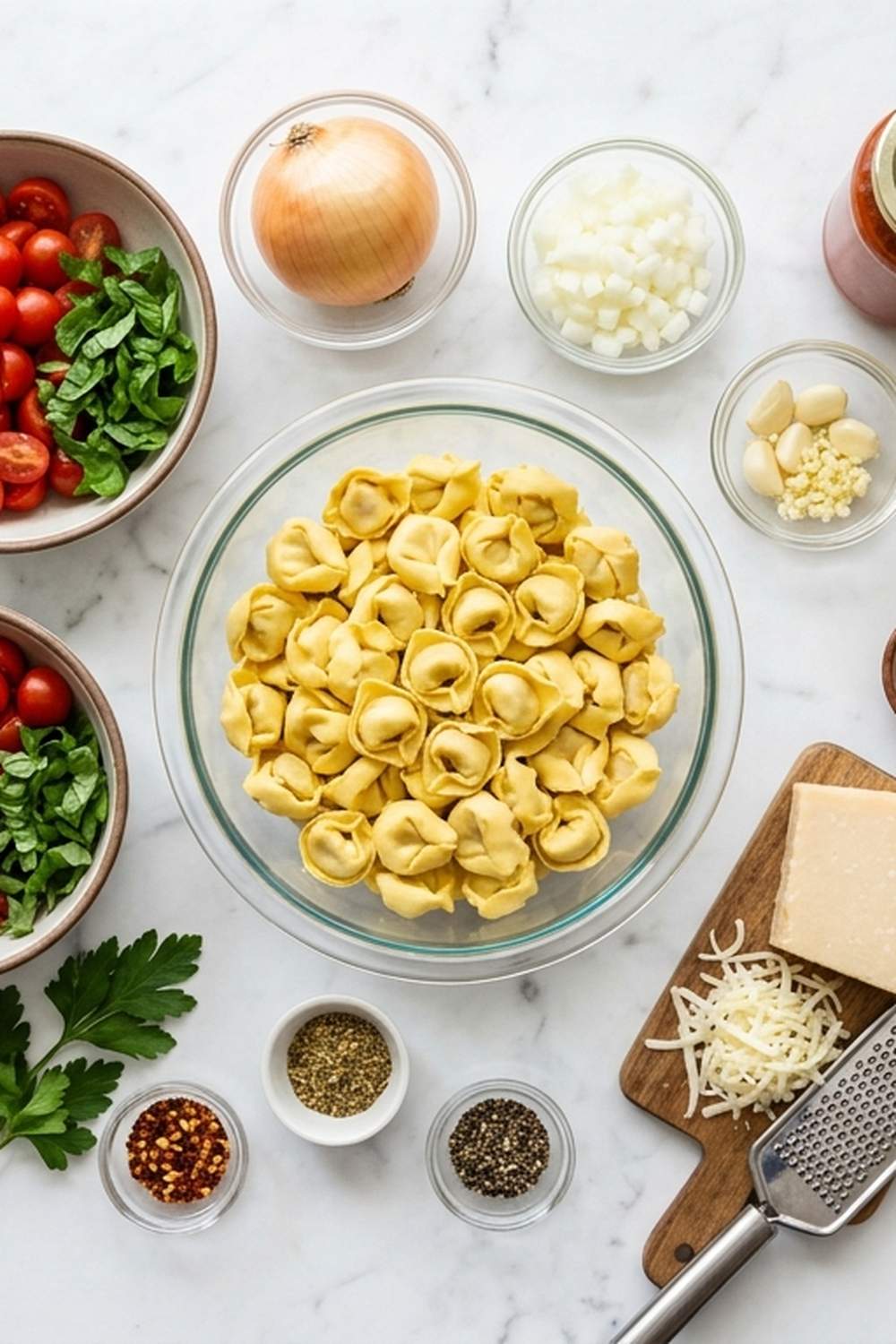
Every ingredient here earns its place. The sausage provides protein and richness that would cost much more in pre-made Italian sauces. The fresh garlic (never powder—I’m begging you) adds aromatics that make people think you cooked all afternoon. Broth stretches the sauce without watering down flavor, which is why I always have low-sodium chicken broth on hand for budget-friendly cooking. The canned tomatoes are your secret weapon: they’re inexpensive, shelf-stable, and contain a natural acidity that balances the cream beautifully. Fresh spinach adds iron and folate while barely changing the grocery bill. And the tortellini? Refrigerated, store-brand tortellini is completely nutritionally equivalent to expensive artisanal versions—I’ve checked the labels countless times.
- 2 cups fresh baby spinach (loosely packed; frozen works too)
- 1 (9-ounce) package refrigerated cheese tortellini (store brand works perfectly)
- 2 tablespoons freshly grated Parmesan cheese (optional for serving; not in the sauce)
- ½ cup heavy cream (or use half-and-half for a lighter version; I’ll explain both below)
- 11 ounces Italian sausage (bulk or removed from casings; see my budget swap below)
- 3 cloves garlic (minced fresh, not jarred or powder)
- Salt and black pepper (to taste at the end)
- ¼ cup low-sodium chicken broth (or vegetable broth if you prefer)
- 1 (14-ounce) can diced tomatoes (canned is actually more nutritious than fresh for this application, due to lycopene stability)
- ½ teaspoon red pepper flakes (optional, but adds depth without heat)
Budget-Friendly Ingredient Swaps: Can’t find bulk sausage? Buy link sausage and squeeze it out of the casing—it’s usually cheaper per pound. Heavy cream running expensive? Use half-and-half (which has 10% fat instead of 36%) and just add an extra tablespoon or two; the sauce will still be creamy because the pasta starch helps. No fresh spinach? Frozen spinach works beautifully—just thaw it and squeeze out excess water so the sauce doesn’t become watery. Store-brand tortellini is genuinely as good as premium versions; I’ve tested this professionally.
Step-by-Step: How to Make Cheese Tortellini With Sausage Recipe Without Fail
I’m going to walk you through this method the way I’d teach it to a client in my nutrition consultation office—assuming zero experience, but trusting you completely. You’re going to nail this.
Step 1: Brown the Sausage and Build Your Flavor Foundation
Remove the sausage from its casing (if it’s in one) by squeezing it into a large skillet over medium-high heat. Don’t stir immediately—let it sit undisturbed for 2-3 minutes so it develops a brown crust on the bottom. This Maillard reaction is what creates depth. Then break it apart with a wooden spoon and continue cooking, stirring occasionally, for another 5-7 minutes until you see no pink remaining and the meat has separated into small, even pieces.
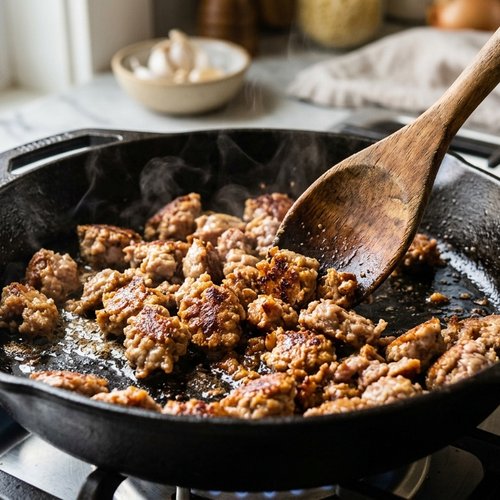
Once the sausage is fully cooked, look at the surface of the skillet. If there’s a visible pool of fat, tilt the pan and use a spoon to scoop out the excess—I usually leave about a tablespoon of fat in the pan because it carries flavor, but I remove anything beyond that. This is why cooking sausage matters: you’re controlling the fat content rather than being surprised by it.
Step 2: Add Garlic and Let It Bloom
Add your minced garlic directly to the hot pan with the sausage. Stir constantly for 30-45 seconds—this is crucial. You want the garlic to become fragrant and slightly golden, but not burnt. The difference between fragrant and burnt is about 15 seconds, so watch carefully. This step, called “blooming” the aromatics, releases garlic’s sulfur compounds and makes them more bioavailable to your body while deepening the overall flavor.
Step 3: Add Broth, Tomatoes, and Cream
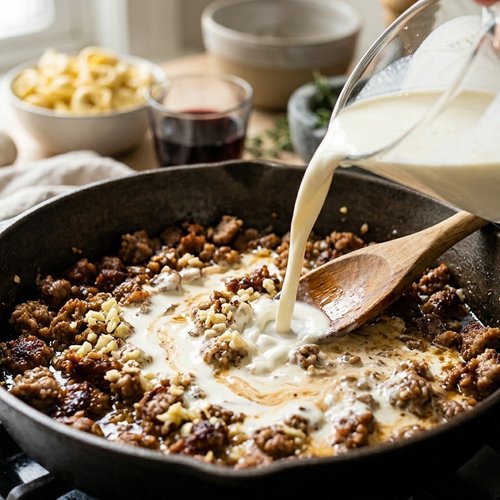
Pour in the chicken broth, then add the entire can of diced tomatoes with its juices—don’t drain them. The liquid in that can is packed with flavor compounds. Stir everything together until the sausage is evenly distributed. Now add the heavy cream and stir gently until the sauce looks uniform. The sauce should look slightly thinner than you’d expect a finished pasta sauce to be—this is correct. The tortellini will add starch and body as it cooks. Bring the mixture to a gentle simmer over medium heat.
Step 4: Cook the Tortellini Directly in the Sauce
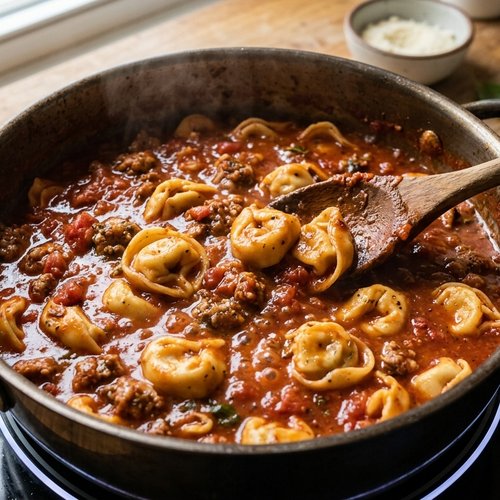
This is the critical moment. Once the sauce is simmering, add the entire package of tortellini directly to the pan. Stir gently but thoroughly so each piece gets coated with sauce and isn’t sticking to others. Set a timer for 5-7 minutes. This is the exact range because it depends on your stove’s intensity and the exact thickness of your tortellini. The pasta is done when you can pierce one piece with a fork and it’s tender throughout, not when the timer says so.
During these 5-7 minutes, stir occasionally—about every 90 seconds or so. You’ll notice the sauce becoming thicker and richer as you stir. This is the starches from the tortellini doing their job. Don’t walk away; stay present. This isn’t a step where you can ignore the pan.
Step 5: Wilt the Spinach and Season
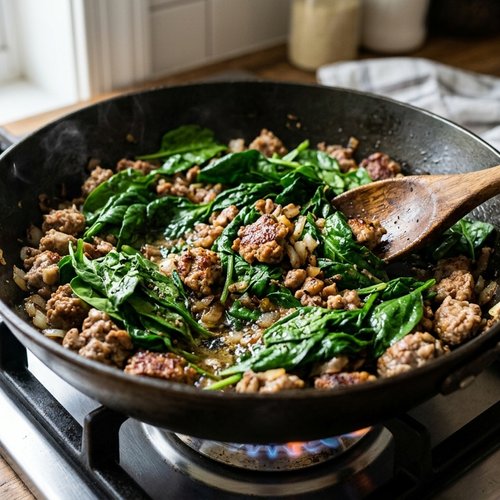
Once the tortellini is tender, add your fresh spinach by the handful, stirring between each addition. It’ll look like you’ve added an impossible amount of vegetable, then it’ll immediately wilt down. This takes about 1-2 minutes total. The residual heat of the sauce is exactly what you need to soften spinach without overcooking it to the point of mushiness.
Now taste the sauce. Add salt and black pepper gradually, tasting after each addition. Remember that the sausage is already seasoned, so you’re not starting from zero. I usually add about ¼ teaspoon salt and several grinds of pepper, then taste again. Season to your preference. If it tastes slightly underseasoned, trust me—it won’t be once you add the Parmesan at the table.
Step 6: Serve Immediately
Divide the tortellini mixture among bowls or plates. Top each serving with fresh Parmesan cheese if you like—about a tablespoon per serving. The Parmesan adds umami, a savory depth that makes people ask for the recipe. Serve immediately while everything is hot and the spinach is still vibrant green.
The Most Common Mistakes (And How to Avoid Them)
- Cooking the tortellini separately in boiling water – This is the biggest mistake I see. When you cook tortellini separately, then mix it with sauce, the pasta is already fully hydrated and the sauce stays thin. By cooking them together, you get both the right texture and the right sauce consistency. Trust the method even if it feels unconventional.
- Not draining excess sausage fat – I understand the reluctance; fat carries flavor. But excess sausage fat creates an oily mouthfeel that masks everything else. Drain the obvious surplus and you’ll taste the tomatoes, garlic, and cream instead of just grease. Your palate will thank you.
- Adding cold cream directly to the hot sauce – If your cream comes straight from the refrigerator and hits a blazing-hot sauce, it can break or curdle slightly. The solution is simple: add cream to warm (not boiling) sauce and stir gently. If you’re worried about temperature, warm your cream in a separate container for 30 seconds before adding it.
- Skipping the Parmesan at the end – I see people try to build all the cheese flavor into the sauce, then serve without any on top. Fresh Parmesan added at the table is completely different than cheese cooked into the sauce. It adds a sharp, salty brightness that makes the whole dish sing. Don’t skip it.
How Do I Know When It’s Done?
Timing alone isn’t enough here because every stove, pan, and batch of tortellini is slightly different. Instead, look for three specific indicators that everything is ready.
First, the tortellini should be tender enough to cut with a fork, but not so soft that it falls apart. Take one out with a spoon, let it cool for 3 seconds, and test it. It should have no firmness in the center—if you feel any resistance, cook for another 60-90 seconds.
Second, the sauce should coat the back of a spoon. If you dip a spoon into the sauce and run your finger across the back, a clear line should remain where your finger was. If the sauce immediately runs back together, you need another minute or two of cooking.
Third, the spinach should be completely wilted and bright green, not dull or grayish (which indicates overcooking). This happens in under 2 minutes, so watch carefully once you add it.
Troubleshooting: When Things Go Wrong
- The sauce is too thin and watery even after cooking – Your tortellini might be releasing less starch than expected (sometimes this happens with premium brands that have thicker pasta). Solution: Let the sauce simmer uncovered for another 2-3 minutes after the tortellini is done, stirring occasionally. The liquid will reduce and thicken. If it’s still thin, whisk together 1 tablespoon cornstarch with 2 tablespoons cold water, then stir this slurry into the sauce while simmering. It’ll thicken within 30 seconds.
- The sausage is tough and chunky rather than breaking down nicely – You likely pressed on it while browning, which compacts the meat. Solution for next time: use a lighter touch and let the heat do the work. For this batch, add an extra tablespoon of broth and let everything simmer gently for another minute; the liquid will help soften the texture slightly. Alternatively, chop the large pieces more finely with your spoon.
- The sauce separated and looks oily – This usually happens when cream was added to a sauce that was too hot, or if sausage fat wasn’t drained properly. Solution: Remove from heat immediately. Whisk 1-2 tablespoons of cold cream into the mixture off the heat, then return to the stove over low heat, stirring constantly. The cooler cream can help emulsify the broken sauce back together. This salvages most batches.
Can I Store Cheese Tortellini With Sausage Recipe?
Yes, and I actually think this dish tastes even better the next day once flavors have had time to meld. Store leftovers in an airtight container in the refrigerator for up to 3 days. The sauce will thicken further as it cools due to the starch from the tortellini; this is normal and desired.
To reheat, place the desired portion in a skillet over medium-low heat, stirring occasionally, until warmed through—about 5-7 minutes. If the sauce seems too thick, add a splash of broth or even a tablespoon of water and stir until you reach the right consistency. Don’t reheat in the microwave if you can avoid it; the uneven heating can cause the cream to separate.
Can you freeze it? Technically yes, but the texture of the tortellini can become grainy and the cream sauce can separate upon thawing. If you do freeze it, thaw it overnight in the refrigerator and reheat gently on the stovetop rather than microwaving. I’d recommend freezing only if you have significant leftovers and want to avoid waste; otherwise, refrigerate for 3 days.
Nutrition Information
Per serving (assuming 4 servings total): approximately 520 calories, 28 grams protein, 32 grams fat, and 38 grams carbohydrates. The protein comes from both the sausage and cheese tortellini, which makes this a satisfying main course that keeps you full for hours. According to USDA nutrition data, the canned tomatoes provide lycopene, a powerful antioxidant that’s actually more bioavailable in cooked and canned tomatoes than in fresh ones. The fresh spinach adds iron and folate, micronutrients many of my clients don’t get enough of. The cream provides fat-soluble vitamin absorption for the tomatoes’ vitamin A and K from spinach.
Expert’s Nutritional Tip: If you’re watching saturated fat intake, use half-and-half instead of heavy cream and reduce the amount to ⅓ cup. You’ll lose some richness, but the dish remains creamy because the pasta starch does much of the thickening work. This reduces saturated fat by about 35% per serving while keeping calories relatively similar.
What Can I Serve With Cheese Tortellini With Sausage Recipe?
This dish is hearty and complete on its own, but if you’re feeding a crowd or want to stretch the meal, consider these pairings:
- A simple green salad – The acidity from vinaigrette cuts through the richness of the cream sauce beautifully. I dress mine with a 3-to-1 ratio of olive oil to red wine vinegar, Dijon mustard, and fresh garlic. This balances the meal nutritionally and aids digestion.
- Garlic bread or crusty bread – Serve for soaking up every drop of sauce. One thick slice per person is usually enough given how rich the tortellini is.
- Roasted vegetables like zucchini or bell peppers – These add volume and nutrients without heaviness. Toss with olive oil, salt, and pepper, then roast at 425°F for 15-20 minutes while your tortellini cooks.
- A light berry smoothie for dessert – Since the main course is rich, keep dessert light and refreshing rather than heavy.

Cheese Tortellini With Sausage Recipe
Ingredients
Method
- Remove the sausage from its casing (if it's in one) by squeezing it into a large skillet over medium-high heat. Don't stir immediately—let it sit undisturbed for 2-3 minutes so it develops a brown crust on the bottom. This Maillard reaction is what creates depth. Then break it apart with a wooden spoon and continue cooking, stirring occasionally, for another 5-7 minutes until you see no pink remaining and the meat has separated into small, even pieces. Once the sausage is fully cooked, look at the surface of the skillet. If there's a visible pool of fat, tilt the pan and use a spoon to scoop out the excess—I usually leave about a tablespoon of fat in the pan because it carries flavor, but I remove anything beyond that. This is why cooking sausage matters: you're controlling the fat content rather than being surprised by it.
- Add your minced garlic directly to the hot pan with the sausage. Stir constantly for 30-45 seconds—this is crucial. You want the garlic to become fragrant and slightly golden, but not burnt. The difference between fragrant and burnt is about 15 seconds, so watch carefully. This step, called "blooming" the aromatics, releases garlic's sulfur compounds and makes them more bioavailable to your body while deepening the overall flavor.
- Pour in the chicken broth, then add the entire can of diced tomatoes with its juices—don't drain them. The liquid in that can is packed with flavor compounds. Stir everything together until the sausage is evenly distributed. Now add the heavy cream and stir gently until the sauce looks uniform. The sauce should look slightly thinner than you'd expect a finished pasta sauce to be—this is correct. The tortellini will add starch and body as it cooks. Bring the mixture to a gentle simmer over medium heat.
- This is the critical moment. Once the sauce is simmering, add the entire package of tortellini directly to the pan. Stir gently but thoroughly so each piece gets coated with sauce and isn't sticking to others. Set a timer for 5-7 minutes. This is the exact range because it depends on your stove's intensity and the exact thickness of your tortellini. The pasta is done when you can pierce one piece with a fork and it's tender throughout, not when the timer says so. During these 5-7 minutes, stir occasionally—about every 90 seconds or so. You'll notice the sauce becoming thicker and richer as you stir. This is the starches from the tortellini doing their job. Don't walk away; stay present. This isn't a step where you can ignore the pan.
- Once the tortellini is tender, add your fresh spinach by the handful, stirring between each addition. It'll look like you've added an impossible amount of vegetable, then it'll immediately wilt down. This takes about 1-2 minutes total. The residual heat of the sauce is exactly what you need to soften spinach without overcooking it to the point of mushiness. Now taste the sauce. Add salt and black pepper gradually, tasting after each addition. Remember that the sausage is already seasoned, so you're not starting from zero. I usually add about ¼ teaspoon salt and several grinds of pepper, then taste again. Season to your preference. If it tastes slightly underseasoned, trust me—it won't be once you add the Parmesan at the table.
- Divide the tortellini mixture among bowls or plates. Top each serving with fresh Parmesan cheese if you like—about a tablespoon per serving. The Parmesan adds umami, a savory depth that makes people ask for the recipe. Serve immediately while everything is hot and the spinach is still vibrant green.
Notes
FAQs
Can I use frozen tortellini instead of refrigerated?
Yes, absolutely. Frozen tortellini actually requires slightly longer cooking—usually 9-10 minutes instead of 5-7. The principle is identical: add them directly to the simmering sauce and let them cook through while thickening it. Don’t thaw them first; add them straight from the freezer. The time increase is because they start from a lower temperature. Everything else remains the same.
What if I can’t find Italian sausage? Can I use ground beef or pork instead?
Ground beef works, but it won’t have the same flavor profile—you’ll want to add an extra ½ teaspoon of fennel seeds or a pinch of Italian seasoning to compensate. Ground pork is closer in flavor but tends to be a bit bland on its own, so again, seasoning helps. That said, Italian sausage is usually inexpensive and widely available, so I’d recommend seeking it out. If you must substitute, brown your chosen meat and immediately add ½ teaspoon fennel seeds (ground), ¼ teaspoon garlic powder, and ¼ teaspoon dried oregano to the pan. This recreates some of the sausage’s characteristic flavor.
Is there a way to make this lighter or lower in fat?
Use half-and-half instead of heavy cream (this cuts saturated fat by about 40%) and reduce the amount to ⅓ cup. Use leaner Italian sausage if your market carries it—many stores offer 93% lean sausage, though it has slightly less flavor, so you might want to add a tiny pinch of fennel seed as mentioned above. Finally, drain a bit more of the sausage fat than you normally would. These changes reduce the per-serving fat from about 32 grams to roughly 18 grams while keeping the dish satisfying. The starch from the tortellini still creates creaminess even with less fat.
Can I make this ahead of time?
Not in the traditional sense—cooking the tortellini in the sauce is a technique that only works when everything is hot and active. However, you can do extensive prep work: brown the sausage, mince your garlic, measure out all your liquids and ingredients, and wash your spinach. Store these in separate containers in the refrigerator. When you’re ready to eat, combine everything and cook as directed. This cuts active cooking time to about 12 minutes. I’d also recommend making the full recipe and storing leftovers for another meal rather than trying to partially make it ahead.
What’s the best way to reheat this without the sauce separating?
Place your desired portion in a skillet (not a microwave) over medium-low heat. Add a splash of broth—about 1-2 tablespoons per serving—and stir occasionally. The broth prevents the sauce from drying out while gentle heat prevents separation. Heat until it’s steaming, usually 5-7 minutes. If you must use a microwave, do it in 30-second intervals, stirring between each, and add a tablespoon of water first. The lower power and frequent stirring reduce the chance of the cream breaking, though stovetop reheating is genuinely superior.
Seasonal Variations and Make-Ahead Guide
Spring & Early Summer Version
Replace the spinach with fresh asparagus cut into 1-inch pieces, adding them during step 4 when you add the tortellini. They’ll cook in the sauce in about 6 minutes. The green color and slight crunch balance the creaminess beautifully, and asparagus’s mild flavor doesn’t compete with the sausage. Add fresh lemon zest just before serving—about ½ teaspoon—for brightness.
Fall & Winter Version
Use sage-flavored Italian sausage if available (it’s more available October through December at most markets) and add ½ cup of cubed butternut squash when you add the broth and tomatoes. The squash softens slightly during cooking and adds subtle sweetness. Skip the spinach or use just 1 cup if you want to keep some green; the butternut is enough vegetable on its own.
Year-Round Prep Strategy
Brown the sausage on Sunday evening and store it in a separate container for up to 3 days. Mince garlic and store it in a small container—it’ll keep for 2-3 days. Wash and dry your spinach thoroughly to prevent excess moisture. Measure your cream and broth into small containers. When you’re ready to cook (Wednesday dinner, for example), you literally just have to assemble and simmer, reducing total time to about 15 minutes. This is meal prep done right—preparing components rather than finishing the dish ahead.
More Recipes You’ll Love
- Black Chili Recipe – Another one-pot meal that’s deeply satisfying and incredibly budget-friendly, perfect for when you want something hearty and warm
- BBQ Beef Mince Recipe – Uses similar browning techniques and pantry ingredients to create something completely different but equally comforting
- Beans and Sweet Potato Recipe – Another plant-forward option that proves delicious, nutritious meals don’t require expensive proteins
You now have everything you need to make this cheese tortellini with sausage recipe become a weeknight staple in your home—not someday, but tonight. You understand why each step matters, you know how to troubleshoot if something goes sideways, and you have budget-friendly swaps if any ingredient seems pricey. Most importantly, you know that cooking a restaurant-quality meal at home is genuinely achievable without special equipment or skills, just attention and intention.
I genuinely hope you make this recipe and find that same joy I felt at my mom’s kitchen table decades ago. That moment when everyone goes quiet because the food is too good to interrupt—that’s what I’m after every time I cook. Please don’t forget to mention @affordablefoodideas if you try this recipe! I love hearing how it turns out in your kitchen.