This post contains affiliate links. As an Amazon Associate I earn from qualifying purchases.
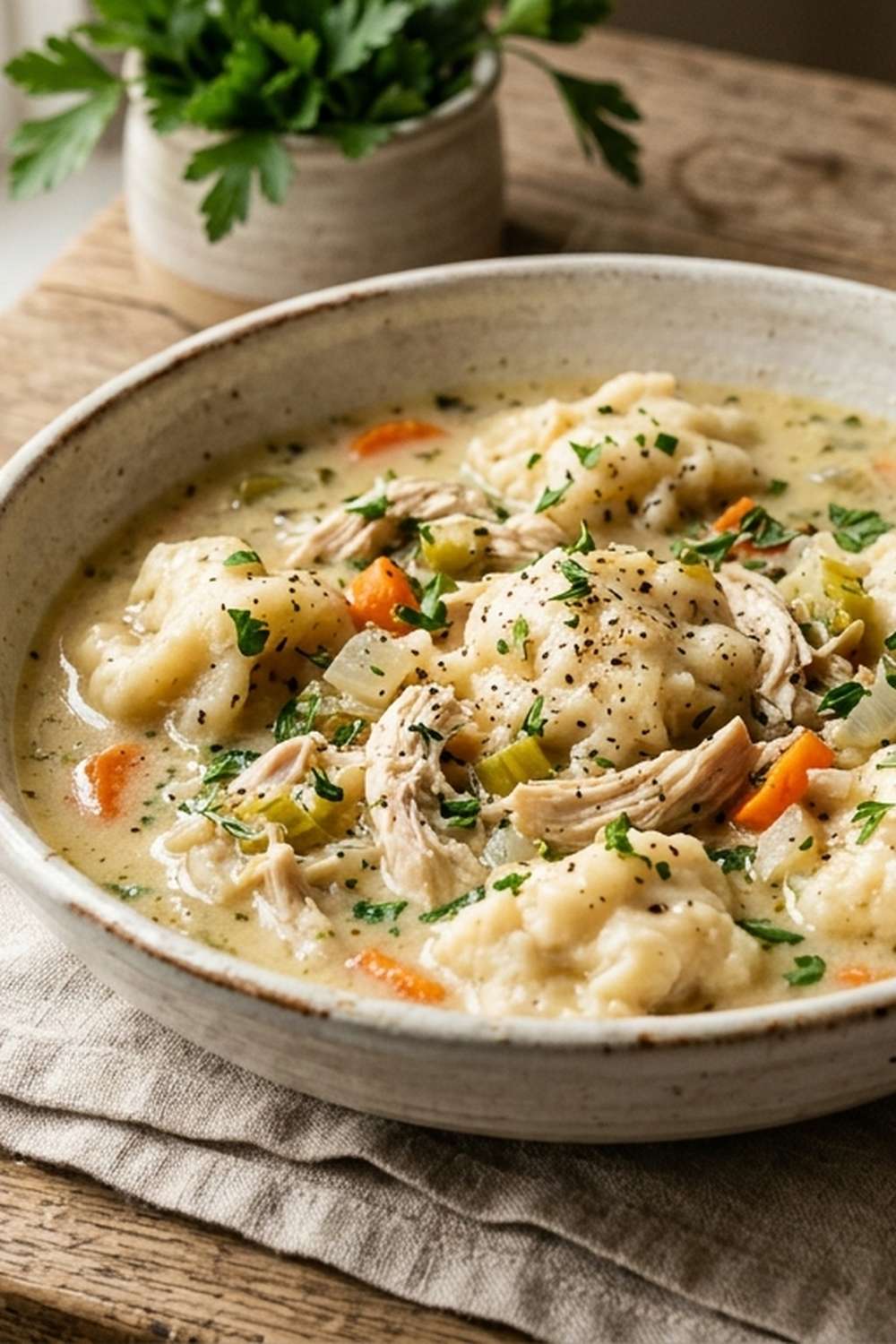
Getting kids to eat chicken drop dumplings feels impossible—until you try this approach. I’ve watched countless parents struggle to get their children excited about homemade soup, only to discover that when kids help make it themselves, something magical happens. This recipe has saved more weeknight dinners in my community than I can count. The warm broth, tender chicken, and pillowy dumplings create the kind of meal that brings families together without breaking the bank. If you’re looking for other budget-friendly chicken dishes your family will devour, check out my budget-friendly BBQ chicken sandwich recipe and BBQ chicken pineapple recipe—both are equally loved at my dinner table.
Chicken Drop Dumplings Recipe: The Whole Family Will Actually Eat (Picky Eaters Included)
I’ll never forget the Tuesday evening when my neighbor Sarah brought her seven-year-old son Marcus over for dinner. He’d rejected every meal she’d prepared that week—chicken nuggets, pasta, even his usual favorite mac and cheese. I was nervous about serving this dish, but something shifted when Marcus spotted the small spoon I was using to drop dumpling dough into the simmering pot. His eyes lit up. Before I could finish cooking, he asked if he could help with the next batch. By the time we sat down to eat, he’d consumed three full bowls and asked for the recipe to make at home. That’s when I realized: this dish isn’t just delicious—it taps into something deeper. It’s a meal that invites participation, creates sensory experiences kids actually want, and tastes like home.
Why Kids Love This Version
After nearly fifteen years working with families on nutrition, I’ve learned that kids don’t resist food because it’s healthy—they resist it because it doesn’t feel like *theirs*. This chicken drop dumplings recipe solves that problem in several ways. The texture contrast between the silky broth and tender dumplings keeps their interest. The mild seasonings won’t overwhelm developing palates, but the flavor is genuine and satisfying. Most importantly, the visual process of dropping dumplings into the pot creates an interactive experience that transforms eating from something parents force into something kids want to participate in.
- The dumpling-dropping element – Children feel like they’re doing the cooking, which dramatically increases their willingness to eat what they’ve helped create. This psychological shift alone converts picky eaters into enthusiastic participants.
- Hidden vegetable nutrition – The finely diced carrots, celery, and onions soften completely into the broth, disappearing visually while delivering essential vitamins, minerals, and fiber without triggering the “I see vegetables” rejection reflex.
- Familiar comfort food format – This tastes like the soups kids recognize from school cafeterias or grandma’s kitchen, removing the “scary new food” barrier that prevents many children from trying dishes.
- Temperature and safety – Unlike foods that require careful cooling, this soup is naturally cooling to safe eating temperature while remaining hot enough to feel special and grown-up.
How to Get Kids Involved in Making This
One of my favorite aspects of this recipe is how naturally it accommodates different ages. When you involve children in cooking, their investment in the final dish multiplies exponentially. I’ve seen toddlers who won’t touch vegetables eat them happily when they’ve had a hand in preparing the meal. Here’s how to include every age at your table:
- Ages 3-5: Measuring and spoon-dropping practice – Let your youngest ones pour pre-measured ingredients into bowls under your supervision. Once you start simmering the soup, give them a practice spoon and a small bowl of dough to drop into water. This builds confidence before they help with the real dumplings. They’ll love the repetitive motion and splashing sounds.
- Ages 6-9: Dumpling dropping and vegetable prep – School-age kids can safely drop the actual dumpling dough into the simmering pot using a small spoon. They can also help wash vegetables, tear lettuce for garnish, or stir the dumpling batter under close supervision. This age group thrives on feeling genuinely helpful.
- Ages 10+: Full recipe responsibility with guidance – Older kids can manage the entire recipe with you nearby supervising heat management. Let them sauté vegetables, whisk the flour mixture, monitor simmering time, and judge when dumplings reach the right texture. This builds real cooking competence and confidence.
The Ingredients – Hidden Nutrition, Visible Deliciousness
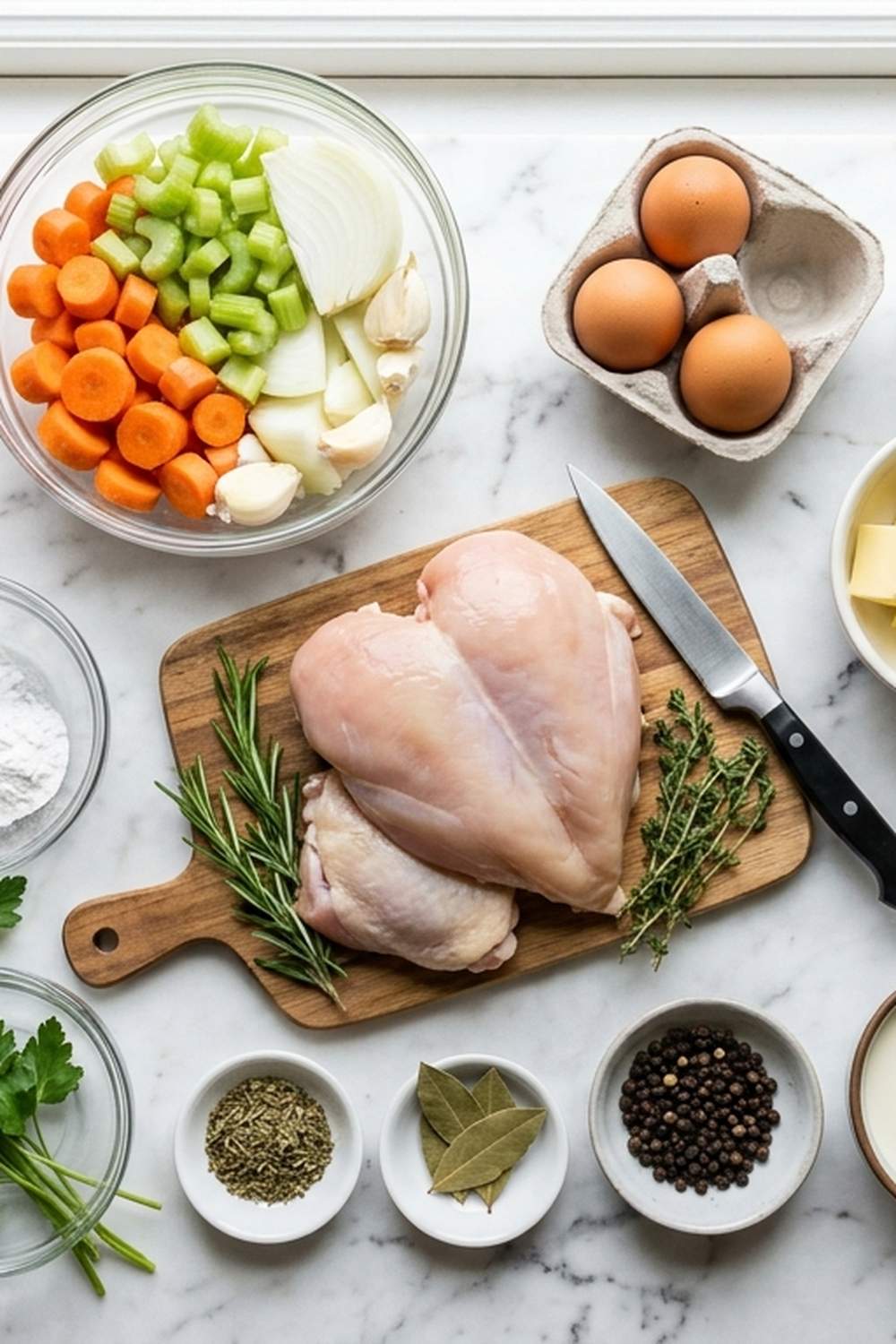
I’ve designed this ingredient list to maximize nutrition while keeping costs manageable. The vegetables soften into the broth until they’re virtually invisible, but they deliver crucial vitamins and minerals kids need for growth and energy. The combination of evaporated milk and sour cream in the dumplings creates richness without requiring cream, making this recipe genuinely affordable even for families watching their budget carefully. One note: the better-than-bouillon base is optional but worth the small investment—it creates deeper flavor than bouillon cubes and costs less than fresh stock.
For the Broth and Chicken
- 1/2 teaspoon freshly ground black pepper (freshly ground makes a noticeable difference)
- 2 large carrots (diced small, they’ll soften and disappear)
- 6 cups low-sodium chicken broth (or homemade if you have it)
- 1 clove garlic (minced, adds complexity without being obvious)
- 1/4 teaspoon dried thyme (medicinal in small amounts, hardly detectable)
- 1/2 cup frozen peas (added at the very end, they stay bright and slightly firm)
- 1 1/2 pounds boneless, skinless chicken breasts or thighs (thighs stay moister, breasts are leaner—choose based on preference)
- 1 yellow onion (chopped, provides depth without overpowering)
- 2 ribs celery (diced, contributes mild flavor kids recognize)
- 2 tablespoons fresh parsley (chopped just before serving, for garnish and freshness)
- 1 teaspoon kosher salt (adjust at the end if needed)
- 1/4 teaspoon dried rosemary (use sparingly—it’s potent)
- 1/3 cup all-purpose flour (spooned and leveled, not packed)
- 4 teaspoons chicken bouillon paste (better-than-bouillon brand works perfectly)
- 2 tablespoons olive oil (for sautéing vegetables without excessive fat)
- 5 tablespoons unsalted butter (for creating the roux base)
- 1/4 teaspoon dried sage (adds warmth without strong herb taste)
- 12 ounces evaporated milk (canned, creates creamy texture without heavy cream)
For the Drop Dumplings
- 1/4 cup sour cream (adds tangy richness without requiring heavy cream)
- 1 tablespoon baking powder (ensures dumplings rise properly and stay tender)
- 3/4 cup whole milk (full-fat creates better dumpling texture)
- 1/4 teaspoon garlic powder (optional, adds subtle savory depth)
- 1 2/3 cups all-purpose flour (spooned and leveled)
- 1/2 teaspoon kosher salt (balances sweetness in the dough)
- 2 tablespoons unsalted butter (melted and slightly cooled before mixing)
Recipe yield: Serves 6 adults as a main course or 8 as a light meal, with leftovers. Makes approximately 24-28 drop dumplings.
How to Make Chicken Drop Dumplings Recipe for the Whole Family
This recipe works beautifully as a family cooking project. The steps are straightforward enough that children can understand the progression, but there’s enough sensory involvement to keep them engaged throughout. I’ve written each step with specific notes about where kids can help safely. The entire recipe takes about 45 minutes from start to finish, making it realistic for weeknight dinners.
Step 1: Sauté Your Vegetables to Build Flavor Foundation
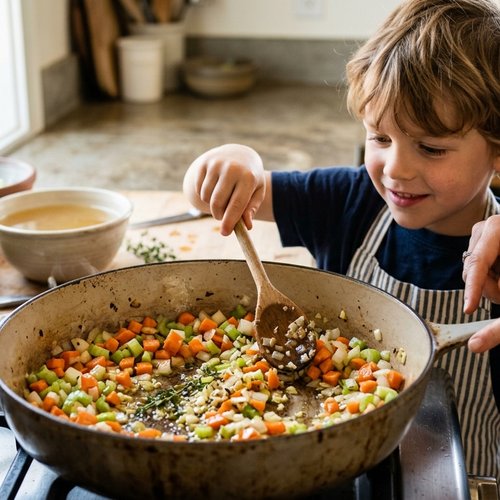
Heat a large, heavy-bottomed pot over medium heat. Once warm, add the olive oil and let it heat for about 30 seconds—you should see it shimmer slightly. Add your diced carrots, celery, and chopped onion all together. Let them cook, stirring occasionally, for about three minutes. You’re looking for them to soften slightly and become fragrant. This is a perfect task for kids 6+: let them stir the vegetables using a wooden spoon while you supervise the heat. After three minutes, add your minced garlic and stir constantly for just 30 seconds—this prevents the garlic from burning and turning bitter.
Step 2: Create Your Roux (The Flavor-Building Base)
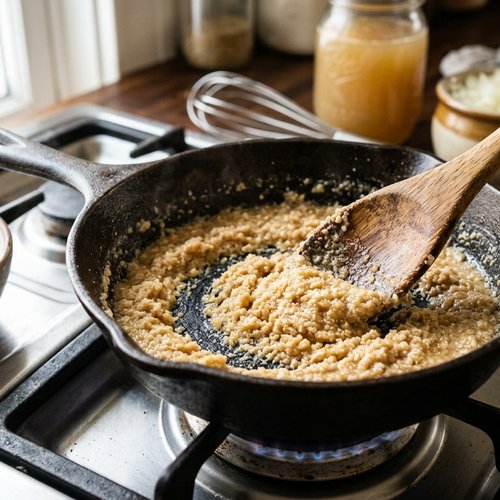
Add the butter to your vegetable mixture and let it melt completely, stirring gently. Once melted and bubbling slightly, sprinkle the flour over the top and whisk vigorously for about one full minute. You’re creating a roux—a mixture of fat and flour that will thicken your broth into a silky sauce. The mixture should look like wet sand or very fine breadcrumbs. Never leave this step unattended, and keep children at a safe distance from the heat. This moment is when the magic starts—the mixture will smell wonderful, toasty and buttery.
Step 3: Add Broth and Seasonings Gradually
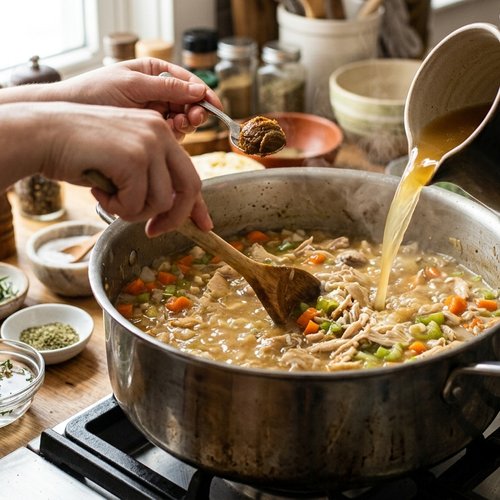
Here’s where many home cooks make mistakes—adding all the liquid at once creates lumps. Instead, gradually pour in the chicken broth while whisking constantly. Start with about 1 cup, whisking until completely smooth, then continue adding the rest slowly while whisking. Once all broth is incorporated, stir in the chicken bouillon paste, dissolved thyme, sage, rosemary, salt, and pepper. The soup should smell deeply savory and inviting now. Kids 8+ can help pour the broth slowly while you whisk, building their understanding of how cooking techniques prevent problems.
Step 4: Add Chicken and Begin Simmering
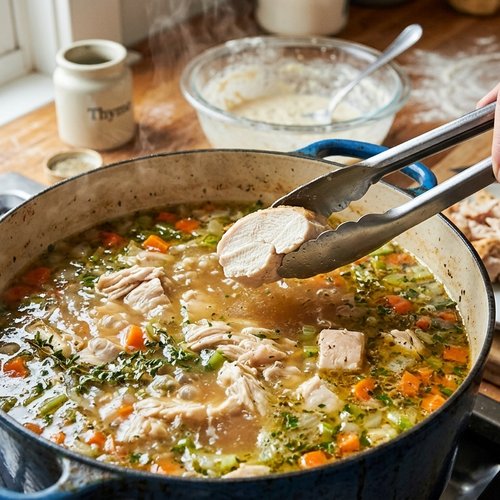
Place your chicken breasts or thighs directly into the simmering broth. Increase heat slightly and bring the mixture to a gentle boil. Once boiling, reduce heat to medium-low, cover with a lid, and simmer for 10 minutes. The chicken should be completely cooked through at this point—you can check by cutting the thickest piece open; it should be white throughout with no pink. Remove the chicken to a clean cutting board and set aside. Kids love watching this step, and it’s completely safe to observe from a distance.
Step 5: Make Your Dumpling Dough
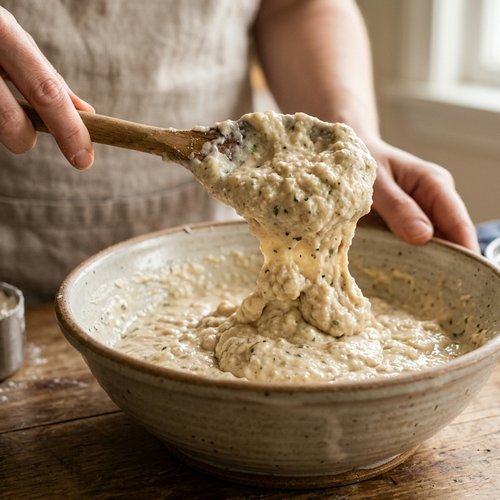
While the chicken cooks, combine your flour, baking powder, and salt in a separate bowl, stirring together with a fork. Make a well in the center of the dry ingredients. Pour the milk, sour cream, and melted butter into the well. Using a fork, gently stir everything together until just combined—the dough will be slightly lumpy and thick, almost like very thick pancake batter. This is critical: do not overmix the dough. Overmixing develops gluten, which makes dumplings tough instead of tender. Kids of all ages can help mix this by hand using a fork under supervision—they love the tactile experience and it’s completely safe.
Step 6: Stir in Evaporated Milk and Peas
Return the broth to a gentle simmer if it’s cooled. Stir in the evaporated milk and frozen peas. The peas don’t need thawing—they’ll warm through in the simmering broth in about 30 seconds. The soup should now be creamy and pale, with hints of green from the peas. Taste a spoonful and adjust salt or pepper if needed.
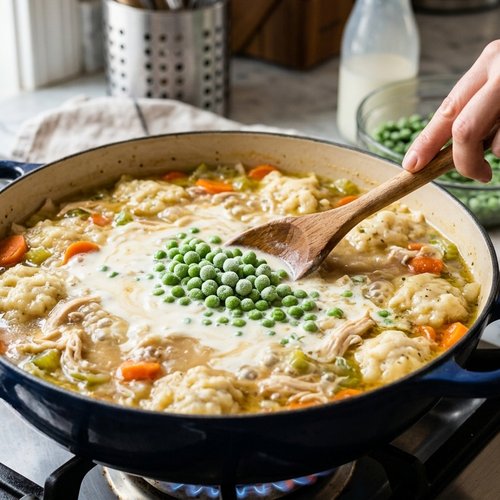
Step 7: Drop Dumplings into Simmering Broth
This is the moment children have been waiting for! Using a small spoon (a teaspoon or small tablespoon works perfectly), scoop up small amounts of dough—about the size of a grape or marble—and gently drop them onto the surface of the simmering broth. Space them out so they’re not crowded. The dumplings will initially sink, then rise to the surface as they cook. Continue dropping dumplings until all dough is used. Let kids 5+ do the actual dumpling dropping while you supervise and ensure the broth stays at a gentle simmer—not boiling vigorously, as that breaks dumplings apart. This step is surprisingly calming and meditative for children.
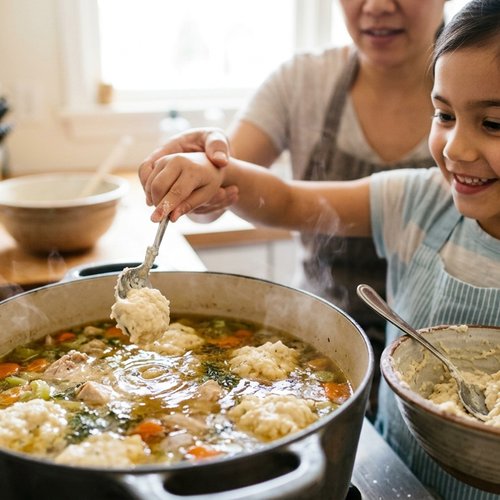
Step 8: Simmer and Test for Doneness
Once all dumplings have been dropped in, cover the pot and reduce heat to low. Simmer for 12-15 minutes. The dumplings will roughly double in size as they cook. To check for doneness, carefully remove one dumpling with a spoon and let it cool slightly, then bite into it. It should be tender all the way through with no doughy center. If still doughy, cover and cook for another 2-3 minutes. Resist the urge to peek constantly—every time you remove the lid, you release steam and extend cooking time.
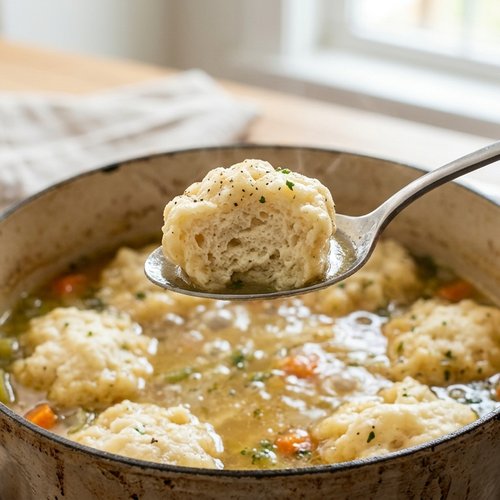
Step 9: Finish and Serve
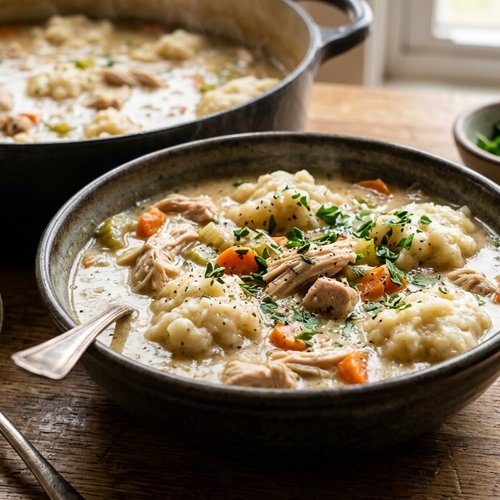
Remove the lid and gently stir the soup with a wooden spoon to break apart any dumplings that might be sticking together. Chop the cooled chicken into bite-sized pieces and add it back to the pot. Give everything a final stir. Ladle into bowls and garnish each serving with fresh chopped parsley. The parsley adds freshness, color, and a mild herbal note that elevates the entire dish. Serve while steaming hot.
Expert’s Nutritional Tip: Understanding Hidden Greens
As a registered dietitian, I’m constantly thinking about how to maximize vegetable intake without triggering resistance from young eaters. This recipe is brilliant because the vegetables become part of the broth structure itself. When carrots, celery, and onion cook in acidic broth for 10+ minutes, their cell walls break down and their nutrients distribute throughout the liquid. Your child isn’t eating “vegetables”—they’re eating broth that happens to contain concentrated vegetable nutrition. The beta-carotene from carrots, the quercetin from onions, and the subtle minerals from celery all transfer into the liquid your child consumes spoonful by spoonful. This is why homemade broth-based soups consistently rank higher for nutrient intake than separated components.
Common Mistakes to Avoid
After teaching this recipe to countless home cooks, I’ve noticed patterns in where things go wrong. Here are the mistakes I see most frequently, and how to prevent them:
- Skipping the roux step or rushing it: The roux (flour and fat mixture) is what creates the soup’s silky texture and prevents lumps. Some cooks try to skip it to save time, then end up with grainy, separated soup. Don’t rush—give it a full minute of whisking. You’ll see the difference immediately.
- Overmixing dumpling dough: I cannot stress this enough. If you stir the dumpling dough more than necessary, gluten develops and creates tough, rubbery dumplings instead of light, tender ones. Mix until just combined, even if there are small lumps visible. Those lumps will disappear during cooking.
- Cooking at too high a heat: If your broth boils aggressively while dumplings cook, they break apart and scatter throughout the soup. Gentle simmering is key. You should see occasional small bubbles breaking the surface, not rolling boils.
- Neglecting to adjust seasoning at the end: Broth intensifies as it simmers and reduces slightly. Taste your finished soup before serving and add extra salt, pepper, or herbs as needed. Kids often reject food that tastes “off,” and sometimes that off-taste is simply under-seasoning.
Make-Ahead Guide: Prep and Freezing Instructions
This recipe is wonderful for meal planning because it can be prepared in stages. Here’s how I handle it in my own kitchen when I’m planning for busy weeks:
Vegetable prep (1-2 days ahead): Dice your carrots, celery, and onion. Store them together in an airtight container in the refrigerator. They’ll stay fresh for 2-3 days. This single step cuts your active cooking time in half on dinner night.
Complete soup without dumplings (freezing option): You can prepare the entire soup through Step 6 (adding evaporated milk and peas), then cool and freeze in a freezer-safe container for up to 3 months. When ready to serve, thaw in the refrigerator overnight and reheat gently. Make your dumpling dough fresh when serving—it doesn’t freeze well and tastes best made the same day.
Batch the dumpling dough: I often make double or triple the dumpling dough recipe and freeze portions. Scoop dough onto a baking sheet, freeze until solid (2-3 hours), then transfer frozen dough balls to a freezer bag. Frozen dumplings can go directly into simmering broth—just add 2-3 minutes to cooking time since they start frozen.
Storing leftovers properly: The finished soup stores beautifully in the refrigerator for 3-4 days in an airtight container. Reheat gently on the stovetop over medium-low heat, stirring occasionally. The dumplings soften slightly more with each reheating, which most kids actually prefer. You can also portion individual servings into glass containers for grab-and-heat lunches.
Customization Station: Let Everyone Build Their Own
One of the most effective strategies I’ve learned for managing picky eaters is shifting control to them. When children feel they’re making choices rather than being told what to eat, compliance and enthusiasm increase dramatically. Here’s how to set up a dumpling bar that works:
- Dumpling texture choices – Serve some bowls with extra broth (for kids who like their dumplings soupy) and others with a thicker concentration of dumplings (for kids who prefer less liquid). Let kids choose their ratio. You can easily adjust by adding more broth or ladling out broth as needed.
- Protein variations – If you have picky eaters in your house, you can cook some portions with shredded turkey or rotisserie chicken instead of regular chicken breast. Offer a “choice” about which protein they’d like in their bowl. The familiarity creates openness to trying the rest of the dish.
- Seasoning personalization – Set out small bowls with fresh parsley, black pepper, and even a tiny bowl of garlic powder. Let kids sprinkle their own garnishes. Kids who help season their own food eat more of it.
- Side component options – Serve with bread (crusty, soft, or garlic options), or with a simple green salad on the side. Let each person choose what they want alongside their soup.
Scaling for Different Family Sizes
This recipe as written serves 6-8 people generously. Here’s how to scale up or down:
Family of 2-3 (half recipe): Use 1 tablespoon olive oil, 1 large carrot, 1 rib celery, 1/2 onion, 1/2 clove garlic, 2.5 tablespoons butter, 2.5 tablespoons flour, 3 cups broth, 2 teaspoons bouillon paste, and all seasonings at half strength. Use 3/4 pound chicken and 6 ounces evaporated milk. For dumplings, use 2/3 cup flour, 1.5 teaspoons baking powder, 1/4 teaspoon salt, 1/3 cup milk, 2 tablespoons sour cream, and 1 tablespoon butter. This makes 3-4 servings with minimal leftovers.
Large family or meal prep (double recipe): Double all ingredients exactly. Use your largest pot—a 6-8 quart pot works best. The cooking times remain the same. This makes 12-16 servings, perfect for meal prepping or feeding a large family with leftovers for lunches throughout the week. Double batches actually cook more evenly than single batches in large pots.
Can I Store Chicken Drop Dumplings Recipe?
Storage is one of this recipe’s best features—it actually tastes better on day two or three as flavors meld together.
Refrigerator storage: Cool the soup to room temperature, then transfer to airtight containers. It keeps safely for 3-4 days in the refrigerator. Never leave soup sitting at room temperature for more than two hours.
Freezer storage: The complete soup freezes well for up to 2-3 months. Use freezer-safe containers, leaving an inch of space at the top (soup expands when frozen). Thaw overnight in the refrigerator before reheating. The dumplings may soften slightly more upon thawing, which children often prefer.
Lunchbox transport: This soup is ideal for school or work lunches. Pour hot soup into a quality insulated thermos that you’ve pre-warmed with hot water (pour out the water, then add soup). The soup stays hot for 4-6 hours. Pack a crusty roll and fresh fruit alongside for a complete lunch that costs a fraction of what you’d spend eating out.
Reheating tips: Reheat gently on the stovetop over medium-low heat, stirring occasionally, until steaming throughout. Avoid high heat, which can cause the dumplings to fall apart. Stovetop reheating takes about 10 minutes and preserves texture better than microwaving.
Nutrition Information
According to USDA nutritional databases, one serving of this chicken drop dumplings recipe (calculated as 1/8 of the total recipe) contains approximately:
- Calories: 385 per serving
- Protein: 28 grams (essential for muscle growth and immune function in developing children)
- Total fat: 14 grams
- Carbohydrates: 38 grams (primarily from dumplings and vegetables)
- Fiber: 2 grams (from vegetables that soften into the broth)
- Sodium: 850 milligrams (when using low-sodium broth; adjust if using regular strength)
- Calcium: 180 milligrams (from evaporated milk and dairy)
- Iron: 2.2 milligrams (from chicken and vegetables)
From a child development perspective, this meal checks critical nutritional boxes. The protein supports muscle and brain development during growth years. The combination of B vitamins from chicken and whole grains from dumplings supports energy metabolism—crucial for active children. The vegetables hidden in the broth deliver vitamins A, C, and K. The dairy components provide calcium for bone development, and the iron supports cognitive function. This single meal provides a significant portion of most children’s daily nutritional needs while tasting like comfort food rather than medicine.
What to Serve Alongside for a Complete Family Meal
While this soup is nearly a complete meal on its own, children often prefer having a few additional components on their plate. Here’s what I serve alongside and why it works:
- Crusty bread or dinner rolls – Kids love using bread to soak up extra broth, and this extends the meal’s satisfaction. A simple store-brand roll costs just pennies and makes the meal feel more complete.
- Simple green salad with light vinaigrette – This adds raw vegetables and fresh texture contrast. Keep the dressing mild so it doesn’t overpower young palates. Many kids who refuse raw vegetables on principle will eat them when they’re part of a salad “bar” they can build themselves.
- Steamed or roasted vegetable on the side – A small serving of roasted carrots, green beans, or broccoli with a touch of butter and salt rounds out the meal. Since these vegetables are cooked separately, they taste different from the ones in the soup, extending variety on the plate.
- Fruit for dessert – A simple piece of fresh fruit or a small bowl of berries finishes the meal on a naturally sweet note. This satisfies the craving for something sweet without requiring added desserts.
If you’re looking for additional budget-friendly meal ideas, my bean soup crock pot recipe and black chili recipe offer similar comfort-food satisfaction for families watching their grocery budget.
Seasonal Variations
This recipe’s base is flexible enough to adapt throughout the year. Here are my favorite seasonal tweaks:
Spring version: Add fresh asparagus cut into 1-inch pieces or fresh peas (if in season) instead of frozen. Add a squeeze of fresh lemon juice at the end for brightness. Use fresh dill instead of rosemary for a lighter herb profile that matches spring’s energy.
Summer version: Make the soup lighter by using half the evaporated milk (substitute with regular milk). Add fresh corn kernels and fresh basil. Serve with a side salad and crusty bread to make it feel more like a light meal than heavy comfort food.
Fall version: Add a pinch of ground sage and nutmeg—increase the rosemary slightly. A diced potato added with the broth thickens it slightly and increases heartiness. Serve with warm, crusty bread and spiced apple cider as a beverage.
Winter version (the original): This is when the full-fat evaporated milk and rich dumplings shine. Add a bay leaf while simmering and remove before serving. Consider adding diced potato or a handful of egg noodles if you want to extend the recipe. The heavier version warms from the inside out during cold months.

Chicken Drop Dumplings Recipe
Ingredients
Method
- Heat a large, heavy-bottomed pot over medium heat. Once warm, add the olive oil and let it heat for about 30 seconds—you should see it shimmer slightly. Add your diced carrots, celery, and chopped onion all together. Let them cook, stirring occasionally, for about three minutes. You're looking for them to soften slightly and become fragrant. This is a perfect task for kids 6+: let them stir the vegetables using a wooden spoon while you supervise the heat. After three minutes, add your minced garlic and stir constantly for just 30 seconds—this prevents the garlic from burning and turning bitter.
- Add the butter to your vegetable mixture and let it melt completely, stirring gently. Once melted and bubbling slightly, sprinkle the flour over the top and whisk vigorously for about one full minute. You're creating a roux—a mixture of fat and flour that will thicken your broth into a silky sauce. The mixture should look like wet sand or very fine breadcrumbs. Never leave this step unattended, and keep children at a safe distance from the heat. This moment is when the magic starts—the mixture will smell wonderful, toasty and buttery.
- Here's where many home cooks make mistakes—adding all the liquid at once creates lumps. Instead, gradually pour in the chicken broth while whisking constantly. Start with about 1 cup, whisking until completely smooth, then continue adding the rest slowly while whisking. Once all broth is incorporated, stir in the chicken bouillon paste, dissolved thyme, sage, rosemary, salt, and pepper. The soup should smell deeply savory and inviting now. Kids 8+ can help pour the broth slowly while you whisk, building their understanding of how cooking techniques prevent problems.
- Place your chicken breasts or thighs directly into the simmering broth. Increase heat slightly and bring the mixture to a gentle boil. Once boiling, reduce heat to medium-low, cover with a lid, and simmer for 10 minutes. The chicken should be completely cooked through at this point—you can check by cutting the thickest piece open; it should be white throughout with no pink. Remove the chicken to a clean cutting board and set aside. Kids love watching this step, and it's completely safe to observe from a distance.
- While the chicken cooks, combine your flour, baking powder, and salt in a separate bowl, stirring together with a fork. Make a well in the center of the dry ingredients. Pour the milk, sour cream, and melted butter into the well. Using a fork, gently stir everything together until just combined—the dough will be slightly lumpy and thick, almost like very thick pancake batter. This is critical: do not overmix the dough. Overmixing develops gluten, which makes dumplings tough instead of tender. Kids of all ages can help mix this by hand using a fork under supervision—they love the tactile experience and it's completely safe.
- Return the broth to a gentle simmer if it's cooled. Stir in the evaporated milk and frozen peas. The peas don't need thawing—they'll warm through in the simmering broth in about 30 seconds. The soup should now be creamy and pale, with hints of green from the peas. Taste a spoonful and adjust salt or pepper if needed.
- This is the moment children have been waiting for! Using a small spoon (a teaspoon or small tablespoon works perfectly), scoop up small amounts of dough—about the size of a grape or marble—and gently drop them onto the surface of the simmering broth. Space them out so they're not crowded. The dumplings will initially sink, then rise to the surface as they cook. Continue dropping dumplings until all dough is used. Let kids 5+ do the actual dumpling dropping while you supervise and ensure the broth stays at a gentle simmer—not boiling vigorously, as that breaks dumplings apart. This step is surprisingly calming and meditative for children.
- Once all dumplings have been dropped in, cover the pot and reduce heat to low. Simmer for 12-15 minutes. The dumplings will roughly double in size as they cook. To check for doneness, carefully remove one dumpling with a spoon and let it cool slightly, then bite into it. It should be tender all the way through with no doughy center. If still doughy, cover and cook for another 2-3 minutes. Resist the urge to peek constantly—every time you remove the lid, you release steam and extend cooking time.
- Remove the lid and gently stir the soup with a wooden spoon to break apart any dumplings that might be sticking together. Chop the cooled chicken into bite-sized pieces and add it back to the pot. Give everything a final stir. Ladle into bowls and garnish each serving with fresh chopped parsley. The parsley adds freshness, color, and a mild herbal note that elevates the entire dish. Serve while steaming hot.
Notes
FAQs
Can I make this recipe with ground chicken instead of whole breasts?
Yes, you can—but I don’t recommend it for family meals with young kids. Ground chicken cooks so quickly that it becomes difficult to manage texturally, and small pieces can get lost in the soup. Using whole breasts that you chop at the end gives you better control and larger, more visible pieces kids can identify. If you do use ground chicken, brown it with the vegetables in Step 1 and skip the simmering step. Add it to the broth once the roux is made.
My kids refuse to eat anything with visible herbs. Can I skip them?
Absolutely. The dried herbs (thyme, sage, rosemary) are optional flavor enhancers, not requirements. If you omit them, the soup will still taste good—just less complex. To maintain flavor depth, I’d suggest adding an extra 1/2 teaspoon of chicken bouillon paste and an extra squeeze of fresh lemon juice at the end. This replaces the herbaceous complexity the dried herbs would have provided.
What if I don’t have evaporated milk? Can I use regular milk or cream?
You can substitute, but with modifications. Regular milk tends to curdle when added directly to hot broth if the temperature isn’t managed carefully. If using regular whole milk (same amount), whisk it with a tablespoon of flour before adding to temper it. For cream (which I don’t recommend for budget reasons), you’d use only 6-8 ounces since it’s richer. Evaporated milk is actually the superior choice here because it’s shelf-stable, affordable, and creates the creamiest results without separating.
How do I know if my dumplings are done? The center still looks doughy.
This is the most common question I hear. Dumpling centers should look slightly doughy when you first cut into them—that texture is actually desirable. You’re looking for “just cooked through” not “completely firm.” Remove a dumpling, let it cool slightly (they’re very hot), then bite into it. You shouldn’t taste raw flour, and there shouldn’t be a thick band of uncooked dough in the center. If you see a raw flour taste or uncooked dough, cover and simmer 2-3 more minutes. Trust your taste—overcooking dumplings makes them dense and rubbery.
Can I make this vegetarian or use vegetable broth instead of chicken?
Yes! Omit the chicken entirely and use vegetable broth instead. Add a can of white beans (rinsed and drained) and increase the vegetables—add an extra carrot, more celery, and perhaps some diced potato for heartiness. Increase the bouillon paste to 2 tablespoons (using vegetable bouillon) to deepen flavor without chicken. Add a teaspoon of nutritional yeast if you have it for additional savory depth. The dumplings remain exactly the same. This version is equally nourishing and often costs even less than the chicken version.
More Family-Friendly Recipes You’ll Love
- Easy vegan fried rice recipe – A budget-friendly one-pot meal that kids can help prepare and customize with their favorite vegetables
- Black bean nacho recipe – A build-your-own meal that gives picky eaters control over what goes on their plate
Final Thoughts: Creating Food Memories That Last
I started my career as a dietitian believing that healthy eating was about nutrition science alone. More than a decade into this work, I’ve learned it’s actually about belonging, participation, and memory. When your child helps drop dumplings into simmering broth, they’re not just eating—they’re creating a neural pathway that connects cooking, care, and nourishment. That same child, as a teenager or adult, will remember the comfort of this meal and be more likely to prepare it for their own family someday.